Asian Emergency Financing Safety Net Expands as Currency-Swap Reforms Take Effect
The $240 billion CMIM arrangement now offers rapid emergency financing in dollars, renminbi and yen, along with more flexible precautionary-line renewals.
Our editorial standards
MarketReview publishes clear, independently produced financial information using reliable sources and transparent editorial standards.
Read our Editorial Policy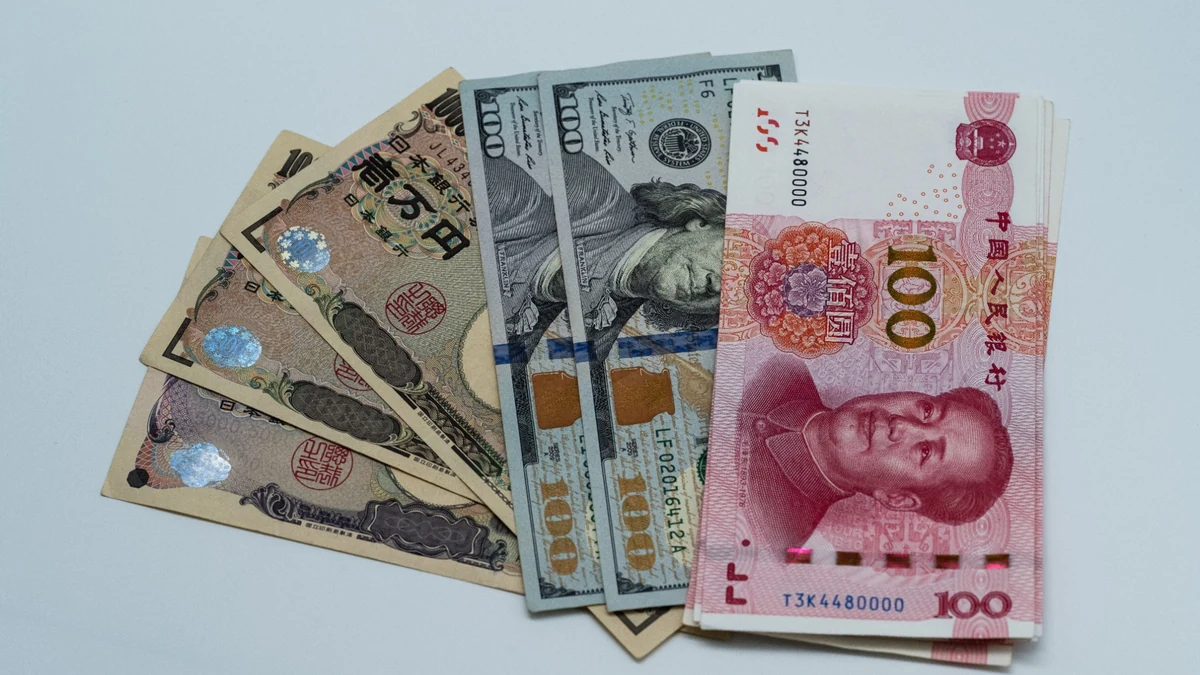
An amended emergency-financing agreement linking East and Southeast Asian economies took effect on November 11, giving participating authorities a faster way to seek foreign-currency support after sudden shocks. The changes widen the functions of the Chiang Mai Initiative Multilateralisation (CMIM), a regional currency-swap arrangement, without increasing its $240 billion total financing capacity.
A new Rapid Financing Facility is intended for urgent balance-of-payments needs caused by events such as natural disasters and pandemics. The revised rules also make certain drawings under the existing Precautionary Line renewable and specify how US dollars, Chinese renminbi and Japanese yen can be provided through the new emergency channel.
In its November 11 announcement, the ASEAN+3 Macroeconomic Research Office (AMRO) confirmed that the amended agreement had taken effect. The agreement covers participating ASEAN economies, China, Japan and South Korea, as well as the Monetary Authority of Hong Kong, China. AMRO supports its operation through regional economic surveillance and technical work. The main change is the range and design of support available within the existing regional commitment, rather than an enlarged pool of money.
A rapid facility for shocks that cannot wait
CMIM already had two financing channels. Its Stability Facility is meant to support members facing a financial crisis, while its Precautionary Line provides a means of arranging support before conditions deteriorate. The new Rapid Financing Facility addresses a different problem: an actual and urgent shortage of external financing following a sudden external shock, rather than problems rooted in weak economic fundamentals or domestic policy management.
A severe natural disaster can suddenly raise import and reconstruction needs while disrupting tourism receipts or other foreign-exchange earnings. A pandemic can put comparable pressure on external payments at short notice. Those are examples of the circumstances the rapid facility is intended to cover, not evidence that any country has already requested funding under the new rules.
To speed access, AMRO says the rapid facility has no qualification tests before a request and no policy conditionality imposed afterward. The facility is designed for situations where a full economic-adjustment program may be unnecessary or impractical. That is a narrower promise than unconditional funding: the request must still concern a qualifying external shock and proceed through the arrangement’s decision-making process.
Financing limits depend on each member’s agreed maximum access, not on the headline $240 billion figure. Under the IMF de-linked portion, access to the rapid facility is set at 20% of a member’s maximum arrangement amount. Under the IMF-linked portion, the corresponding limit is 50%. The distinction matters because those are two different parts of the member-specific financing framework; they are not percentages any participant can simply claim from the entire regional arrangement.
These two portions reflect the CMIM’s relationship with the International Monetary Fund. A de-linked portion permits access without an IMF-supported program, whereas the linked portion operates within the framework of IMF-associated financing. Removing the rapid facility’s own advance qualification tests and subsequent policy conditions is intended to make the emergency instrument workable when speed is the priority, without erasing the separate rules governing the two portions.
Three currency choices, with the $240 billion ceiling unchanged
Liquidity under the rapid facility can be provided in US dollars, Chinese renminbi or Japanese yen. That is more specific than a general promise to make every Asian currency available. Under the revised provisions, an eligible member providing funds may substitute eligible non-dollar currencies for up to half of its financial contribution. If a recipient requests dollars instead, the provider must be ready to arrange the exchange.
For a government or central bank responding to an external payments problem, the option to receive different major currencies can make the facility more adaptable to the payments it needs to meet. The dollar remains an eligible choice. The amendment therefore does not remove dollar funding from CMIM or establish a compulsory shift toward the yen or renminbi.
The 50% substitution rule describes how much of an eligible providing member’s contribution can be made in non-dollar currencies. It does not establish a guaranteed currency mix for every borrowing member. Nor does the reform automatically turn half of the $240 billion regional commitment into yen and renminbi financing. Actual support depends on the members involved and the terms of an approved swap.
Currency flexibility was already part of the broader CMIM framework before this amendment. Earlier changes enabled local-currency contributions on a voluntary and demand-driven basis. What has become effective now is the specified choice of freely usable currencies within the newly established rapid facility. Separating those developments avoids treating November’s reform as the first occasion on which any non-dollar currency could be used in the regional arrangement.
CMIM’s unchanged financial ceiling is central to understanding the policy. CMIM’s $240 billion represents regional commitments available under its rules, not a new $240 billion appropriation announced this week. The latest amendment is intended to improve the speed, financing routes and practical usability of those commitments. It does not, by itself, add resources or demonstrate that the arrangement has supplied money in response to a particular emergency.
Precautionary renewals and a longer path to implementation
Separately, the amendments revise the CMIM Precautionary Line. Members can now renew amounts actually drawn under that line, giving them a way to retain approved liquidity support when the relevant financing need lasts beyond the original drawing period. This change concerns renewals of drawings; it should not be confused with establishing the new rapid facility, which is meant for a different type of emergency.
For the IMF-linked portion of the Precautionary Line, a drawing may be renewed in full or in part up to two times. The executive-level decision-making body can authorize a different number of renewals where necessary for consistency with the relevant IMF-supported program. For the IMF de-linked portion, each renewal requires that body to judge it necessary and appropriate and approve it separately, according to AMRO’s published terms.
Renewal provisions can be useful when foreign-currency strains persist beyond an initial support period. But they do not mean a member receives an automatic or unlimited extension. The revised rules retain specific approval requirements and distinguish between financing that is linked to an IMF program and financing that is not.
Work on these changes preceded the effective date by more than two years. ASEAN+3 finance ministers and central bank governors endorsed the rapid facility and its basic design in May 2024. At their May 2025 meeting, they approved an amended CMIM agreement and called for the domestic procedures needed to bring it into force. Japan’s Ministry of Finance confirmed that the agreement entered into force on November 11, 2026, turning those earlier decisions into operative rules.
Created in 2010, the arrangement began with $120 billion in total commitments. A later amendment doubled the capacity to $240 billion and added the Precautionary Line; subsequent revisions adjusted access and currency provisions. The current reform fits that history of changing the design of the regional safety net without necessarily increasing the amount committed by its members.
In a policy paper published in May 2026, AMRO said the CMIM had not been activated since it was established. That distinction matters when assessing the new emergency instrument: improving its design is not the same as demonstrating its use. That observation predates the November amendment, but it highlights why the latest change should be described as expanded readiness rather than an actual rescue or a demonstrated increase in lending.
A member seeking support under the Rapid Financing Facility would still need to establish an urgent balance-of-payments need arising from a sudden external shock. The relevant members would then have to implement the currency-swap support under the amended procedures. Those practical steps, rather than the unchanged headline capacity, will determine how the new rules work when a crisis calls for them.
More from Banking


Latest News
View all news- U.S. Crude Oil Rebounds Above $87 as Strait of Hormuz Supply Risks Persist
- U.S. Dollar Strengthens as Inflation Data Lift Expectations for Another Fed Rate Increase
- USDA Awards $4 Million to Expand Conventional Crop-Breeding Research Across Five States
- Silver Rebounds Above $52 as U.S. Rate-Hike Fears Keep Precious Metals Volatile
- Gold Futures Recover Above $4,050 After Inflation-Driven Selloff