Canadian Building Permits Fall 4.1% as Residential Construction Intentions Weaken
Residential permits fell 5.8% in September, led by multi-family projects in British Columbia and Alberta, while single-family construction intentions increased.
Our editorial standards
MarketReview publishes clear, independently produced financial information using reliable sources and transparent editorial standards.
Read our Editorial Policy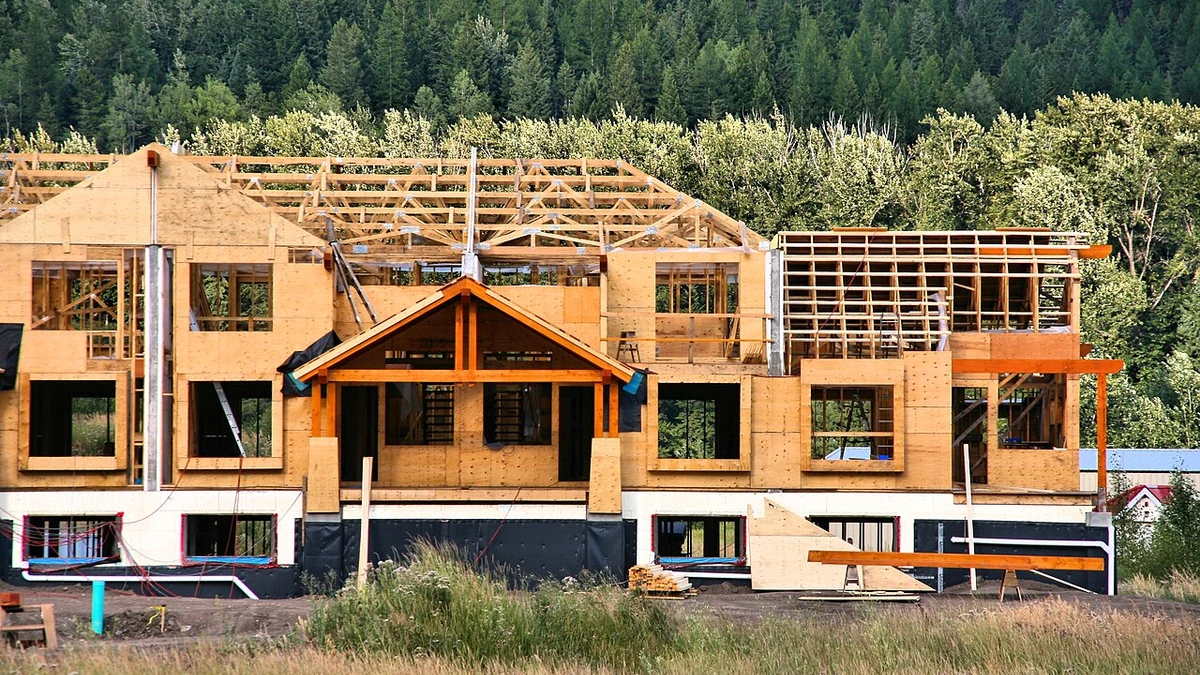
The value of building permits issued across Canada fell 4.1% in September as a pullback in plans for multi-unit housing outweighed a modest improvement in single-family construction intentions. The decline interrupted an uneven stretch for planned building activity and showed that developers were seeking approval for less residential work than a month earlier.
Municipalities issued permits worth C$12.9 billion, down C$552.8 million from August, according to Statistics Canada figures released Thursday. Residential permits accounted for C$475.7 million of the drop, with the non-residential sector contributing a smaller C$77.1 million decline. The figures measure the value of authorized construction rather than spending on projects already underway.
The Statistics Canada report showed a 4.5% monthly decline after adjusting for construction-price changes, somewhat larger than the 4.1% drop measured in current dollars. On that constant-dollar basis, total permit values were still 1.9% higher than a year earlier. The month-to-month setback therefore does not, by itself, establish a sustained decline in real construction intentions.
Building permits offer an early view of developers’ plans, but an approved project may start later, change in scope or never be built. Changes in the value of large apartment complexes, public facilities and industrial projects can also make the monthly totals volatile. September’s numbers are most revealing when the residential and non-residential categories are examined separately.
Multi-family permits account for the residential setback
Residential permit values declined 5.8% to C$7.8 billion in September. The entire net reduction came from multi-family projects, including apartment buildings, condominiums and other developments with more than one dwelling. Permits for that category fell C$529.3 million to C$5.1 billion, more than the overall C$475.7 million residential decline.
The difference reflects a modest rise in plans for single-family dwellings. Those permit values increased C$53.6 million to C$2.7 billion, partly offsetting the downturn in larger developments. The contrast matters because a fall in total residential approvals does not mean every part of the housing market weakened at the same time. It was the apartment and other multi-unit segment that drove September’s national result.
British Columbia accounted for C$292.1 million of the drop in multi-family permits, followed by Alberta with a C$186.8 million decrease. Together, the two western provinces represented most of the national decline in this category. Statistics Canada said eight provinces and one territory contributed to the reduction, so the weakness extended beyond the two largest contributors.
Single-family permitting followed a different regional pattern. Ontario recorded a C$103.3 million increase, the main driver of the national improvement. That gain was partly offset by declines elsewhere, including C$20.0 million in British Columbia. The result underscores why national housing-permit figures should not be treated as a uniform reading on the appetite to build homes across Canadian markets.
For builders and suppliers, the distinction between single-family and multi-family intentions is consequential. A large apartment project typically involves more housing units, longer planning horizons and different financing arrangements than an individual detached home. A monthly fall in multi-family permit value could reflect the timing of a few sizable approvals as well as more general caution about proposed developments. The release does not establish which factor dominated the September movement.
Institutional projects pull non-residential approvals lower
The non-residential side of the construction pipeline also weakened, although less sharply. Permit values slipped C$77.1 million to C$5.1 billion as a decline in institutional projects outweighed gains in industrial building plans. Institutional permits, which cover facilities such as schools, hospitals and government buildings, fell C$171.5 million to C$1.6 billion.
Quebec had the largest institutional decrease at C$95.5 million, followed by Saskatchewan at C$43.6 million and Alberta at C$39.3 million. Eight provinces and one territory contributed to the retreat in this category. Given the scale of individual public-sector facilities, the timing of their approvals can exert an outsized influence on a month’s national non-residential total.
Industrial permits moved in the opposite direction, rising C$90.9 million to C$1.3 billion. Ontario added C$299.2 million and Nova Scotia gained C$128.1 million in industrial intentions, but those increases were substantially offset by declines of C$164.1 million in Quebec and C$119.8 million in Alberta. The uneven distribution suggests a changing mix of projects rather than a broad rise in industrial construction plans across the country.
Commercial permits provided some support as well. Seven provinces contributed increases in that category, led by a C$50.6 million gain in Alberta. Taken together, the three non-residential components show why the overall sector decline was limited: lower institutional approvals were partly absorbed by increased industrial and commercial intentions.
Quarterly figures and housing starts show a mixed picture
September completed a third quarter in which the total value of Canadian building permits fell C$1.5 billion, or 3.6%, from the previous quarter to C$38.8 billion in current dollars. Adjusted for price changes using 2023 dollars, the decline was steeper at 4.8%, leaving a total of C$34.7 billion. The difference between the two measures is important when assessing how much proposed construction activity changed rather than simply the dollar value attached to it.
On that constant-dollar basis, non-residential construction intentions dropped C$1.7 billion to C$13.8 billion during the quarter, their largest quarterly decrease since the second quarter of 2020. An exceptional level of institutional permitting in the previous quarter, including plans for a new hospital in Ontario, helps explain the comparison. Institutional intentions alone fell C$1.5 billion to C$4.6 billion in the third quarter after reaching a record in the second.
Residential construction intentions, by contrast, were virtually unchanged for the quarter at C$21.0 billion in constant dollars. A C$92.5 million decline in single-family permit values was largely offset by a C$80.3 million increase in multi-unit values. That quarterly stability sits alongside September’s sharp monthly decline and cautions against interpreting a single month’s data as the direction of the entire quarter.
The volume of housing units authorized nevertheless provides another measure of the pipeline. Across Canada, permits covered approximately 71,300 single-family and multi-family units during the third quarter, compared with 78,500 during the same quarter a year earlier. Those unit counts are not seasonally adjusted, unlike the principal monthly dollar-value figures, and should not be compared directly with the seasonally adjusted percentage changes.
Actual construction activity is not moving in lockstep with permit values. Separate Canada Mortgage and Housing Corporation data showed that the seasonally adjusted annual rate of housing starts rose 3% in September to 248,896 units from 242,223 in August. Its six-month trend measure edged up 0.6% to 250,411 units. Those readings count homes beginning construction, not permits issued in the same month.
CMHC’s actual, unadjusted counts tell a less encouraging year-over-year story. In centres with populations of at least 10,000, September housing starts totaled 19,984 units, down 11% from 22,375 a year earlier. Starts in those centres during the first nine months of 2026 numbered 170,964, 4% below the comparable period of 2025. The two housing data series can diverge because project approvals and construction starts occur at different stages and on different schedules.
Statistics Canada is scheduled to release October building-permit figures on December 11. That report will help show whether the September decline in multi-family construction intentions persisted or reflected the uneven timing of major approvals.
More News



Latest News
View all news- National Vision More Than Doubles Adjusted Earnings Per Share but Cuts Sales Outlook
- U.S. Existing-Home Sales Plunge 5.5% to Lowest Level Since 2010
- Chicago Fed Releases New Reading on U.S. Financial Conditions
- Fed Governor Barr Warns AI Could Widen Wealth Inequality
- Dutch Business Bankruptcies Surge 27% in October, Official Data Shows