
Bank of England, Singapore and Thailand Central Banks Report Successful Cross-Border FX Settlement Tests
Project Meridian FX APAC linked three wholesale settlement test environments, demonstrating coordinated currency payments and liquidity-saving netting without launching a live service.
Our editorial standards
MarketReview publishes clear, independently produced financial information using reliable sources and transparent editorial standards.
Read our Editorial Policy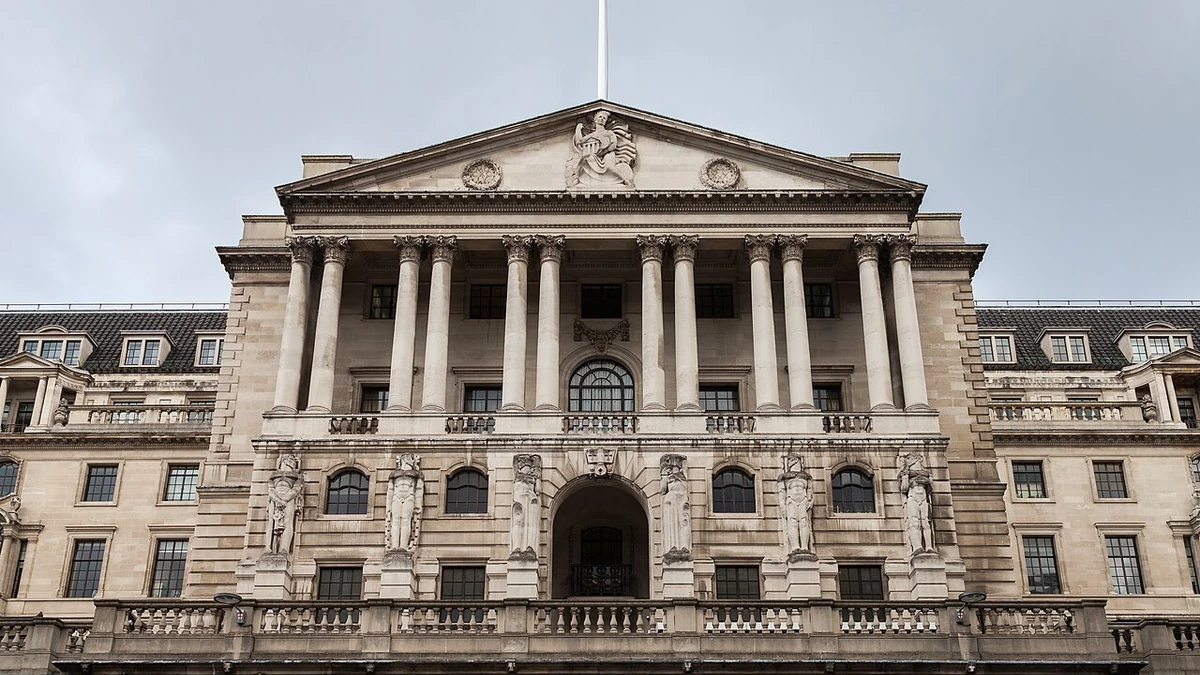
The Bank of England, Monetary Authority of Singapore and Bank of Thailand said on November 13 that a joint experiment had successfully coordinated foreign-exchange settlement across wholesale payment systems built on different technologies. The results demonstrate a way to link central bank money transfers without requiring all three jurisdictions to adopt the same settlement platform.
Called Project Meridian FX APAC, the trial tested payment-versus-payment settlement, which links the two currency payments in an FX trade so that one does not proceed without the other. It also demonstrated multilateral net settlement across three test systems, allowing offsetting payment obligations to be settled using less liquidity. The work was conducted in experimental settings and did not launch a live international FX service.
Partior, the project’s technology partner, developed and tested the coordinating prototype alongside the central banks. The Bank of England’s technical report explains how the operator handled settlement instructions across systems with materially different capabilities. The approach offers an alternative to requiring participating institutions to migrate to a single ledger.
Technical compatibility addresses only part of the problem. In a conventional FX trade, a bank can face a loss if it delivers one currency but does not receive the other. According to Bank for International Settlements research based on its 2025 survey, more than $1.4 trillion, or 10% of average daily FX settlement in April of that year, remained fully exposed to this risk through gross bilateral settlement. A method that links both payments addresses that specific vulnerability, although a successful test does not establish how much risk a future service would remove.
Three different settlement systems, one coordinating operator
Three contrasting infrastructures were deliberately selected. The Bank of England used its Synchronisation Lab, which models a traditional real-time gross settlement system. Thailand’s Project SAN represented a centrally managed tokenised payment system with an interoperability layer, while Singapore’s SGD Testnet provided a shared-ledger environment for wholesale central bank digital currency. Singapore’s testnet was used in a non-live configuration for this project.
Rather than move the currencies onto a new common platform, the synchronisation operator received and matched the instructions for each leg of a proposed FX payment. It then arranged for the necessary funds to be reserved, checked that each participating system was ready, and instructed settlement once the required conditions were met. The operator used system-specific adapters to communicate with the different platforms.
Those differences mattered in practice. On the Bank of England’s test system, funds could be earmarked in a participant’s account. The Thai environment used a conditional escrow mechanism, and Singapore’s arrangement used a dedicated wallet to replicate a reservation of funds. This showed that the same overall settlement objective could be reached through different technical methods, but it also introduced different responsibilities for the coordinating operator.
A centrally operated synchronisation service handled the shared workflow, rather than a blockchain replacing the central banks’ ledgers. Its role was to manage the sequence and status of linked payments. That distinction is important for banks considering interoperability: the experiment assessed a coordination layer across existing and emerging settlement models, not the creation of a new shared currency or a universal international payment network.
Netting reduced liquidity needs in the test
For individual FX payments, the trial’s payment-versus-payment process reserved the relevant funds before allowing settlement to proceed. If one leg could not be prepared, the operator could release the reservation on the other side rather than let a payment go through alone. After the technical point of commitment, the system instead continued pursuing completion of the remaining leg, including by retrying instructions after a temporary outage.
A second use case tackled a different cost of FX settlement: the amount of money banks need to have ready. Rather than process every eligible payment separately, the operator grouped non-urgent instructions into settlement cycles and calculated each participant’s net position. Offsetting obligations could therefore reduce the amount that needed to be reserved and transferred. The central banks demonstrated this process across all three test environments, but they did not report a quantified saving that banks could expect in production.
Finding a settlement batch that every system could accept was not automatic. If a participant lacked sufficient funds, the prototype could remove an affected payment from the batch and try again with a smaller set. This iterative approach helped preserve the linked-payment requirement while allowing other eligible payments to proceed, rather than forcing an entire group of instructions to fail.
Engineers also simulated invalid account details, insufficient liquidity and a temporary settlement-system outage. The reported tests either completed linked settlement or withdrew it before commitment, avoiding a result in which just one currency leg settled. The findings have an important boundary: they did not test all real-world disruptions, including non-overlapping central-bank operating hours and the expiry of reserved funds across time zones.
Legal finality and live operations remain open questions
In its announcement of the results, the Monetary Authority of Singapore described the exercise as a demonstration of technical interoperability, with further work needed on the arrangements for practical use. A working prototype is not the same as agreement among jurisdictions over who is responsible when settlement is delayed, an operator fails or a payment instruction becomes irrevocable under local law.
Technical atomicity and legal settlement finality are not interchangeable, the accompanying policy report cautions. A coordinated workflow may be designed so that linked payments succeed together, but each domestic system has its own rules governing when a transfer becomes final. A live cross-border service would need clear and enforceable treatment of those events, including during outages, insolvency or disputes.
Oversight would also depend on precisely what the operator does. A service that merely matches instructions and monitors reserved funds raises different issues from one that temporarily holds funds or calculates the net amounts owed by participating banks. Some of the escrow and netting functions used in the experiment were specific design choices, not necessary features of every potential synchronisation arrangement. Central banks would still need to settle questions about access, governance, data sharing, resilience and accountability before operational deployment.
Australia’s Reserve Bank and Bangko Sentral ng Pilipinas contributed as observer central banks to the policy work. Their participation broadened the examination of how the model could operate across legal and supervisory regimes, but neither was described as running one of the three settlement test systems.
For the Bank of England, the results feed into its wider plan to launch a live synchronisation interface in 2028. That target applies to the Bank’s planned capability, not a commitment that the three-country FX arrangement tested under Meridian FX APAC will enter production in that year. The participating authorities identified further work on additional jurisdictions, currencies and payment scenarios, alongside the operating and legal arrangements needed to connect real wholesale settlement systems.
More from Banking



Latest News
View all news- Vertiv Raises Annual Dividend 60% to 40 Cents a Share
- Swiss Dental Company vVARDIS Prices $175 Million U.S. IPO at $18 a Share
- Florida Man Pleads Guilty in $42 Million Medicare Fraud Scheme
- Dutch Mothers’ Employment Income Falls 33% After First Child, New Study Finds
- Danish Disposable Income Rose 4.5% in 2025, New Official Data Show
