
Fed Governor Waller Calls for Stronger Legal Clarity Around Tokenized Payments
Federal Reserve Governor Christopher Waller said tokenized payment markets need clear rules for ownership, custody and settlement, while traditional payment rails will remain important.
Our editorial standards
MarketReview publishes clear, independently produced financial information using reliable sources and transparent editorial standards.
Read our Editorial Policy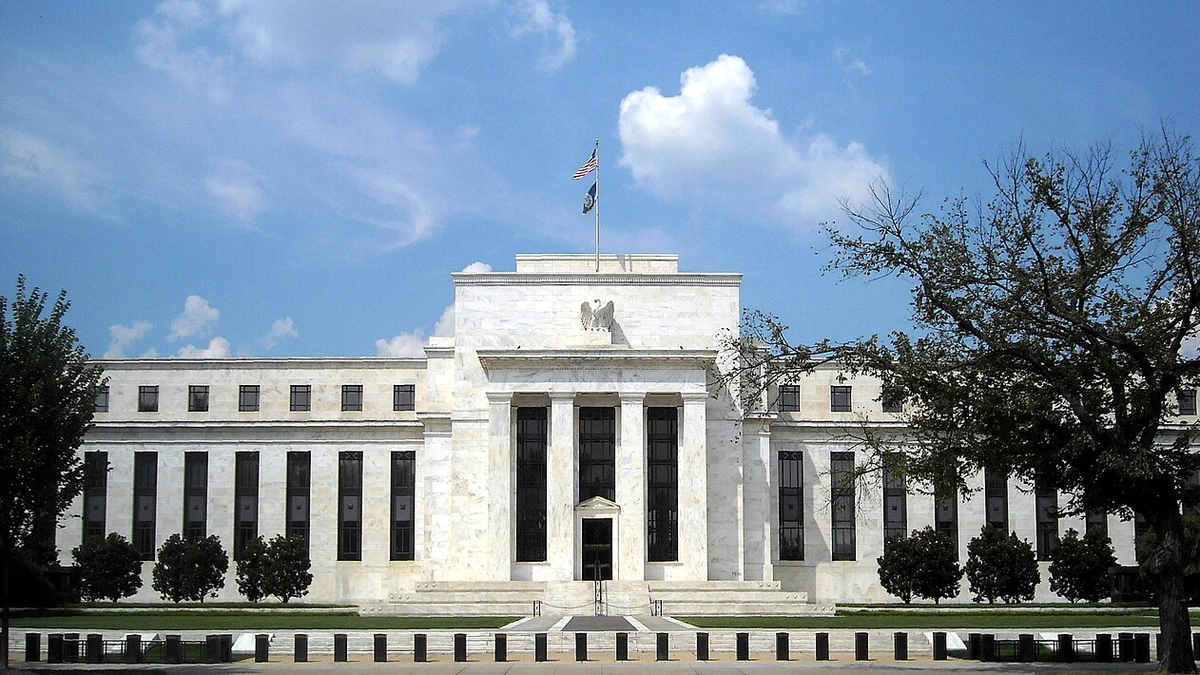
Federal Reserve Governor Christopher Waller said Tuesday that tokenized payment markets need clearer legal foundations before banks and other major financial institutions can rely on them at scale. Ownership rights, custody arrangements and the treatment of assets when a platform fails cannot be settled by computer code alone, he argued.
In remarks delivered November 17 at The Clearing House’s annual conference in New York, Waller described a payments industry in which blockchain-based systems are moving closer to conventional banking and securities markets. Digital tokens can make transfers programmable and allow trading outside ordinary business hours, but those features also create questions about who is responsible when an automated process goes wrong.
The speech was a discussion of market design and the Federal Reserve’s supporting role, not an announcement of a new regulation or a proposal to launch a central bank digital currency. Waller emphasized that private companies will develop competing payment services, with trust and dependable governance determining which approaches gain widespread use.
Tokenized assets still need enforceable legal rights
Tokenization makes an existing financial instrument usable on a new platform by representing it digitally. A share, bond or other asset may move through blockchain infrastructure, yet the technology does not by itself determine the underlying legal claim. That becomes more complicated when an asset passes between networks run by different operators.
In his prepared speech published by the Federal Reserve, Waller identified questions that have to be resolved as conventional assets migrate onto tokenized platforms. Legal identity and ownership rights must carry across networks, along with the asset’s economic terms and compliance obligations. He also pointed to the treatment of settlement records, custody, insolvency and the resolution of failed institutions or systems.
Those are practical concerns for a bank holding assets on behalf of customers or an investment manager using tokenized securities. If a platform’s records show that a token has changed hands, the parties still need to know whether the transfer settles the legal obligation. If an intermediary fails, a customer must be able to establish what property or claim it owns and how that claim would be handled. The answers depend on governance and applicable law, not just the accuracy of a digital ledger.
Accountability becomes especially important when smart contracts execute actions automatically. Waller asked who would be responsible if a fraudster exploited such code, a private key was lost or compromised, or an erroneous transfer could not readily be reversed. He also raised the possibility of assets becoming stranded on blockchains that cease to function as useful markets. Such failures could leave customers with technical evidence of ownership but an uncertain route to recovering value.
The Fed governor’s point was not that every tokenized service faces the same legal problem. He argued that different uses may warrant different levels of control. Systems supporting financially important activity, for example, may place more weight on privacy and safeguards than on unrestricted access for software developers. The larger obstacle to adoption is uncertainty about how responsibilities and rights will hold up when a service is tested.
Digital payment choices expand without replacing existing rails
The legal questions arise as payment providers develop ways to settle purchases of tokenized assets. Waller discussed stablecoins, tokenized commercial bank deposits and tokenized money market funds as distinct instruments that could help move value across new platforms. A tokenized security needs a payment method alongside it, and the two sides of a trade have to meet reliably.
Stablecoins and tokenized deposits can both support programmable transfers, but Waller stressed that their issuer arrangements, regulatory treatment and connections to traditional systems are different. One payment instrument may suit international corporate payments, while another may better serve the settlement of high-value securities. A bank, fund manager or corporate treasury could therefore use several methods rather than placing every payment on a single network.
Speed and timing are part of the appeal. Waller offered the example of an investor buying a tokenized stock on a Saturday, when many established markets and payment systems are closed. If the asset and the payment are designed to change hands together, automation may reduce delays and the risk of one party delivering without receiving what it is owed.
That simultaneous exchange is often called atomic settlement. Waller warned against treating it as the answer to every market’s needs. Large financial markets also use net and batch settlement, which reduce the amount of cash participants must have available at a given moment. For firms making many payments, conserving liquidity can matter as much as completing each transfer individually and immediately.
Existing payment infrastructure also remains central to his outlook. Waller said conventional large-value and instant-payment rails provide a tested foundation for transferring money, including through their links to central bank funds. Central bank money does not have to appear on every new platform, in his view, but it remains essential to confidence in the broader payment system.
That position leaves room for private tokenized services without assuming that all dollars will migrate to blockchains. Traditional networks already help users move funds into and out of stablecoins and support settlement involving tokenized deposits, he noted. The important question is whether those connections can operate safely as financial institutions use more than one form of money.
Waller sees the Fed as an infrastructure provider and convener
Competition is reshaping who builds payment networks. New blockchain firms can offer systems that operate continuously and make automation easier to develop. Established financial institutions bring customer relationships, operational experience and existing market infrastructure. Some are developing private networks, others are forming industry partnerships, and some are working directly with newer technology providers.
Waller did not identify a single model that the industry should adopt. Open and more tightly controlled networks can serve different needs, and firms will have to judge the tradeoffs between access, privacy and reliability. The governor framed trust as something built through dependable performance and clear responsibility over time, not through a technical claim that a ledger is secure.
His remarks also drew on discussions with payment companies and financial-market participants, including a Federal Reserve roundtable with representatives of traditional and decentralized finance in September. Those conversations are helping the central bank understand where payment innovation is encountering barriers and where common approaches might be useful.
For the Fed, Waller described a supporting rather than a market-directing role: maintain core payment and settlement infrastructure, monitor risks to financial stability and work with industry when problems are difficult for individual firms to solve. He said the central bank can help convene participants where a challenge falls within its mandate, while private firms compete to build products and services.
Waller did not specify a regulatory timetable or commit the Fed to a new tokenized settlement platform. His immediate emphasis was on continuing discussions about how payment networks connect and how firms can move between different forms of money without weakening the legal certainty or trust that existing markets depend on.
More from Banking


Latest News
View all news- Walmart Raises Full-Year Outlook After Revenue Climbs 5.2% in Third Quarter
- Treasury Sanctions Alleged Crypto Scam Operator, Firms and Myanmar Commanders
- Fed Vice Chair Jefferson Warns AI Investment Could Raise Inflation Before Productivity Benefits Emerge
- U.S. Natural Gas Storage Rises by 20 Billion Cubic Feet, EIA Reports
- GAO Questions Cost Controls on $45 Billion U.S. Immigration Detention Funding
