Bendigo Bank Ordered to Pay A$8 Million Over Cybersecurity Failures
The Federal Court approved the penalty after the Australian bank admitted accountability breaches linked to a 2023 attack on its former Alliance Bank business.
Our editorial standards
MarketReview publishes clear, independently produced financial information using reliable sources and transparent editorial standards.
Read our Editorial Policy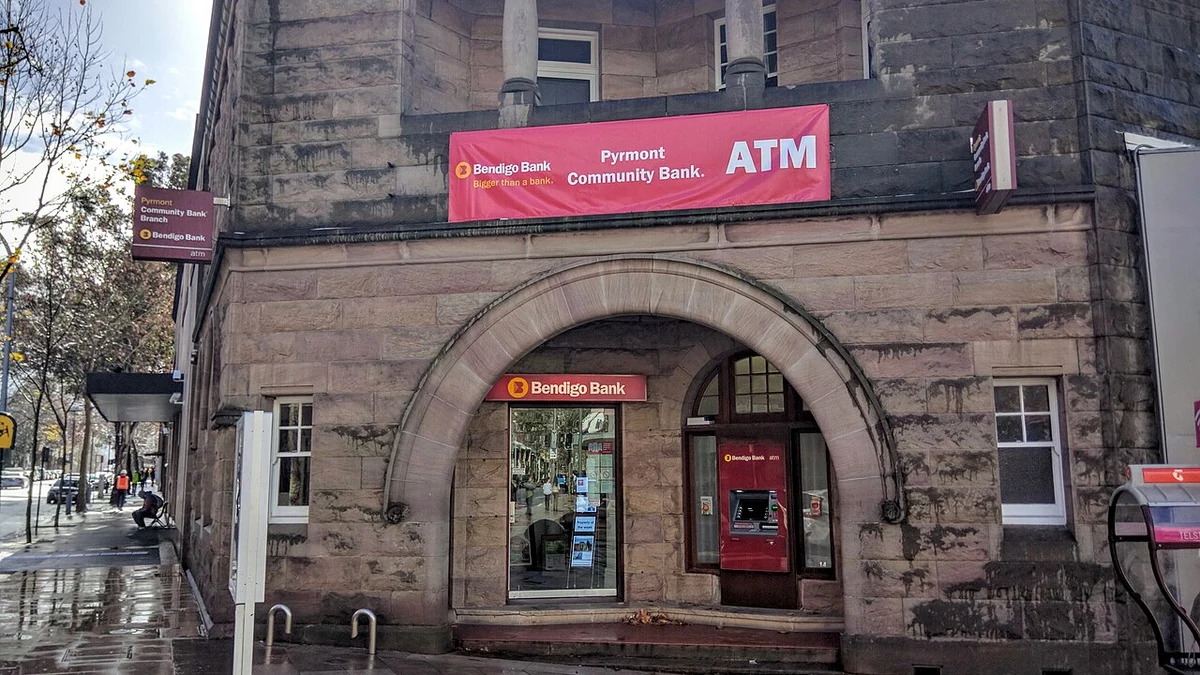
Australia’s Federal Court ordered Bendigo and Adelaide Bank to pay A$8 million in penalties on Tuesday over cybersecurity and management failures associated with a March 2023 attack on its former Alliance Bank business. The bank admitted breaching provisions of the Banking Act that governed the responsibilities of banks and their senior executives.
The decision formalizes the penalty that Bendigo Bank and the Australian Prudential Regulation Authority (APRA) agreed to propose in August. The bank had already reimbursed affected customers and taken the systems involved out of service. The proceedings concerned deficiencies that existed between 2020 and 2023, rather than a newly discovered security breach.
In its announcement of the court orders, APRA said the attacker accessed about 257 accounts. Unauthorized transactions numbered 286 and amounted to approximately A$490,000, with 87 customers affected. The bank could not recover A$140,000 of the money and covered the outstanding losses itself.
Security weaknesses had been identified before the attack
The case arose from weaknesses in online banking security that APRA said had been present well before the incident. In August, the regulator described inadequate password controls and shortcomings in the design of the system used by Alliance Bank customers. Some of the problems had been identified during security testing in 2020 but remained unresolved when the accounts were compromised in March 2023.
APRA’s case concerned the bank’s handling of known vulnerabilities, not merely the fact that someone had gained access to customer accounts. The findings from 2020 gave Bendigo an opportunity to improve its defenses before the incident.
According to APRA’s account of the ruling, deficiencies extended to the bank’s ability to prevent and detect unauthorized activity, the regular assessment of its security controls and the oversight of the technology supporting Alliance Bank’s online services. The regulator also said the relevant technology operations had not been included in the assigned responsibilities of accountable executives.
Bendigo’s August disclosure identified the affected operations more specifically as Service One Alliance Bank. It said customers elsewhere in the banking group were not affected. That limits the known scope of the incident; the number of compromised accounts should not be confused with the smaller number of customers affected by unauthorized payments. Nor does the amount of the penalty represent the value of the stolen funds.
Penalty already reflected in the bank’s financial results
For shareholders, the November decision resolves a legal matter for which Bendigo had already recognized a cost. In an August 10 announcement to the Australian Securities Exchange, the bank said it expected to recognize the proposed A$8 million penalty and A$2.6 million in associated legal costs as a non-cash item in its financial results for the year ended June 30.
The group’s 2026 annual report subsequently put the after-tax cost of the matter at A$9.8 million. The court’s approval of the previously proposed penalty therefore should not be read as an announcement of an additional A$8 million expense on top of that amount. Recognition of the cost in the accounts is also distinct from the actual payment of the penalty.
Alliance Bank ceased operating in September 2024, according to Bendigo. Chief Executive Richard Fennell said in August that the bank had responded once the incident was discovered and reimbursed customers. The bank reported that the remaining remedial work was finished. APRA likewise said the issues behind the attack had been addressed.
There are broader risk-management costs on Bendigo’s books that are separate from this case. Its annual report describes a program to strengthen its management of non-financial risk following additional conditions APRA imposed on its banking licence in August. The bank estimated that the program would take around three years and cost A$70 million, an amount it included in its 2026 results.
APRA also imposed an A$50 million operational risk capital requirement effective at the start of 2026. Bendigo had estimated that the measure would reduce its common equity tier 1 capital ratio by about 0.17 percentage points. Unlike a fine, that requirement concerns the capital available to absorb risk rather than a payment to the authorities.
Australia’s executive accountability rules have since changed
The legal basis for the A$8 million penalty was the former Banking Executive Accountability Regime (BEAR), not the Financial Accountability Regime (FAR) that now applies to Australian banks. The admitted violations concerned the duty of the bank to exercise due skill, care and diligence in its operations and the obligation to ensure that designated executives’ responsibilities extended across the business.
Australia replaced BEAR with FAR in the banking sector on March 15, 2024. The newer regime is jointly administered by APRA and the Australian Securities and Investments Commission and extends executive accountability requirements beyond banking to insurance and superannuation. Its scope also includes conduct obligations, reinforcing the importance of defining who is responsible for particular areas of a financial institution.
Separate prudential requirements apply specifically to information security. APRA’s CPS 234 standard makes boards responsible for overseeing information security and requires financial institutions to evaluate safeguards for systems managed by related entities or external providers. It also requires systematic security testing based on the risks involved. Those requirements help explain the broader supervisory concern raised by the Bendigo case, although Tuesday’s penalty was imposed for breaches of the former executive accountability regime.
APRA said in August that it no longer had concerns about the adequacy of Bendigo’s information security controls. That assessment was specific to information security; the separate program to strengthen non-financial risk management remains a multi-year undertaking.
More from Banking


Latest News
View all news- Best Buy Raises Annual Earnings Outlook as Quarterly Sales Grow 5.8%
- Analog Devices Reports Record Quarterly Revenue of $4.37 Billion
- Private-Sector Hiring Slows to 21,000 Jobs per Week, ADP Estimates
- UK Retail Sales Return to Growth After More Than Two Years, CBI Survey Shows
- Singapore and Australia Sign Agreement to Enable Cross-Border Carbon Storage