U.S. Durable Goods Orders Rise 0.2% in October as Machinery Demand Strengthens
Machinery orders increased 1.8%, and a key gauge of business equipment demand rose 1.2% despite a decline in transportation equipment orders.
Our editorial standards
MarketReview publishes clear, independently produced financial information using reliable sources and transparent editorial standards.
Read our Editorial Policy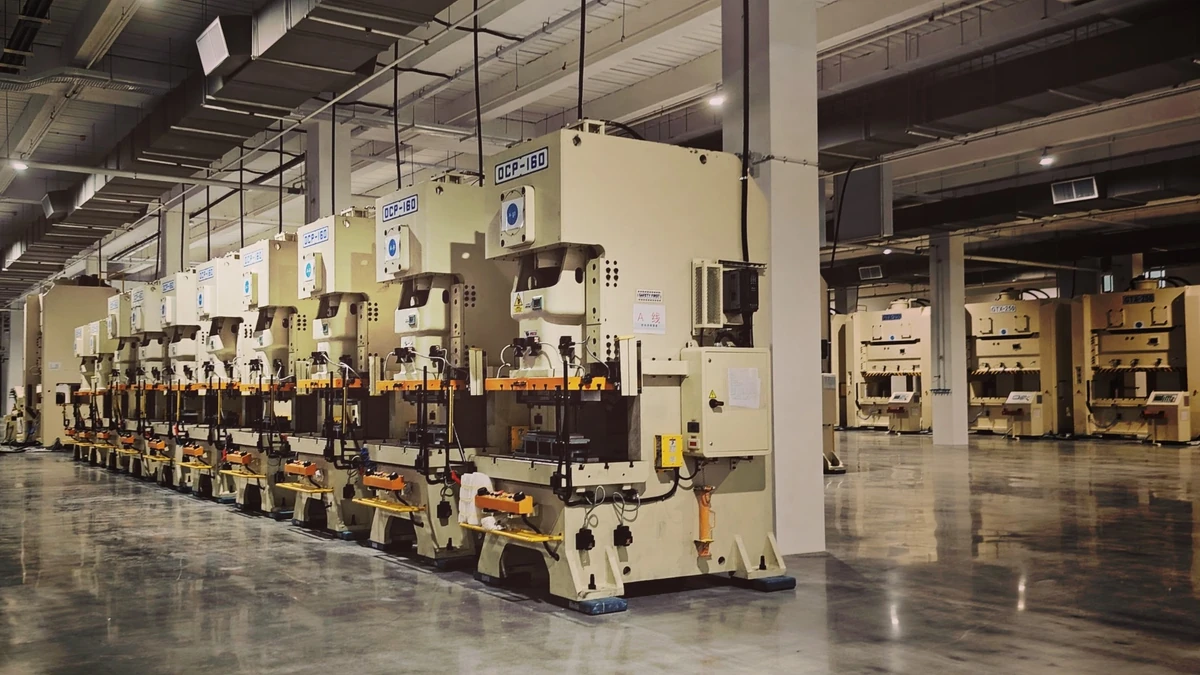
New orders for U.S.-manufactured durable goods rose 0.2% in October to $346.7 billion, with demand for machinery helping offset a decline in transportation equipment orders. The increase was modest compared with September’s revised 2.0% gain, but a separate measure of demand for business equipment strengthened.
October marked the fifth consecutive monthly increase in overall durable goods orders. Factories also shipped more goods and ended the month with a larger backlog, indicating that October’s slower order growth was accompanied by continued growth in the value of deliveries and future work.
In its advance report released Wednesday, the U.S. Census Bureau put machinery orders at $46.8 billion, up 1.8% from September. Orders in that industry have increased in all but one of the past 22 months, a considerably more consistent pattern than the one seen across durable goods as a whole.
Machinery offsets weaker transportation orders
Transportation had been the main contributor to September’s increase, but it weighed on the October total. Transportation equipment orders fell 0.3% to about $120 billion after rising 5.0% the previous month. Motor vehicle and parts orders were up 0.9%, but orders for both civilian and defense aircraft and parts declined.
Excluding transportation, durable goods orders increased 0.5% for a second consecutive month. Fabricated metal products and electrical equipment, appliances and components both recorded gains, although orders for primary metals and the broader computers and electronic products category slipped. The improvement outside transportation was therefore not uniform.
Machinery accounted for an increase of approximately $813 million in orders from September, slightly more than the $775 million net increase across all durable goods industries, according to the report’s detailed tables. Losses elsewhere absorbed part of the industry’s contribution. The contrast is useful in assessing whether the slowdown in overall orders reflects fading demand across factories or weakness concentrated in particular product groups.
Through the first ten months of 2026, machinery orders amounted to $443.3 billion on an unadjusted basis, 13.7% above the corresponding period in 2025. Total durable goods orders were 8.3% higher over the same period. Those comparisons put October’s machinery increase in the context of a longer expansion in the value of incoming work rather than an isolated monthly gain.
Business equipment orders accelerate
Orders for nondefense capital goods excluding aircraft accelerated to a 1.2% monthly increase, reaching $89.4 billion. The revised September increase in the same category was 0.8%.
Often referred to as core capital goods orders, the measure offers a narrower view of prospective equipment spending by businesses. Removing military purchases and civilian aircraft reduces the influence of large, irregular orders that can obscure underlying demand. It does not capture every form of business investment, including spending on buildings and software.
Shipments of core capital goods increased 0.6% in October after a 1.3% gain in September. The distinction between orders and shipments is important for assessing economic activity. A manufacturer can secure a contract months before delivering the equipment, so an improvement in bookings does not necessarily mean an equivalent amount of investment has already taken place. The Bureau of Economic Analysis uses manufacturing data in preparing its estimates of gross domestic product.
The acceleration did not extend to the capital goods sector as a whole. Nondefense capital goods orders including aircraft rose 0.8%, whereas defense capital goods orders fell 3.6%. Taken together, capital goods orders increased just 0.1%. The difference between the overall and core measures highlights why the headline durable goods figure can be a poor guide to the direction of ordinary commercial equipment purchases in any individual month.
Factory backlogs continue to grow
Durable goods shipments reached $338.6 billion in October, 0.5% higher than in September. Primary metals accounted for a sizable portion of the gain in shipments even though new orders in that industry declined. Factories can maintain deliveries by working through orders booked in earlier months, so the two measures need not move together.
Outstanding durable goods orders reached $1.637 trillion at the end of October. Transportation equipment represented about 63% of that backlog, with civilian aircraft and parts alone accounting for roughly $741 billion. Aircraft can take years to build and deliver, so a large backlog can coexist with a decline in new bookings in a particular month.
Machinery manufacturers also ended October with more outstanding work. Their backlog increased 1.1% to $156.7 billion and inventories rose 0.7% to $107.9 billion. For manufacturers, a growing order book can provide some visibility into future sales, although fulfillment still depends on production capacity and the ability of customers to follow through on purchases.
Across durable goods industries, inventories rose 0.4% to $613.3 billion, extending an uninterrupted run of monthly increases to 13 months. The inventory measure covers goods at different stages of production, not simply finished products waiting for buyers. Its growth alone does not establish that factories are accumulating unsold merchandise.
There are limits to what October’s figures reveal about the strength of manufacturing. The Census Bureau adjusts for seasonal patterns but not inflation, so higher order values may reflect prices as well as volumes. Its survey also cannot establish statistical significance using conventional sampling-error estimates, and its new and outstanding order figures exclude semiconductor manufacturing. The October estimates are also subject to revision.
On December 3, the Census Bureau is scheduled to release its full October factory orders report, including nondurable goods and updated figures for durable goods. November’s advance durable goods report follows on December 23.
More News



Latest News
View all news- U.S. Economic Growth Revised Up to 4.3% in Third Quarter
- Mortgage Applications Jump 6.1% Despite 30-Year Contract Rate Reaching 7.38%
- US Weekly Jobless Claims Fall to 189,000 as Continuing Claims Decline
- U.S. Proposes New Tariffs on 14 Trading Partners Following Section 301 Investigations
- FirstEnergy Contributes $300 Million in Stock to Its Pension Trust