
Bank of America Reports $6.9 Billion Third-Quarter Profit
A $1.2 billion regulatory charge cut reported earnings even as lending, net interest income and wealth management revenue grew.
Our editorial standards
MarketReview publishes clear, independently produced financial information using reliable sources and transparent editorial standards.
Read our Editorial Policy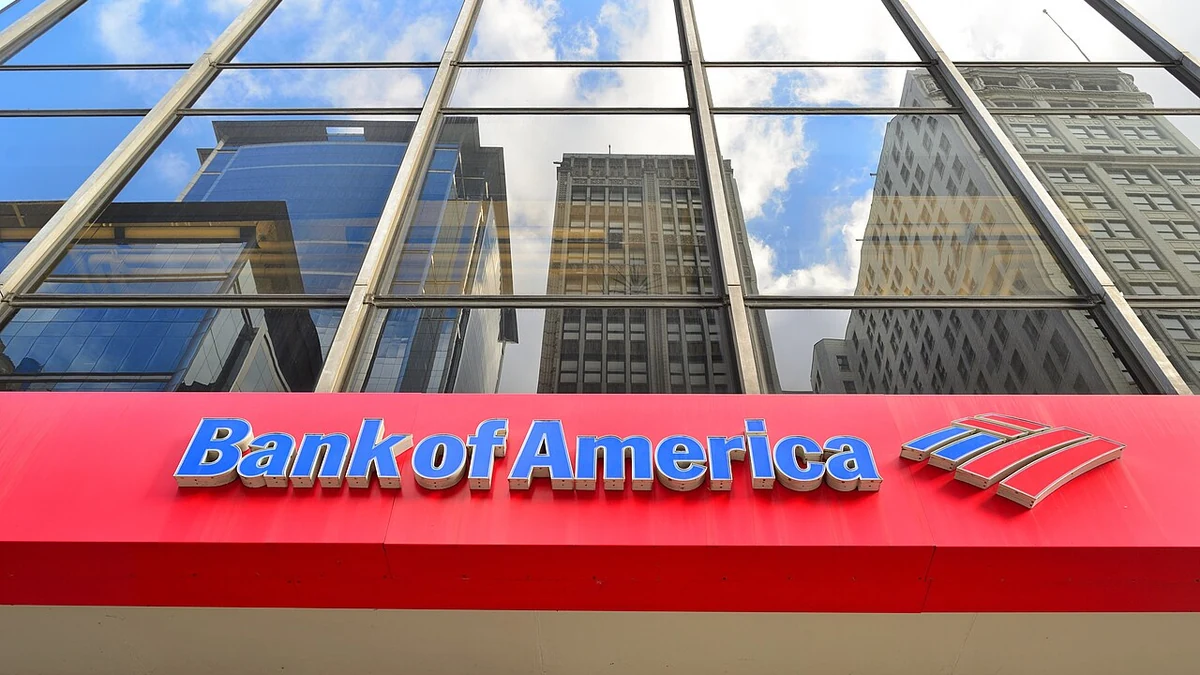
Bank of America reported $6.9 billion in third-quarter profit on Wednesday, down from $8.3 billion a year earlier, after recording a $1.2 billion charge tied to federal regulatory settlements. Diluted earnings were $0.91 per share for the three months ended September 30, compared with $1.04 in the same period of 2025.
The settlement charge accounted for most of the drop in reported profit. Excluding that expense, the bank said adjusted net income was $8.1 billion, or $1.08 per share. Those adjusted figures are non-GAAP measures: profit would still have been slightly below the year-earlier level, although adjusted earnings per share would have been higher.
Revenue offered a different picture of the quarter. It rose 3% to $30.0 billion, supported by lending income and asset management fees, even as trading and investment banking weakened. The contrasting trends in the bank’s third-quarter earnings release help explain why an increase in revenue did not translate into higher reported profit.
A Regulatory Charge Accounts for Much of the Profit Decline
Bank of America recorded the $1.2 billion settlement charge as noninterest expense and said the amount was not tax-deductible. Total noninterest expense increased to $19.7 billion from $17.3 billion a year earlier. Removing the charge produces adjusted expense of $18.5 billion, still above the prior-year figure, so the regulatory cost was not the only source of expense growth.
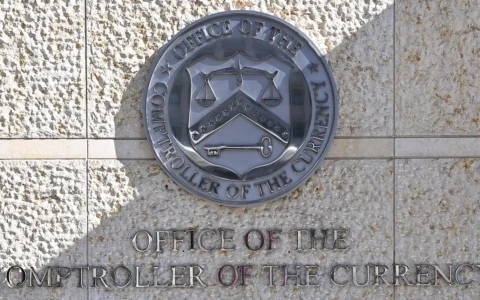
The charge followed enforcement actions announced October 13 over weaknesses in the bank’s anti-money-laundering and sanctions compliance programs. In its announcement of the enforcement actions, the U.S. Treasury Department said the Financial Crimes Enforcement Network assessed a $1.2 billion penalty and the Office of the Comptroller of the Currency assessed a $750 million civil penalty. The OCC said its $750 million assessment is credited against the FinCEN penalty, rather than being an additional $750 million on top of it.
Treasury also announced an $11.6 million settlement with the bank concerning apparent violations of sanctions programs. The enforcement announcement said the bank failed to report more than $5 billion in suspicious activity in a timely manner. That is a finding about reporting and monitoring failures; it does not establish that every payment covered by the figure was criminal.
Regulators have required further remedial work, including a third-party review of past activity and independent assessments of controls. For the earnings comparison, the immediate effect is clear: the charge reduced diluted earnings per share by $0.17, according to Bank of America. The bank’s adjusted presentation removes that specific expense, but its reported $6.9 billion profit includes it.
Loan Growth Lifts Net Interest Income
Net interest income, the difference between interest earned on assets such as loans and interest paid on deposits and other funding, rose 8% to $16.4 billion. Bank of America attributed the increase mainly to higher loan and deposit balances, greater net interest income associated with its markets business, and the repricing of fixed-rate assets. Its net interest yield on a fully taxable-equivalent basis reached 2.16%, up 15 basis points from a year earlier.
Average loans and leases were $1.23 trillion, an increase of 6% from the third quarter of 2025. The bank said average lending had grown sequentially for 10 consecutive quarters. Period-end loans and leases reached about $1.25 trillion, compared with roughly $1.17 trillion a year earlier, a separate measure that also points to an expanding loan book.
Deposits expanded more slowly. Average deposit balances rose 2% to $2.02 trillion, while the amount outstanding at quarter-end was approximately $2.04 trillion. That distinction matters for interpreting the interest-income improvement: the bank benefited from loan growth and asset repricing, rather than relying on a similarly large percentage increase in deposits.
The consumer banking division earned $3.5 billion on $11.6 billion in revenue, with revenue up 4% year over year. The company reported more than 200,000 net new consumer checking accounts during the quarter. Combined credit and debit card spending grew 8% to approximately $266 billion, while average consumer credit card loans increased 5% to about $106 billion. These operating figures suggest customers continued to use the bank’s accounts and cards even though earnings were burdened by the regulatory expense elsewhere in the group.
Wealth Fees Gain as Trading and Investment Banking Slow
Global Wealth and Investment Management was a notable contributor to revenue growth. The division generated $7.1 billion in revenue, up 13%, and net income of $1.5 billion. Asset management fees rose 16% to $4.5 billion, aided by higher market valuations and client asset flows. Assets under management reached $2.4 trillion, an increase of 12% from the year-earlier quarter.
The wealth operation reported $20 billion in assets-under-management inflows during the quarter and $74 billion over the 12 months since the third quarter of 2025. These are flows of client assets, not revenue or profit, but they provide context for the fee growth and show an area of the business whose performance differed from capital-markets activity.
In Global Banking, net income was $2.0 billion and revenue of $6.2 billion was little changed from a year earlier. The bank said higher interest income and treasury service charges were offset by weaker investment banking fees. Firmwide investment banking fees, excluding self-led deals, declined 11% to $1.8 billion, despite an 8% increase in average loans and leases within the Global Banking division.
Sales and trading revenue in Global Markets fell 5% to $5.1 billion. Fixed income, currencies and commodities revenue declined 17% to $2.6 billion, while equities revenue rose 11% to $2.5 billion. That split is important: equities provided some offset, but not enough to prevent an overall decline in trading revenue. The markets division reported net income of $1.2 billion.
Credit Costs Stay Steady as Capital Ratios Ease
Credit-loss expenses did not show the same sharp movement as reported profit. Bank of America’s provision for credit losses was approximately $1.3 billion, little changed from the year-earlier quarter and below the $1.4 billion recorded in the second quarter. Net charge-offs totaled $1.35 billion, down modestly from $1.37 billion a year earlier. The net charge-off ratio fell to 0.44% from 0.47%.
Within credit cards, the charge-off rate declined to 3.22% from 3.46% a year earlier. There was a less favorable comparison in nonperforming loans and leases, which rose to $5.54 billion from $5.35 billion. Taken together, the reported measures do not support describing all parts of the credit portfolio as uniformly stronger, although realized losses were slightly lower.
The bank ended September with a preliminary standardized Common Equity Tier 1 capital ratio of 10.9%, down from 11.2% at the end of June. Average global liquidity sources stood at $914 billion. Bank of America also reported $8.3 billion returned to shareholders during the quarter through common dividends and share repurchases, including about $6.0 billion of stock buybacks.
For subsequent reporting periods, the distinction between ordinary operating expenses and regulatory remediation costs will remain relevant. Treasury’s orders call for an outside review of previously undetected suspicious activity and independent evaluations of the bank’s monitoring, due diligence and data governance. Those requirements extend beyond the single charge reflected in the third-quarter results.
More from Banking


Latest News
View all news- U.S. Inflation-Adjusted Hourly Earnings Fall 0.5% in September
- U.S. Inflation Accelerates to 3.7% as Gasoline Prices Jump 9.1% in September
- Treasury and IRS Propose Stricter Eligibility Checks for Health Insurance Tax Credits
- Morgan Stanley Reports $20.3 Billion in Quarterly Revenue as Wealth Assets Grow
- U.S. Treasury Removes Venezuelan Official Jorge Rodríguez From Sanctions List
