
U.S. Treasury Removes Venezuelan Official Jorge Rodríguez From Sanctions List
The October 14 OFAC update ends a designation imposed in 2018, following the earlier removal of Rodríguez's sister, Delcy, from the same list.
Our editorial standards
MarketReview publishes clear, independently produced financial information using reliable sources and transparent editorial standards.
Read our Editorial Policy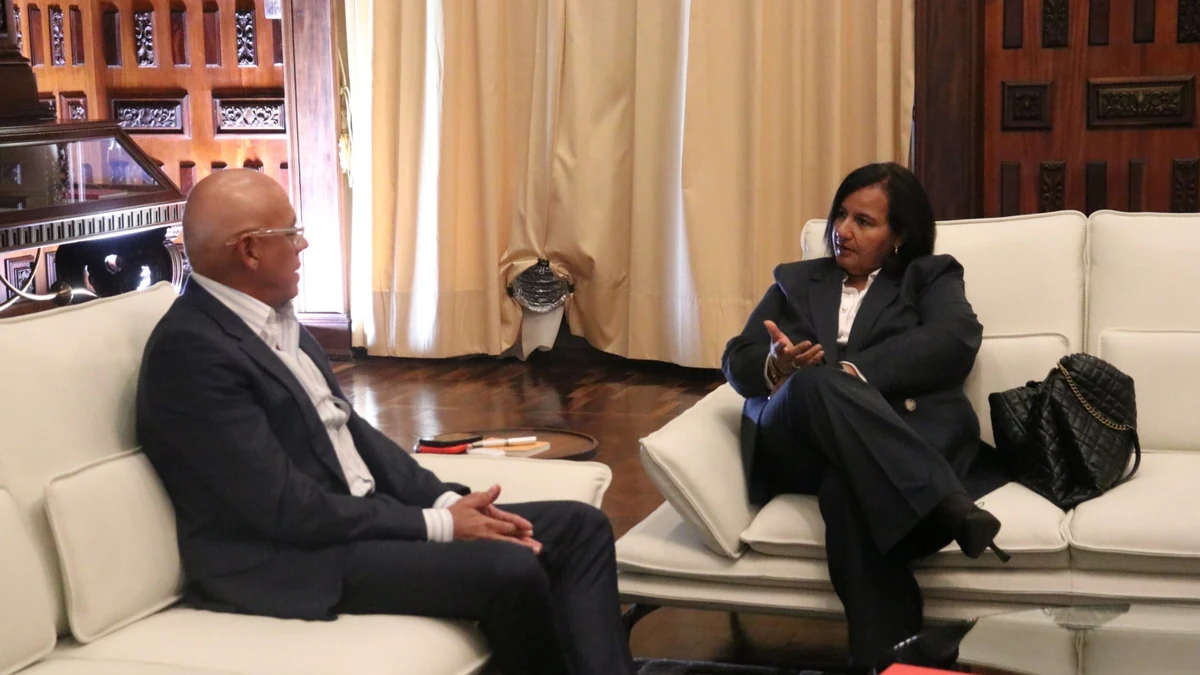
The U.S. Treasury Department has removed Jorge Rodríguez, president of Venezuela’s National Assembly, from its economic sanctions list, ending an individual designation imposed eight years ago. The October 14 decision takes him off the list used by American banks and companies to identify people whose property must be blocked under U.S. sanctions rules.
The Office of Foreign Assets Control (OFAC) did not give a reason for the removal or announce any wider rollback of restrictions on Venezuela. Its update addresses Rodríguez by name, rather than the broader sanctions program, and comes about six months after the agency removed his sister, acting President Delcy Rodríguez, from the same list.
An individual designation dating to 2018
In its October 14 sanctions-list notice, OFAC identifies the Venezuelan official as Jorge Jesús Rodríguez Gómez. The record also deletes entries under several variations of his name, including Jorge Rodríguez and Jorge J. Rodríguez Gómez. The multiple lines refer to the same person, not several officials separately cleared of sanctions.
Rodríguez was designated on September 25, 2018, when the first Trump administration imposed sanctions on four figures it described as members of then-President Nicolás Maduro’s inner circle. Those included Rodríguez, Delcy Rodríguez, Cilia Flores de Maduro and Defense Minister Vladimir Padrino López. At the time, the Treasury said the officials occupied positions that helped Maduro retain political control.
The 2018 announcement described Jorge Rodríguez as Venezuela’s minister of communication and information, a post he had taken in late 2017. It also recorded his earlier service as mayor of Caracas’s Libertador district and as the country’s vice president in 2007. His position has since changed: he now presides over the National Assembly, giving the removal relevance beyond his personal financial status.
Treasury’s original action was part of a wider campaign directed at officials and networks that the U.S. government accused of facilitating corruption and undermining democratic institutions. Those allegations were the U.S. government’s justification for the measures at the time. Wednesday’s deletion should not be read as a published reversal of those findings, because OFAC offered no such explanation.
What removal means for U.S. financial dealings
Placement on OFAC’s Specially Designated Nationals and Blocked Persons List, usually called the SDN List, carries direct legal consequences. U.S. persons generally cannot conduct dealings with a listed person, and assets in the United States or under the possession or control of U.S. persons must be blocked. Banks and other businesses use the list as part of their sanctions-screening systems.
Removing Rodríguez’s listing eliminates the prohibitions that applied solely because he was personally designated under that entry. OFAC guidance also says a separate sanctions license is not required to release property when the person whose interest caused the block has been delisted. Whether a particular asset or proposed payment can actually be released or processed may still depend on other applicable restrictions and the facts of the case.
That distinction is especially important for organizations with links to Venezuela. OFAC rules can block an entity even when the entity does not have its own SDN entry, including when blocked persons own at least 50% of it in the aggregate. A change in one individual’s status does not automatically erase an independent restriction on a company, a counterparty or another designated owner.
For financial institutions, the practical task is to reconcile the newly deleted identifiers with existing customer and payment records, while keeping other screening obligations in place. OFAC’s notice lists Rodríguez’s aliases and identifying information for that purpose. It does not say that a particular bank account has been unfrozen or that any specific commercial arrangement has received U.S. approval.
The removal is also confined to the sanctions listing addressed in the notice. It makes no announcement about Rodríguez’s U.S. visa status, travel eligibility or any separate legal matter. Those issues are governed by their own rules and cannot be resolved from an SDN-list update alone.
A second Rodríguez delisting amid changes to Venezuela policy
The October decision follows an April 1 OFAC notice that removed Delcy Eloína Rodríguez Gómez, Jorge Rodríguez’s sister, from the SDN List. That earlier notice likewise presented a deletion rather than a detailed policy statement. The two actions involve prominent officials in Venezuela’s current leadership, but neither document establishes why Treasury chose those particular dates or whether the removals were negotiated together.
Reuters reported on Wednesday that Rodríguez was due to lead another round of U.S.-backed talks with an opposition faction, covering political changes intended to precede eventual elections. The news agency said there was still no fixed election date. That is relevant diplomatic context for the sanctions decision, but the OFAC announcement itself does not connect the delisting to those talks or specify any condition agreed by the participants.
During 2026, Washington has also revised the rules governing certain economic activities involving Venezuela. OFAC’s September 28 update, for example, issued amended general licenses covering specified Venezuelan-origin oil and petrochemical activity, the supply of certain goods and services, and negotiations for some contingent investment contracts. Those authorizations apply to defined activities and conditions; they are a different legal mechanism from taking an individual off the SDN List.
The distinction matters to companies assessing business opportunities in the country. An individual delisting changes how firms screen that person, whereas a general license sets out which otherwise restricted activities may proceed within its terms. Neither should be described as permission for all dealings with Venezuela, and both require attention to the remaining sanctions framework.
The removal may make direct financial engagement with Rodríguez less constrained under U.S. sanctions law, but the notice does not establish a new investment agreement, a change in Venezuela’s government or an election timetable. It is a concrete adjustment to one official’s status on a U.S. enforcement list. The wider political implications depend on developments that Treasury has not set out in the published record.
In 2018, Treasury said restrictions under the Venezuela program did not have to be permanent and could be reconsidered in response to meaningful changes in conduct. The agency did not invoke that earlier policy language in Wednesday’s notice or identify any specific actions by Rodríguez as the basis for delisting. For now, the confirmed outcome is the removal of his SDN entries while other Venezuela-related sanctions and targeted authorizations continue to operate.
More News


Latest News
View all news- OCC Report Finds Restrictive Banking Policies at Nine Major U.S. Banks
- Morgan Stanley Reports $20.3 Billion in Quarterly Revenue as Wealth Assets Grow
- Federal Reserve Researchers Examine Liquidity Risks as Retail Investors Enter Private Credit
- CMS Says Duplicate Health Insurance Subsidy Checks Could Save $1.5 Billion Annually
- BlackRock Assets Reach $15.5 Trillion After $205 Billion in Quarterly Net Inflows
