
Federal Reserve Researchers Examine Liquidity Risks as Retail Investors Enter Private Credit
A new Federal Reserve staff note says semiliquid funds have become a fast-growing path for retail investors into private credit, raising questions about redemptions, valuations and credit cyclicality.
Our editorial standards
MarketReview publishes clear, independently produced financial information using reliable sources and transparent editorial standards.
Read our Editorial Policy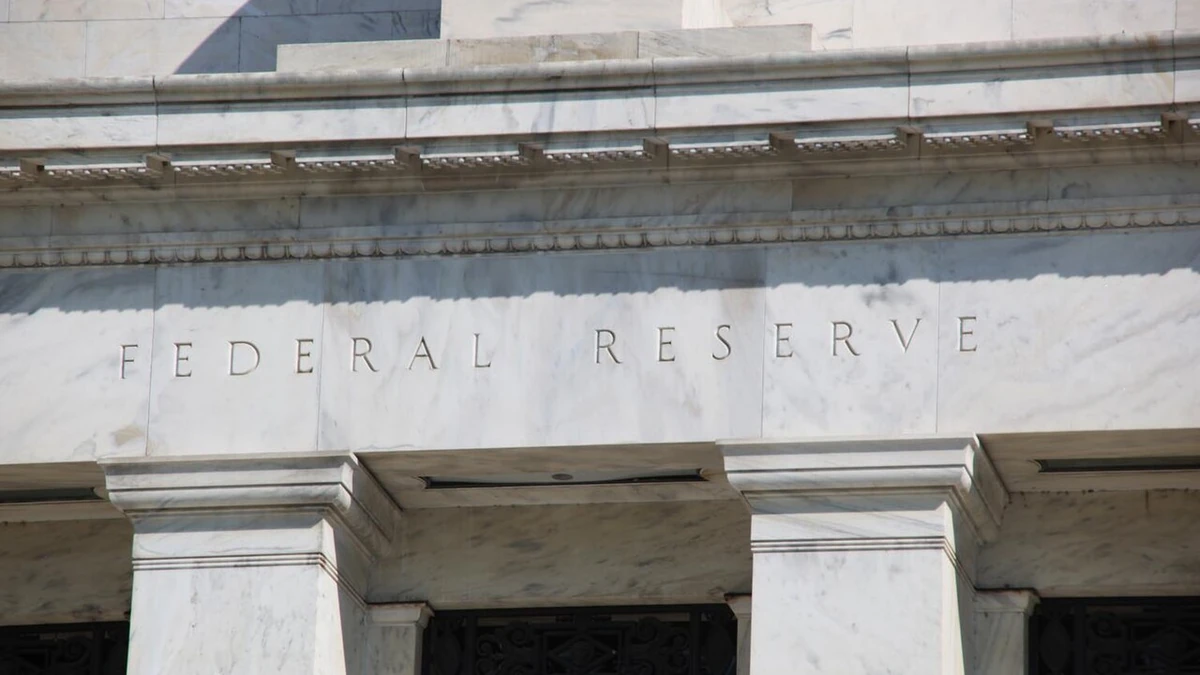
Federal Reserve researchers are taking a closer look at how quickly retail money is moving into private credit, and what that shift could mean for liquidity when investors want out. In a FEDS Notes paper published on October 14, Logan George and Chaehee Shin examined the rapid growth of so-called semiliquid funds, vehicles that give individual investors periodic redemption opportunities while investing heavily in assets that are harder to sell quickly.
The study does not announce a new Federal Reserve rule, and it does not argue that a broad market disruption is already under way. Its contribution is narrower, but still important for investors and policymakers: it lays out how interval funds, tender offer funds and non-traded perpetual-life business development companies are becoming a larger channel for retail access to private markets, especially private credit, and why that could change how stress shows up in the sector.
Semiliquid retail funds have grown rapidly
According to the Federal Reserve research note, total net assets in the three main semiliquid fund categories climbed from $15 billion in 2018 to $388 billion in 2025. The authors said that pace far exceeded growth in the broader mutual fund market over the same period, showing how asset managers are increasingly using these structures to bring retail capital into private-market strategies.
The paper focuses on interval funds, tender offer funds and non-traded perpetual-life BDCs. All three are closed-end structures, which means they are not subject to the same 15% illiquid-asset cap that applies to traditional open-end mutual funds. That makes them more suitable for holding private loans, private equity interests, real estate exposures and other assets that cannot always be sold on short notice at transparent market prices.
Private credit sits at the center of the shift. The researchers found that private credit accounted for 49.5% of aggregate interval-fund holdings as of the fourth quarter of 2025. In non-traded BDCs, loans made up 93.4% of portfolios. Interval funds alone held average net assets of $882 million in the sample, while the average non-traded BDC was much larger at about $3.1 billion.
The note argues that this matters because the retail investor base behaves differently from the institutional capital that has long dominated private markets. Pension funds, endowments and other large allocators typically commit money for long periods. Retail investors, by contrast, may expect more regular access to cash, even when the underlying assets are relatively illiquid and are valued less frequently than public securities.
Why liquidity design matters in private credit
The fund structures studied by the Fed are not fully liquid, but neither are they fully locked up. That middle ground is the source of both their commercial appeal and their risk. Interval funds usually offer repurchases at set intervals, often quarterly, and must repurchase at least 5% and as much as 25% of shares during each offer period. Tender offer funds often run on a similar timetable, but their boards have more discretion over when and how much to repurchase. Non-traded BDCs often use capped repurchase programs that can also be modified or suspended.
That means investors can request liquidity, but only within limits. The SEC’s investor bulletin on interval funds notes that repurchase offers are periodic rather than daily, and that if requests exceed the amount a fund is offering to buy back, investors may be repurchased only on a pro rata basis. In practice, an investor who wants to exit may get back only part of the requested amount and may need to wait for a later window to redeem the rest.
The Fed researchers said interval funds held short-term liquid assets equal to 3.0% of holdings at the end of 2025, versus 8.8% for tender offer funds and just 0.2% for non-traded BDCs. The lower cash buffers do not automatically mean a problem is imminent, because some of these vehicles rely on loan repayments, interest income and committed facilities to meet ordinary redemptions. Even so, the paper argues that the structure leaves important questions about how these funds would behave under heavier and more prolonged stress.
One issue is valuation. Private credit assets usually do not trade in continuous public markets, so their valuations rely more on models, manager judgment and less frequent comparison points than public bonds or exchange-listed loans. If investors begin to think those valuations are lagging a downturn in public markets, they may have an incentive to submit redemption requests sooner rather than later. The paper points to the possibility that perceived mispricing can reinforce investor outflows rather than calm them.
Researchers point to queues, gating and a more cyclical credit supply
The note draws a distinction between classic open-end fund runs and what stress may look like in semiliquid private-market vehicles. Because redemption terms are capped, the risk may emerge less as an immediate dash for the exits and more as a queue. When requests exceed a fund’s preset repurchase limit, some investors may have to wait through prorating or carry-forward mechanisms before recovering their cash.
George and Shin wrote that early 2026 provided examples of elevated redemption requests at large private credit managers’ retail vehicles. Those requests exceeded existing repurchase limits, leading to prorated withdrawals and unfulfilled requests being carried forward. The authors said such episodes suggest that current liquidity-management tools may absorb moderate stress, but that their performance in a deeper, broader downturn is still uncertain.
The paper also compares the current setup with earlier pressure on non-traded private REITs between 2022 and 2024. In those cases, major funds imposed gating as withdrawal requests climbed faster than cash on hand. The authors say that episode shows how redemption friction in semiliquid products can take months or even years to clear, especially when the underlying assets are sound but not easily sold and when private valuations adjust more slowly than public-market benchmarks.
For private credit itself, the broader implication is that a market once funded mainly by locked-up institutional capital could become more sensitive to sentiment, performance and retail withdrawal behavior. The Fed note suggests that if retail flows become an important driver of asset growth and shrinkage, the supply of credit to private companies may become more procyclical. Money could arrive quickly when returns look attractive and redemption windows seem manageable, then become harder to rely on when market conditions weaken.
That does not mean retail access to private credit is inherently flawed. The paper notes that semiliquid funds can broaden participation in markets that were once largely limited to institutions and wealthy clients. It does mean, however, that the liquidity promise offered to investors, even when clearly limited in legal terms, deserves close scrutiny alongside the composition and valuation of the underlying assets. The study ends by framing the sector as an important area for further monitoring as retail exposure to private markets continues to expand.
More from Investing



Latest News
View all news- U.S. Inflation-Adjusted Hourly Earnings Fall 0.5% in September
- U.S. Inflation Accelerates to 3.7% as Gasoline Prices Jump 9.1% in September
- Treasury and IRS Propose Stricter Eligibility Checks for Health Insurance Tax Credits
- OCC Report Finds Restrictive Banking Policies at Nine Major U.S. Banks
- U.S. Treasury Removes Venezuelan Official Jorge Rodríguez From Sanctions List
