Bank of Japan Holds Rate at 1.25%, Accelerates ETF Sales to ¥860 Billion a Year
The faster ETF disposals begin in January 2027, while one policy board member called for an immediate rate increase to 1.5%.
Our editorial standards
MarketReview publishes clear, independently produced financial information using reliable sources and transparent editorial standards.
Read our Editorial Policy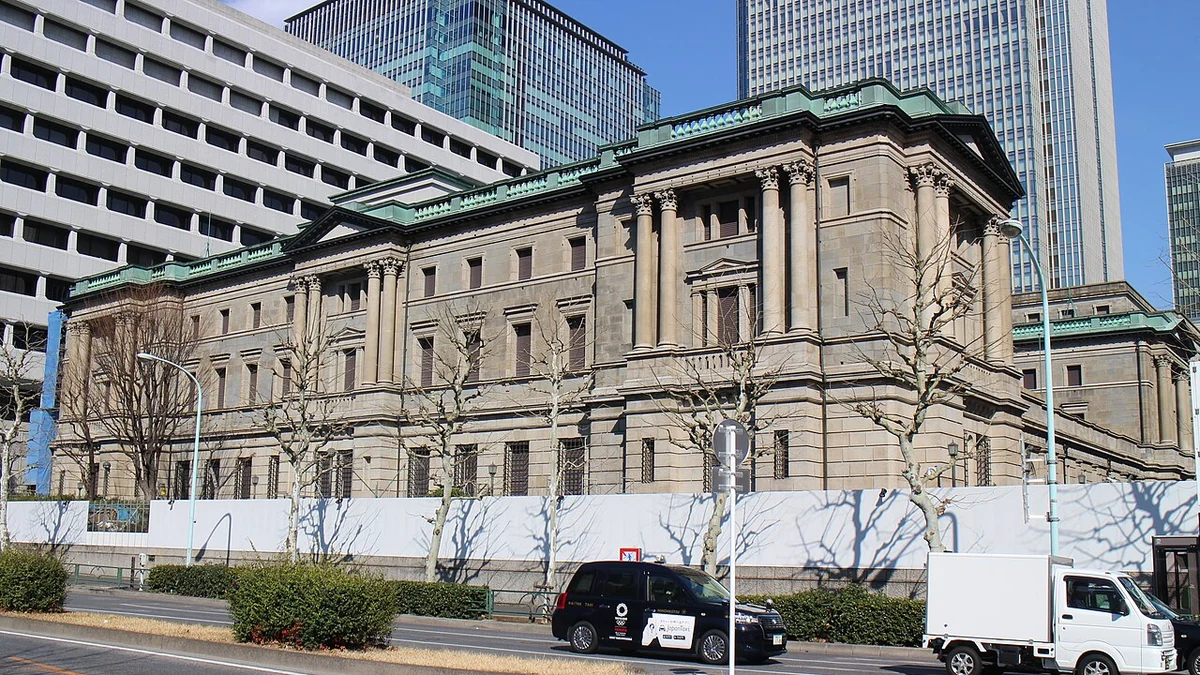
The Bank of Japan kept its short-term policy rate at around 1.25% on Friday, October 30, while approving a sharp increase in sales of its exchange-traded fund (ETF) holdings. Annual ETF disposals will rise to about ¥860 billion from ¥330 billion, measured at book value, beginning in January 2027.
Support differed sharply between the two decisions. Eight of the central bank’s nine policy board members voted to leave interest rates unchanged, with one member calling for another increase. All nine backed the faster ETF sales. Taken together, the votes show a central bank prepared to reduce its stock-market holdings more quickly even as it takes more time over its next interest-rate move.
Under the revised plan, ETF sales will represent an amount equivalent to about 0.1% of stock-market trading value, double the earlier proportion. Its own estimates suggest the higher pace would reduce the time needed to dispose of its holdings from about 112 years to roughly 43 years. Even after the acceleration, the planned exit remains gradual.
One dissent on interest rates after September’s increase
The October 30 monetary policy statement maintained the guideline for the uncollateralized overnight call rate at around 1.25%. The decision followed a September increase that took effect on September 24, leaving the latest meeting as a pause rather than a reversal of the earlier tightening.
Board member Hajime Takata opposed keeping the rate unchanged. He proposed raising it to around 1.5%, arguing that underlying consumer-price inflation had reached the BOJ’s price-stability target and that the bank should move more quickly toward a neutral interest rate. His proposal was rejected by the majority.
A neutral rate is a level of interest rates that neither stimulates nor restrains the economy. Takata’s argument was therefore about the speed of further tightening, not a demand to abandon the bank’s inflation target. The other eight members chose to retain the existing overnight-rate guideline for the period until the next decision.
In September, the BOJ approved the move to 1.25% by a 7–2 vote and said future increases would depend on economic activity, prices and financial conditions. It also identified developments in the Middle East, global demand linked to artificial intelligence and foreign exchange rates among the risks it would monitor. That guidance did not set a calendar for the next increase, and Friday’s decision likewise announced no new rate-hike date.
ETF sales will rise to about ¥860 billion a year
ETF disposals are a separate part of the BOJ’s retreat from the asset purchases of its earlier monetary-easing policies. The bank set the initial annual disposal pace at about ¥330 billion in September 2025, basing it on roughly 0.05% of market trading value. Actual sales began in January 2026.
In explaining the increase, the central bank said its sales so far had proceeded smoothly without a major effect on the market. Trading value in Japan’s stock market had also expanded. That gave the board a basis for raising the intended proportion to around 0.1%, rather than simply increasing the yen amount without reference to trading activity.
At approximately 2.6 times the previous annual pace, the ¥860 billion figure is large in relative terms, but it should not be read as expected cash proceeds from selling securities. It represents the book value of the ETF holdings to be disposed of each year. Their current market prices can be considerably different from the values carried on the BOJ’s books.
Using the market-to-book ratio of ETFs sold between January and September 2026, the BOJ estimated that the new annual pace would amount to about ¥2.46 trillion at market value. That conversion is based on recent observed valuations, not a guarantee of future sale prices. The bank used both trading on the Tokyo Stock Exchange Prime Market and its ETF sales experience during that nine-month period to calculate the revised program.
Execution remains subject to safeguards. The BOJ says the amounts sold should be broadly proportionate to the share of each ETF in its holdings, with disposals spread over time. It retains the ability to adjust sales temporarily or suspend them within the annual plan if financial-market conditions warrant it.
Japan real estate investment trusts are treated separately. The BOJ left its planned J-REIT disposals at around ¥5 billion a year on a book-value basis, meaning Friday’s acceleration applies to ETFs rather than every category of asset on its balance sheet.
A faster exit, but one that could still last decades
The estimated disposal period illustrates the scale of the ETF portfolio even under the higher sales plan. Its estimate of approximately 43 years to complete the sales uses the outstanding book value of ETF holdings at the end of September 2026 divided by the new annual disposal amount. The previous ¥330 billion pace produced an estimate of about 112 years on the same basis.
Neither figure is a fixed completion date. Market prices change, and the central bank has explicitly preserved room to modify the selling pace when conditions require. The calculation is best understood as an illustration of how much faster the current plan is than its predecessor, rather than a promise that the entire portfolio will have been sold in a particular calendar year.
The BOJ’s stated disposal principles are to obtain adequate prices, avoid losses as much as possible and limit destabilizing effects on financial markets. These constraints help explain why the bank is connecting its sales pace to overall market trading activity even after authorizing a more than twofold increase in the annual book-value amount.
For equity-market participants, the practical change is a larger recurring flow of ETF sales from a central-bank holder. The effect on share prices cannot be inferred from the ¥860 billion figure alone, particularly because the market-value equivalent is different and the BOJ can adjust the timing of sales. The bank has described its experience with the earlier program as orderly, but that does not remove the need to respond to changing liquidity or prices.
Several scheduled releases will add detail to the policy picture. The full October Outlook Report is due on November 2, followed by a summary of opinions from this meeting on November 10. The next monetary policy meeting is scheduled for December 17–18, before the revised ETF-selling pace takes effect in January 2027.
More from Banking


Latest News
View all news- New York Fed Researchers Find LinkedIn Hiring Data Can Improve Inflation Forecasts
- India’s Fiscal Deficit Reaches 42.1% of Annual Target in First Half of FY27
- Energy Department Opens $237 Million Funding Opportunity for U.S. Power Grid Supply Chain
- Chicago Business Barometer Falls to 55.3 in October but Signals Continued Expansion
- Chevron Posts $9.9 Billion Quarterly Profit as U.S. Refinery Throughput Hits Record