
Canada Announces Abu Dhabi Crown Prince Visit Focused on Investment and Economic Ties
Canada said Abu Dhabi Crown Prince Sheikh Khaled bin Mohamed bin Zayed Al Nahyan will visit Ottawa on Oct. 26 and 27 as the two countries push deeper ties in investment, trade, energy and advanced technologies.
Our editorial standards
MarketReview publishes clear, independently produced financial information using reliable sources and transparent editorial standards.
Read our Editorial Policy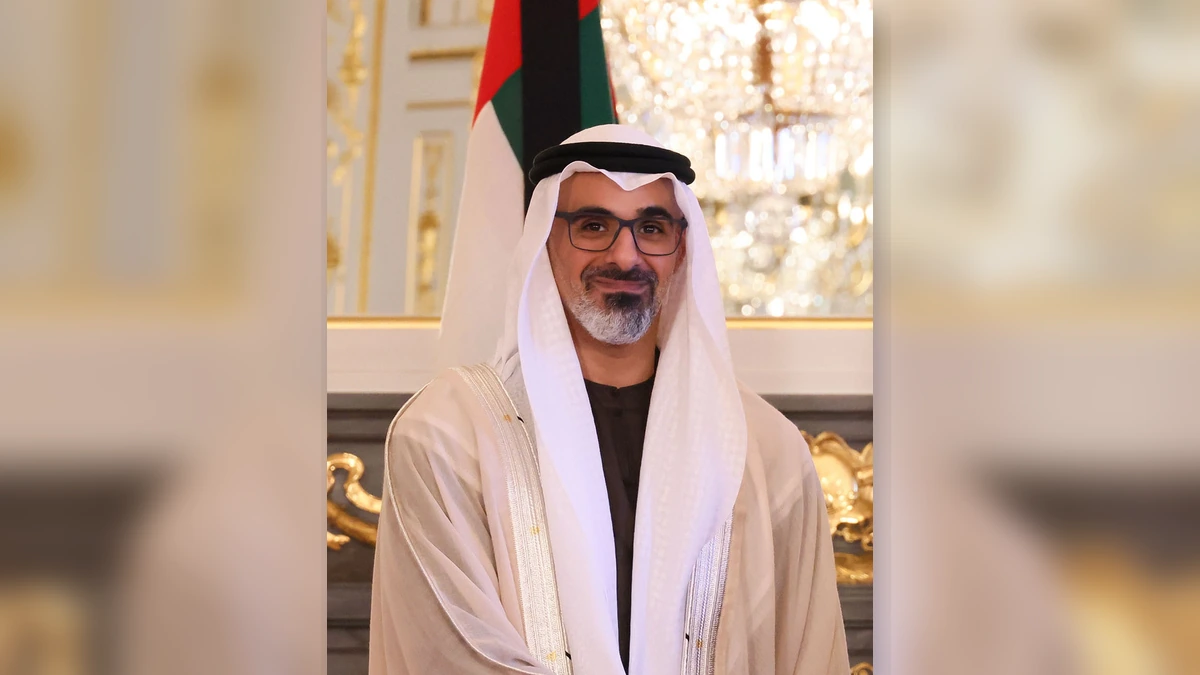
Canada has announced that Abu Dhabi Crown Prince Sheikh Khaled bin Mohamed bin Zayed Al Nahyan will visit Ottawa on Oct. 26 and 27, with the government framing the trip as part of a broader push to deepen economic and strategic ties with the United Arab Emirates.
In a news release from the Prime Minister’s Office, Canada said the visit will focus on turning recent diplomatic progress into practical outcomes in areas that include investment, trade, energy, critical minerals, infrastructure, defence and security, space, advanced communications technologies, quantum and artificial intelligence.
The announcement is significant less because it unveils a single headline deal and more because it shows how quickly the Canada-UAE relationship has moved onto a wider economic footing. Ottawa is presenting the visit as the next step in a relationship that has already produced an investment-protection agreement, the conclusion of trade talks and a much larger conversation about long-term capital flows into Canada.
Canada also used the announcement to highlight the UAE’s C$70 billion investment commitment to Canada, which was unveiled last year. That matters because the figure is not being pitched as a fresh pledge tied specifically to this visit. Instead, the government is pointing to it as evidence that the relationship has already shifted into a more ambitious phase, with leaders now looking at how to channel that momentum into specific sectors and projects.
Visit comes after a run of economic agreements
The backdrop to the visit is a period of unusually fast movement in the bilateral relationship. According to official Canadian trade materials, the Canada-United Arab Emirates Foreign Investment Promotion and Protection Agreement, or FIPA, entered into force on May 19, 2026. That agreement is designed to give Canadian and Emirati investors greater predictability and legal protection when they invest in each other’s markets.
Canada has also completed negotiations on a broader Canada-UAE Comprehensive Economic Partnership Agreement, known as CEPA. Ottawa announced in July that the two sides had concluded those negotiations, describing the accord as a framework to strengthen trade and investment ties, improve market access and reduce barriers to commerce. The agreement has been negotiated, but Canada has not yet described it as in force, making it important to distinguish between the completed negotiations and the earlier FIPA that is already active.
That distinction helps explain why the Crown Prince’s visit matters. Diplomatic visits at this stage are often about converting framework agreements and political intent into bankable projects, business activity and follow-through at the ministerial and institutional level. With investor protections already in place and trade talks wrapped up, both sides have a clearer foundation for discussing real opportunities rather than just broad aspirations.
From Canada’s perspective, the timing also fits a wider trade-diversification strategy. Successive governments have sought to broaden the country’s commercial relationships beyond its largest traditional partners, and the UAE gives Canada a route into one of the Middle East’s most active investment and logistics hubs. For the UAE, Canada offers a politically stable destination for long-term capital deployment as well as access to sectors that match its strategic priorities.
Investment, energy and technology are likely to dominate the agenda
The Canadian statement makes plain where officials see the most room for expansion. Energy and critical minerals are natural candidates because Canada is trying to attract capital into resource development, energy infrastructure and supply chains linked to the global energy transition. The UAE, meanwhile, has both financial firepower and a demonstrated interest in building diversified international portfolios.
Infrastructure is another likely focus. Large investment commitments become more meaningful when governments and investors can identify concrete projects with a clear policy framework and acceptable risk profile. Canada has been emphasizing domestic growth, productivity and strategic infrastructure, and UAE-linked capital could fit into that story if both sides can match broad interest with workable structures.
Advanced technologies stand out as well. The Prime Minister’s Office specifically cited advanced communications, quantum and artificial intelligence, suggesting that the visit is not limited to traditional trade diplomacy. Canada wants to position itself as a destination for high-value technology investment and commercialization. The UAE, for its part, has been pursuing an economic diversification strategy that places significant weight on future-oriented industries and innovation capacity.
Defence and security also appear in the official agenda, which signals that Ottawa is viewing the relationship through a wider strategic lens. Even so, the central commercial message of the visit is hard to miss. Canada is trying to present itself as an attractive, reliable and scalable destination for Emirati capital while also expanding opportunities for Canadian exporters and businesses in the Gulf region.
Why the visit matters now
The relationship is growing from a relatively modest base. Canada said two-way merchandise trade with the UAE totaled C$3.5 billion in 2025, with Canadian exports accounting for the larger share. Those figures are not huge by the standards of Canada’s trade with its biggest partners, but they are large enough to show an established commercial foundation and small enough to suggest room for substantial growth if the current political momentum leads to execution.
The visit also gives both governments a public stage to demonstrate continuity. It follows Prime Minister Mark Carney’s visit to the UAE in November 2025, when Canada and the UAE signed the FIPA, launched CEPA negotiations and announced the UAE’s investment commitment. By welcoming the Crown Prince to Ottawa less than a year later, Canada can point to a sequence of announcements that has moved from diplomatic outreach to formal agreements and now to implementation-focused engagement.
That does not mean major new deals will necessarily emerge immediately. Government visit announcements often set direction rather than deliver a full package of signed outcomes on day one. Still, the official language around investment and economic ties suggests both sides want the trip to produce substance, whether through business discussions, sector-specific cooperation or a clearer roadmap for how the existing agreements will be used.
For markets and companies watching the relationship, the key question is whether the visit turns political alignment into concrete commercial momentum. Canada has now set expectations that this partnership can move beyond symbolism. The next test will be whether the visit delivers measurable progress in the sectors that Ottawa itself has put at the center of the agenda.
More News



Latest News
View all news- Bristol Myers Squibb, BioNTech Report 36.7% Response Rate in Phase 2 Pumitamig Lung Cancer Trial
- New Zealand National Party Unveils 26-Point First-100-Days Agenda Covering Taxes, Loans and KiwiSaver
- FAA’s JFK Flight Limits Enter New Two-Year Extension Through October 2028
- Eli Lilly Releases New Olomorasib Lung Cancer Data Ahead of 2027 Phase 3 Results
- Austria Sets 2027 Motorway Toll Vignette Increase at 2%, Below Inflation
