
Eli Lilly Releases New Olomorasib Lung Cancer Data Ahead of 2027 Phase 3 Results
Updated studies of Lilly’s investigational drug showed an unreached median time to progression in an 85-patient group and a 62% response rate in a separate 77-patient group.
Our editorial standards
MarketReview publishes clear, independently produced financial information using reliable sources and transparent editorial standards.
Read our Editorial Policy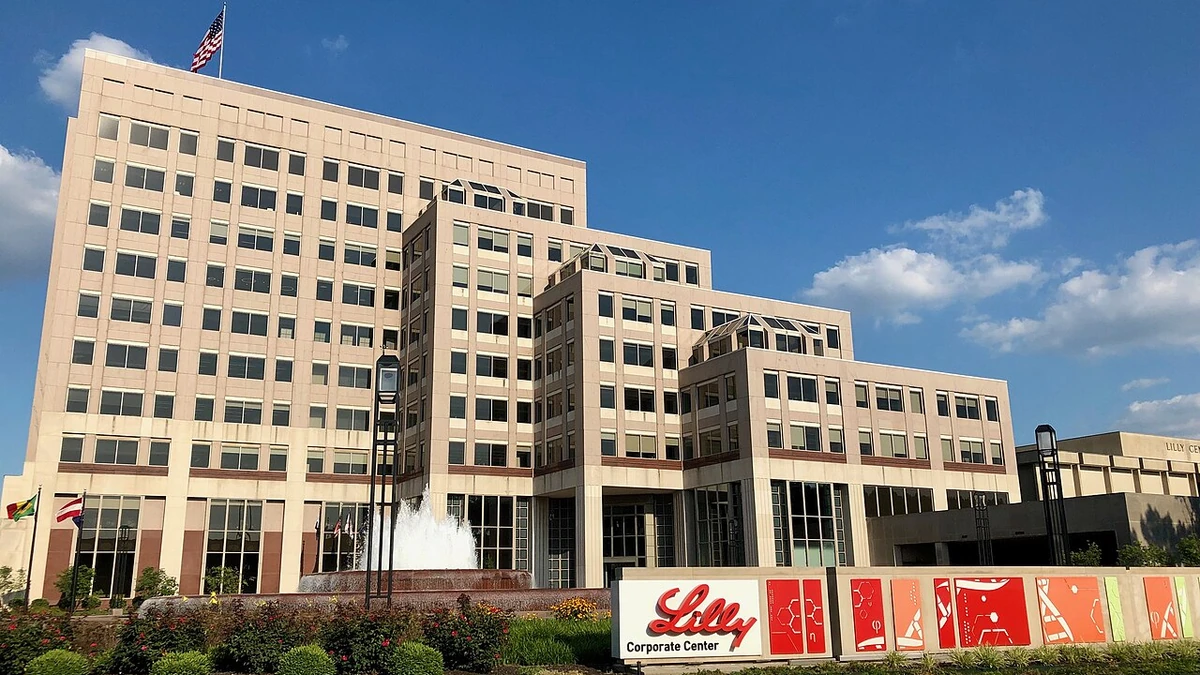
Eli Lilly released updated results Sunday for olomorasib, its experimental lung cancer drug, showing prolonged disease control in one patient group and a 62% confirmed tumor response rate in another. The findings involve people receiving their first treatment for advanced non-small cell lung cancer with a specific KRAS gene mutation, an area where Lilly is trying to move targeted medicines earlier in care.
The results were disclosed alongside the 2026 European Society for Medical Oncology Congress in Madrid. They come from the Phase 1/2 LOXO-RAS-20001 study and safety lead-in portions of the ongoing SUNRAY-01 program, rather than a completed randomized Phase 3 comparison. Lilly expects the first randomized SUNRAY-01 results in the first half of 2027.
In its October 25 announcement, Lilly described two different olomorasib regimens: one paired with Merck’s immunotherapy pembrolizumab, sold as Keytruda, and another adding chemotherapy. Those groups have different patient characteristics and cannot establish whether either regimen outperforms current first-line treatment.
What the two lung cancer cohorts showed
The chemotherapy-free analysis involved 85 patients who received olomorasib with pembrolizumab. After a median follow-up of 20.7 months, neither median progression-free survival nor median duration of response had been reached, Lilly said. That means the available observations did not yet permit researchers to calculate a midpoint for those measures; it does not mean that every patient remained free of progression or maintained a response.
At 18 months, the estimated progression-free survival rate was 55% across the 85-patient group. It was 65% among patients with PD-L1 expression of at least 50%, a subgroup representing 64% of those enrolled. PD-L1 is a tumor marker doctors use in selecting certain immunotherapy regimens. The higher-expression subgroup is particularly relevant to the chemotherapy-free arm being tested in Lilly’s randomized program.
A second, updated single-arm analysis followed 77 patients receiving olomorasib, pembrolizumab, pemetrexed and platinum chemotherapy. The investigators reported confirmed tumor responses in 48 patients, an overall response rate of 62%. Median progression-free survival was 11.6 months, and the median duration of response among those who responded was 14.5 months. Median follow-up had reached 18.7 months, approximately nine months longer than in the prior analysis described by Lilly.
Patients in the chemotherapy-containing group had a different profile: 74% had PD-L1 expression below 50%, compared with the predominance of higher expression in the other group. The reported 11.6-month median progression-free survival therefore should not be compared directly with the unreached median from the chemotherapy-free cohort. The data are descriptive observations from separate groups, not a head-to-head trial of the two approaches.
The mutation itself is an important part of the treatment strategy. KRAS G12C changes a protein involved in cell-growth signaling. Olomorasib is designed to bind the mutated protein and keep it inactive. Lilly estimates that roughly 13% of people with non-small cell lung cancer have this mutation, making biomarker testing necessary to identify patients who might be eligible for a targeted treatment.
The safety figures remain important
Lilly is also testing whether a KRAS G12C inhibitor can be added to immunotherapy without unacceptable toxicity. Previous efforts to combine drugs in this class with immunotherapy have faced safety challenges, according to the company. The new results provide more follow-up on adverse events, but they do not yet establish that olomorasib is safer than an alternative regimen.
Among the 85 patients receiving olomorasib and pembrolizumab without chemotherapy, the most commonly reported grade 3 or higher treatment-related adverse events were elevated ALT liver enzymes in 15.3%, elevated AST liver enzymes in 12.9% and diarrhea in 8.2%. Treatment-related events led to a reduction in the olomorasib dose for 31.8% of patients and discontinuation of the treatment regimen for 11.8%. Lilly reported no grade 5 treatment-related events in this group.
The chemotherapy-containing regimen had a different side-effect pattern. Grade 3 or higher treatment-related neutropenia, a reduction in certain white blood cells, occurred in 21% of patients, while anemia occurred in 17%. Elevated ALT and low platelet counts each affected 12%. Olomorasib dose reductions attributable to treatment-related events occurred in 19.5%, and 7.8% discontinued the regimen for that reason. No grade 5 treatment-related events were reported in this cohort either.
Lilly said the trial protocols did not require preventive medications specifically for olomorasib. That protocol detail should not be taken as evidence that side effects were absent. The dose changes and discontinuations show why the drug’s tolerability will remain part of the assessment when larger randomized results are available.
A first-line opening depends on the 2027 Phase 3 readout
The first-line setting is the main distinction between Lilly’s program and KRAS G12C drugs already available in the United States. The Food and Drug Administration’s accelerated-approval records list Amgen’s sotorasib (Lumakras) and adagrasib (Krazati) for certain patients with KRAS G12C-mutated advanced lung cancer who have already received systemic therapy. Neither listing establishes a first-line indication for those medicines.
For a patient whose disease progresses quickly, reaching a later line of therapy is not assured. That makes the effectiveness of the initial regimen especially consequential. Combining an investigational targeted therapy with treatments already used at diagnosis is Lilly’s attempt to address that gap, though the latest findings cannot show whether adding olomorasib extends survival or delays progression relative to standard treatment alone.
SUNRAY-01 is designed to answer that comparison directly. Its randomized, double-blind Part A tests olomorasib plus pembrolizumab against placebo plus pembrolizumab in patients whose tumors have PD-L1 expression of at least 50%. Part B compares olomorasib added to pembrolizumab and pemetrexed-platinum chemotherapy with the same chemoimmunotherapy regimen plus placebo, regardless of PD-L1 expression. Lilly said enrollment in Part B is complete.
A further Part C is designed to examine olomorasib plus pembrolizumab in patients with PD-L1 expression below 50%. The broader development program also includes SUNRAY-02, a separate Phase 3 study of olomorasib with immunotherapy for certain patients with non-metastatic lung cancer following definitive treatment. Those studies are asking different clinical questions from the early efficacy analyses announced this weekend.
Lilly has said olomorasib with pembrolizumab for first-line lung cancer with high PD-L1 expression received an FDA Breakthrough Therapy designation. That designation can facilitate development and review, but it is not marketing authorization. Olomorasib remains investigational, and Lilly has not established that the outcomes observed in the small cohorts will hold up against a control group.
For investors, the distinction matters because a successful first-line therapy could reach patients at an earlier point in treatment than the existing approved KRAS G12C options. No revenue forecast or approval timeline follows from the newly reported response rates. Lilly’s stated next milestone is the first randomized SUNRAY-01 Phase 3 data, expected in the first half of 2027, particularly for olomorasib with chemoimmunotherapy.
More News

Latest News
View all news- Bristol Myers Squibb, BioNTech Report 36.7% Response Rate in Phase 2 Pumitamig Lung Cancer Trial
- New Zealand National Party Unveils 26-Point First-100-Days Agenda Covering Taxes, Loans and KiwiSaver
- FAA’s JFK Flight Limits Enter New Two-Year Extension Through October 2028
- Canada Announces Abu Dhabi Crown Prince Visit Focused on Investment and Economic Ties
- Austria Sets 2027 Motorway Toll Vignette Increase at 2%, Below Inflation
