FAA’s JFK Flight Limits Enter New Two-Year Extension Through October 2028
The FAA kept JFK’s daytime slot regime in place through Oct. 28, 2028, saying peak-hour demand still exceeds what the airport and surrounding airspace can absorb without severe delays.
Our editorial standards
MarketReview publishes clear, independently produced financial information using reliable sources and transparent editorial standards.
Read our Editorial Policy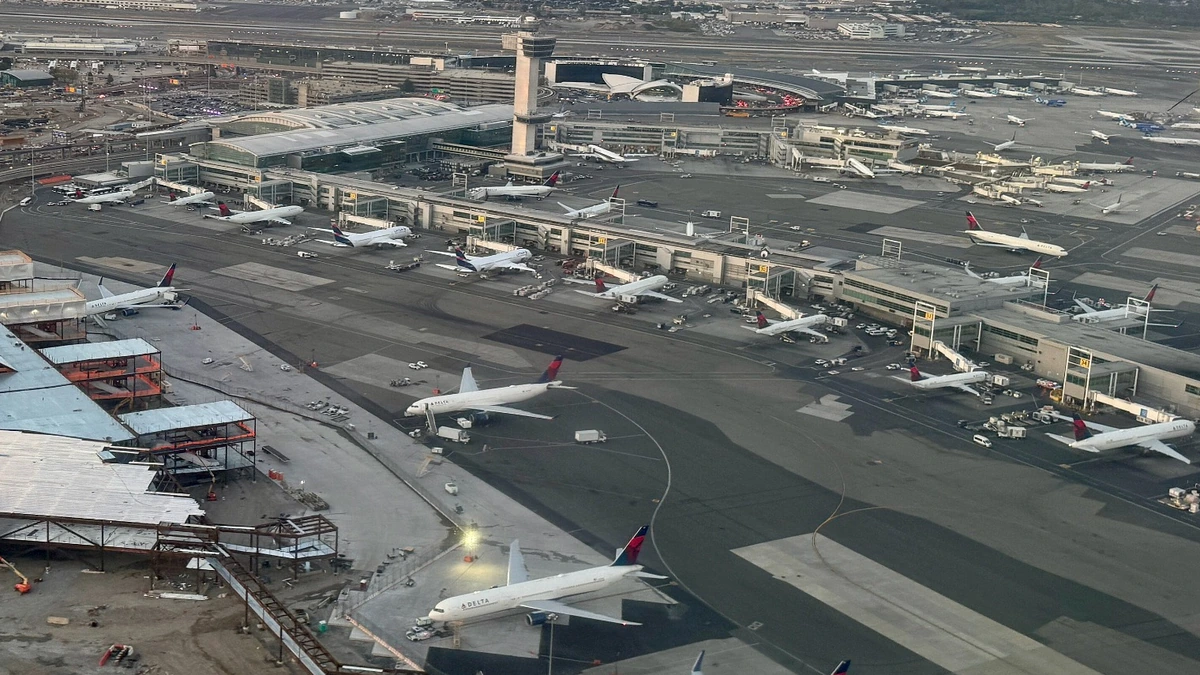
Federal Aviation Administration limits on scheduled flights at John F. Kennedy International Airport are entering another two-year extension, keeping the current slot regime in place through Oct. 28, 2028 as carriers continue competing for scarce peak-hour access at one of the nation’s busiest international gateways.
The extension, which takes effect Oct. 25, does not introduce a new cap. It continues an operating order first imposed in 2008 and renewed repeatedly since then after the FAA concluded that scheduled demand at JFK still exceeds what the airport and the surrounding New York airspace can reliably absorb without serious delay.
For airlines, the practical takeaway is that the core framework stays intact. The FAA is keeping the current hourly limit of 81 scheduled arrivals and departures combined during the controlled portion of the day, preserving the same structure that has governed carrier access for years while officials continue studying runway capacity, traffic patterns and the airport’s interaction with nearby facilities.
In its Federal Register order, the agency said the slot-controlled regime at JFK will continue to apply from 6 a.m. through 10:59 p.m. Eastern Time every day of the week. The order also leaves in place the 80% minimum usage rule for operating authorizations, along with procedures for withdrawing, reallocating, leasing and trading those authorizations with FAA approval.
FAA says peak-hour demand still outruns available capacity
The FAA’s rationale for the extension is straightforward. It said the reasons for keeping the order have not changed materially since the rule was first put in place. Demand for access to JFK remains high, new entrants and incumbent airlines are still seeking additional peak-period flights, and requests to retime existing flights into more attractive hours continue to exceed what the airport can handle.
The agency pointed to the Summer 2026 scheduling season as a fresh example. Historic-slot requests and retiming submissions continued to show demand above the scheduling limits in multiple hours, according to the order. In the FAA’s view, removing the current restrictions would risk severe congestion-related delays at JFK and create ripple effects across the broader National Airspace System.
That matters because JFK does not operate in isolation. It sits inside one of the most complex airspace regions in the country, alongside LaGuardia, Newark Liberty and other busy airports that compete for runway, airspace and air traffic management resources. Delays at JFK can spread quickly through airline networks, disrupting aircraft rotations, crew schedules and connecting passengers well beyond New York.
The order also makes clear that the FAA is not treating the status quo as permanent or untouchable. Officials said they will continue monitoring demand, performance and runway capacity at JFK during the extended period. The agency added that it is still studying runway configurations, delays under alternative demand scenarios and the operational constraints created by the heavily used airspace surrounding the airport.
What the extension preserves for airlines
The extension keeps more than just the headline hourly cap. It preserves the operating-authority system under which U.S. and foreign carriers need FAA-assigned authority to conduct scheduled or regularly conducted commercial service at JFK during the covered hours. That applies both to carriers already serving the airport and to airlines seeking to start new scheduled service while the order remains in effect.
It also preserves the seasonal usage standard that governs historical rights. Carriers generally must use an operating authorization at least 80% of the time over the period authorized by the FAA in order to retain historical priority, subject to defined exceptions. That rule is meant to discourage carriers from holding scarce airport access without actually operating enough flights to justify it.
Another important point for airline planners is that the order continues to allow limited schedule adjustments, as well as leases and trades of operating authorizations, subject to FAA review. That flexibility gives airlines some room to respond to operational disruptions or reshape schedules within the broader cap, but it does not open the door to unrestricted growth during the controlled hours.
The FAA also retained language allowing the administrator to change the limits if capacity exists to accommodate more operations without a significant increase in delays. In other words, the present cap is not framed as an arbitrary fixed number. It is tied to the agency’s judgment about how many scheduled operations JFK can handle while maintaining workable performance in a constrained environment.
Why this matters for travelers and the wider New York market
For travelers, the extension is less about a visible policy change and more about continuity. The order is designed to prevent schedule growth during the busiest parts of the day from getting ahead of the airport’s practical operating capacity. When too many flights are packed into the same hours, delays tend to multiply quickly, particularly at an airport where weather, runway configuration and downstream network congestion can all complicate operations.
That does not mean passengers will suddenly notice shorter lines or perfectly on-time departures because the order was extended. The FAA’s action is better understood as a congestion-management tool than a consumer-facing service upgrade. Its goal is to reduce the risk of a system that would become even less reliable if carriers were free to add more peak-hour operations than the airport can realistically support.
The new expiration date also gives airlines a longer planning horizon. Instead of facing another near-term lapse in the order, carriers now know that the current framework is scheduled to remain in force into late October 2028. The FAA said that timing aligns with the extended expiration date for the separate order limiting operations at LaGuardia, which helps maintain consistency across two of the New York region’s most capacity-constrained airports.
At the same time, the agency signaled that broader policy questions remain open. The order notes that the FAA, working with the Office of the Secretary of Transportation, will continue considering possible rulemaking to codify policies for slot-controlled airports. Until any longer-term framework emerges, the JFK extension keeps the current operating rules in place and gives airlines, airports and regulators a familiar set of constraints for the next two years.
More News

Latest News
View all news- Bristol Myers Squibb, BioNTech Report 36.7% Response Rate in Phase 2 Pumitamig Lung Cancer Trial
- New Zealand National Party Unveils 26-Point First-100-Days Agenda Covering Taxes, Loans and KiwiSaver
- Eli Lilly Releases New Olomorasib Lung Cancer Data Ahead of 2027 Phase 3 Results
- Canada Announces Abu Dhabi Crown Prince Visit Focused on Investment and Economic Ties
- Austria Sets 2027 Motorway Toll Vignette Increase at 2%, Below Inflation