
Clearwater Paper Refinances Debt With $275 Million Term Loan and New Revolver
The new five-year credit agreement also provides a $200 million revolver and funds the full redemption of Clearwater Paper's 4.75% senior notes due in 2028.
Our editorial standards
MarketReview publishes clear, independently produced financial information using reliable sources and transparent editorial standards.
Read our Editorial Policy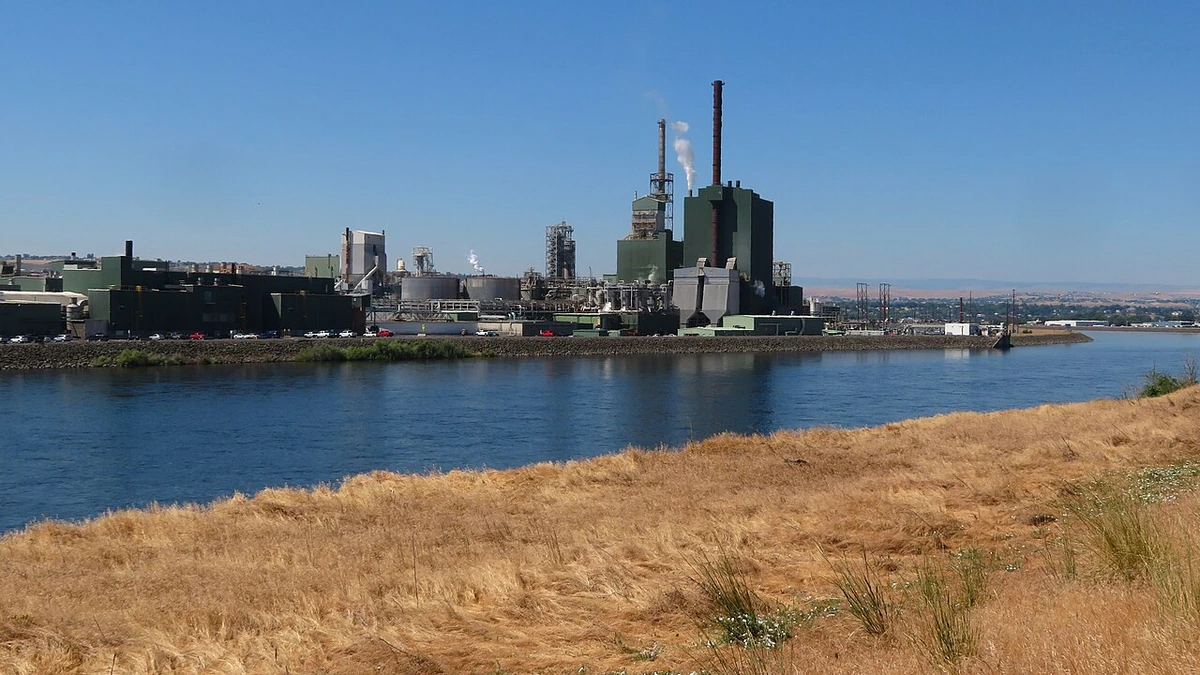
Clearwater Paper Corporation refinanced a large portion of its debt with a new $275 million term loan and a $200 million revolving credit facility, pushing the maturity of the new borrowings out to September 2031.
The Spokane, Washington-based paperboard producer entered into the new credit agreement on September 18 with AgWest Farm Credit, PCA, as administrative agent and a syndicate of lenders. The $275 million term loan was fully funded at closing, while about $15 million was drawn on the revolver. The company announced the refinancing Monday.
Proceeds are being used to redeem Clearwater Paper’s $275 million of 4.750% senior notes due in 2028, repay and terminate its existing asset-based lending facility, and cover fees and expenses tied to the refinancing. In its September 21 Form 8-K, Clearwater said it has already deposited enough funds with the notes trustee to complete the redemption on October 3, 2026, including $1.7 million of accrued and unpaid interest through that date.
New agreement replaces two earlier credit facilities
The refinancing simplifies a debt structure that previously included a term revolver with AgWest and a separate asset-based revolving facility administered by JPMorgan Chase. The new agreement amends and restates the AgWest credit agreement and replaces both of those earlier facilities with the $275 million term loan and the new $200 million revolver.
Clearwater’s June-quarter filing provides a useful snapshot of the facilities being replaced. At June 30, the company’s AgWest term revolver had a commitment of $259.3 million and no borrowings outstanding. That facility was scheduled to mature in May 2029, although it also contained a springing maturity provision linked to the 2028 senior notes.
The asset-based facility had a $375 million headline revolving commitment and was due in November 2027. Borrowing availability depended on eligible receivables and inventory, however, and those assets supported up to $197.7 million of availability at June 30. Clearwater was using $82.8 million at that point, consisting of $79 million in borrowings and $3.8 million of letters of credit.
Under the new structure, the $200 million revolver remains subject to borrowing-base limits tied to eligible receivables and inventory. Up to $10 million of the facility can be used for letters of credit. After Clearwater delivers its financial statements for the year ending December 31, 2027, it may seek as much as another $100 million of revolving commitments, but that increase is uncommitted and depends on participating lenders agreeing to provide the additional capacity and on other conditions being met.
The replacement therefore should not be read simply as a comparison between the old $375 million ABL commitment and the new $200 million revolver. The earlier facility’s usable capacity also depended on its borrowing base, while the new package adds the fully funded $275 million term loan and extends the maturity date of the replacement facilities to September 18, 2031.
Loan pricing, amortization and collateral shift under the new structure
The initial interest rate on both the term loan and the revolver borrowings made at closing is 8.25% a year. Longer term, loans under the agreement generally can be priced from one-month or three-month term SOFR, a SOFR monthly variable base rate, or AgWest’s fixed rate, with an applicable margin ranging from 2.50% to 4.75% depending on Clearwater’s consolidated leverage ratio.
The term loan does not remain entirely outstanding until maturity. Clearwater must make annual principal payments of $5.5 million on December 1 of each year beginning in 2027, with the remaining balance due at the September 2031 maturity. The company generally can prepay the term loan without a premium or penalty, while the agreement also requires certain mandatory repayments after specified events such as some asset sales or debt issuances that are not otherwise permitted.
Security for the new debt is broader than a simple unsecured corporate borrowing. Clearwater’s obligations are backed by liens on substantially all personal property assets. After certain post-closing requirements are satisfied, the collateral package is also expected to include material real property assets, including mills in Georgia, Arkansas and Idaho, as well as property of domestic subsidiaries that guarantee the credit agreement.
The financing also introduces financial maintenance tests. Clearwater must keep its debt service coverage ratio at no less than 2.65 to 1.00 through the quarter ending June 30, 2027, 2.75 to 1.00 for the September 2027 quarter, and 3.00 to 1.00 for quarters after that. A current ratio of at least 1.75 to 1.00 is also required. The agreement includes the usual restrictions on additional debt, liens, asset sales, investments and other specified corporate actions.
Because AgWest is part of the Farm Credit System, Clearwater may also receive patronage dividends under the agreement. The company records those distributions, when earned, as a reduction of interest expense. That means the stated loan rate does not necessarily equal Clearwater’s eventual net interest cost after any patronage distributions.
Refinancing follows a quarter of debt reduction and weaker earnings
The new financing arrives after Clearwater had already reduced net debt during the second quarter. At June 30, total debt was $362.2 million before unamortized deferred debt costs, while cash and cash equivalents totaled $95.4 million. The company reported net debt of $266.8 million, down $59 million from the end of March and $50 million from the end of 2025.
That balance-sheet improvement came during a weaker operating quarter. Second-quarter net sales were $374.8 million, compared with $391.8 million a year earlier, and Clearwater posted a net loss of $21.5 million versus net income of $2.7 million in the prior-year period. Adjusted EBITDA from continuing operations was negative $8 million, compared with positive $40 million a year earlier. Management attributed much of the decline to lower market pricing and the timing of a planned major maintenance outage at the Lewiston, Idaho mill.
Clearwater also spent $22 million in direct costs on the Lewiston outage and said the project was completed on time and on target. At the same time, management reported stronger paperboard volumes and continued cost reductions, including restructuring work at its Cypress Bend, Arkansas facility. The refinancing changes the company’s maturity schedule while those operating initiatives continue.
Chief Executive Arsen Kitch said the new capital structure gives Clearwater greater certainty as it executes its long-term strategy and capital allocation priorities. The financing itself does not remove the risks around earnings, interest rates or covenant compliance, all of which Clearwater identified in its filing, but it eliminates the approaching 2028 note maturity and replaces the earlier revolving arrangements with facilities that run to 2031.
The next concrete step is the October 3 redemption of the 4.750% senior notes. Clearwater has already funded the trustee for the principal and accrued interest, and the company said the notes will be fully redeemed on that date.
More from Investing

Latest News
View all news- UK Help to Save Bonus Payments Pass £300 Million as Government Plans Wider Eligibility
- Bundesbank Says German Economy Is Losing Momentum Temporarily in Third Quarter
- France and Canada Put LNG, Energy and Critical Minerals on Macron-Carney Agenda
- U.S. and China Open New York Economic Talks on Trade, AI and Critical Minerals
- Australia Raises Pension Payments and Deeming Rates From Sept. 20
