Microchip Technology Completes Hailo Acquisition to Expand Edge AI Portfolio
Microchip has completed its Hailo acquisition, adding AI accelerators, vision processors and software while saying it plans to continue supporting Hailo's existing products and customers.
Our editorial standards
MarketReview publishes clear, independently produced financial information using reliable sources and transparent editorial standards.
Read our Editorial Policy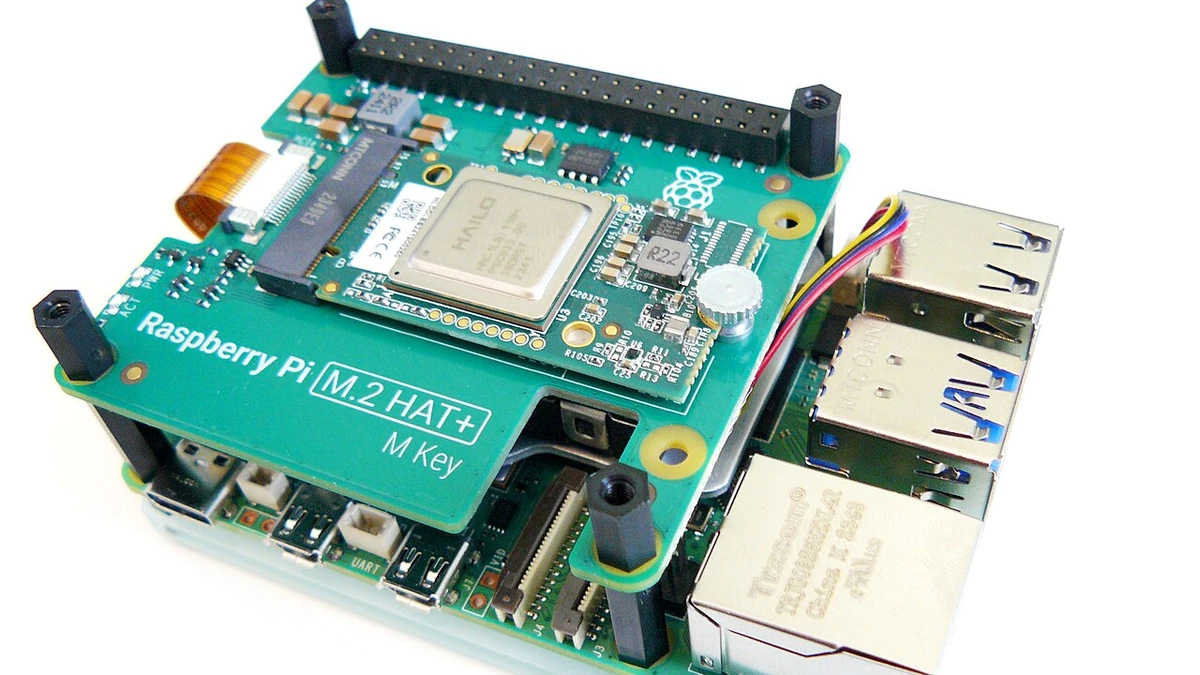
Microchip Technology has completed its acquisition of Hailo, bringing the edge AI specialist’s accelerators, vision processors, robotics processors and software into Microchip’s embedded semiconductor portfolio. Financial terms were not disclosed, and Microchip said the acquisition is not expected to have a material impact on its financial results.
The closing turns an agreement announced in July into an owned product line at a time when Microchip is pushing further into systems that perform AI processing locally rather than relying entirely on cloud infrastructure. Hailo gives the company dedicated silicon and software for computer vision, generative AI and other inference workloads that can run inside cameras, industrial equipment, robots and other edge devices.
Hailo adds dedicated AI acceleration to Microchip’s embedded stack
Microchip said in its Sept. 21 completion announcement that Hailo’s technology expands its edge AI offering across computer vision, transformer-based models, multimodal workloads and advanced video analytics. The company is positioning the acquired products alongside its existing embedded processors, FPGAs, connectivity, security, analog and power products rather than as a stand-alone bet on one class of AI chip.
That distinction matters for the markets Microchip serves. Many embedded systems have to balance compute performance against power use, physical size, connectivity and long product lifecycles. Running inference at the edge can also reduce the need to send every data stream to a remote data center, which can lower latency and keep more processing local. Microchip has been building around that model with machine-learning tools and FPGA-based capabilities, while Hailo adds hardware designed specifically for AI acceleration and vision processing.
Hailo’s current product catalog shows how broad that additional layer is. Its Hailo-8 accelerator is rated at up to 26 tera-operations per second, while the Hailo-10H targets generative AI workloads with 40 TOPS of INT4 performance. The Hailo-15 AI vision processor is aimed at smart-camera and vision applications, with Hailo listing up to 20 TOPS. Hailo also sells modules and PCIe products that let developers add its accelerators to existing edge systems instead of redesigning an entire computing platform around a new processor.
Microchip said the expanded portfolio can serve applications ranging from low-power smart cameras to higher-performance robotics and autonomous machines. It also highlighted industrial automation, intelligent transportation and advanced vision as areas where the Hailo technology can sit beside Microchip’s established embedded components. The practical pitch is a broader system offering: customers that already buy controllers, connectivity, security or power components from Microchip can now source dedicated edge AI processing from the same supplier.
The acquisition moved from agreement to closing in under two months
Microchip announced the definitive agreement to buy Hailo on July 24 and said at the time that it expected the acquisition to close toward the end of its fiscal quarter ending Sept. 30, subject to customary conditions and regulatory approvals. The Sept. 21 closing came within that timetable. The company did not disclose the purchase price when the agreement was announced and again withheld the terms when it confirmed completion.
The July announcement also offered a clearer picture of the business Microchip was buying. Hailo had more than 100 current customers and a developer community of more than 10,000 users, according to Microchip. Its technology covered AI accelerators and vision systems-on-chip, with support for convolutional neural networks, transformers, large-language and vision-language workloads, image signal processing and video encoding. Microchip said Hailo’s developer ecosystem included activity around Raspberry Pi, GitHub and its own developer and community platforms.
The financial effect is still expected to be limited in the near term, at least by Microchip’s own description. The company said both in July and at closing that the acquisition is not expected to materially affect its financial results. For scale, Microchip reported $1.485 billion of net sales for the quarter ended June 30, 2026, up 38% from the same period a year earlier. It also reported $202 million of GAAP net income attributable to common stockholders for that quarter.
Because the purchase price remains private, investors do not have a disclosed valuation to compare directly with Hailo’s customer base, product portfolio or future revenue contribution. That makes the strategic role of the acquired technology easier to assess than the economics of the purchase itself. Microchip has described the rationale in product terms, emphasizing the ability to add dedicated AI acceleration and vision processing to a much wider embedded platform.
Microchip plans to keep Hailo products and software supported
For existing Hailo customers, the most immediate point from the closing announcement is continuity. Microchip said it plans to continue supporting Hailo’s existing product portfolio, software environment and customer engagements. It also said it intends to keep investing in software tools, development environments and next-generation technologies while giving Hailo customers access to Microchip’s worldwide sales and technical-support organization.
That support commitment is important because edge AI deployments are often built around both silicon and a software toolchain. Hailo’s offering includes compilers, runtime software, model tools and vision-processing software in addition to accelerators. A change in ownership can therefore affect more than chip availability. It can influence software road maps, developer support, qualification work and the effort required to carry existing designs into production.
Microchip’s own cautionary language makes clear that closing the acquisition does not remove execution risk. The company cited the need to retain employees and customers, realize expected benefits, manage demand and market acceptance, and respond to competitive pressure. Those are now post-closing operating questions rather than conditions that still stand between the companies and ownership.
The next evidence will come from how Microchip incorporates Hailo into its product road map and financial reporting. The company has not given a separate revenue forecast for Hailo or disclosed a timetable for new jointly developed products. For now, the completed acquisition gives Microchip a larger set of dedicated AI and vision-processing products and turns its edge AI strategy from a collection of embedded and FPGA capabilities into a portfolio that also includes purpose-built accelerators.
More from Investing



Latest News
View all news- UK Help to Save Bonus Payments Pass £300 Million as Government Plans Wider Eligibility
- Bundesbank Says German Economy Is Losing Momentum Temporarily in Third Quarter
- France and Canada Put LNG, Energy and Critical Minerals on Macron-Carney Agenda
- U.S. and China Open New York Economic Talks on Trade, AI and Critical Minerals
- Australia Raises Pension Payments and Deeming Rates From Sept. 20