
Cracker Barrel Ends Fiscal 2026 With Lower Sales, Sets 2027 Outlook
Cracker Barrel expects fiscal 2027 revenue of $3.325 billion to $3.4 billion and adjusted EBITDA of $180 million to $200 million after fiscal 2026 revenue fell 5%.
Our editorial standards
MarketReview publishes clear, independently produced financial information using reliable sources and transparent editorial standards.
Read our Editorial Policy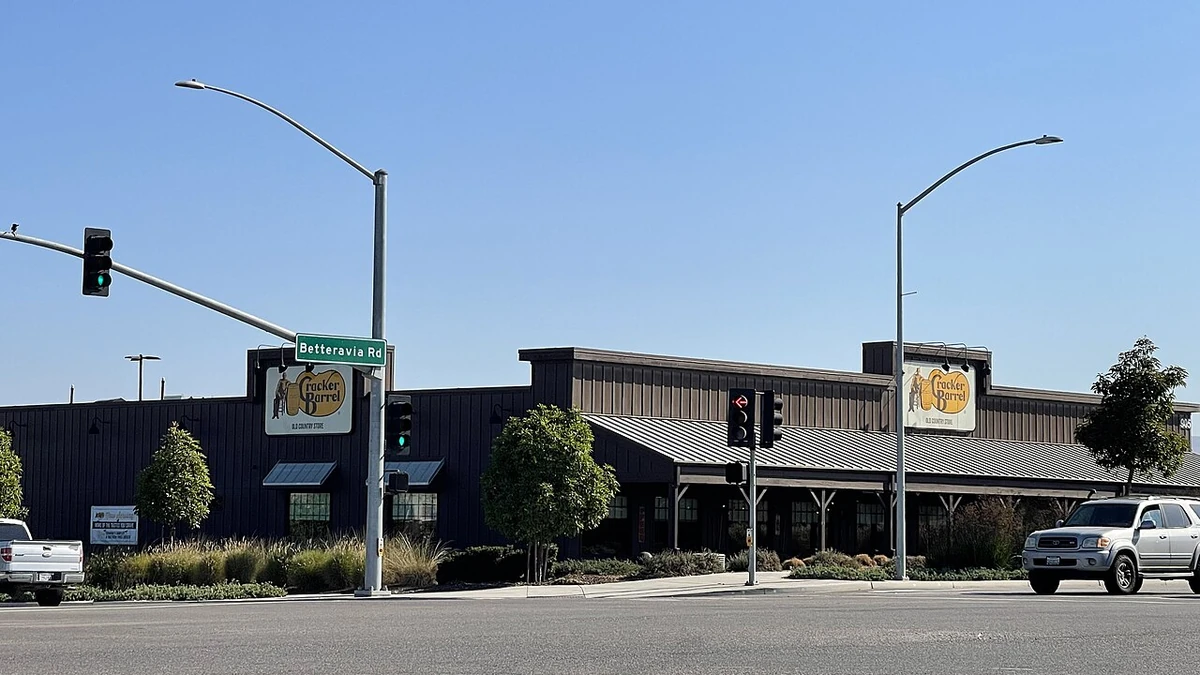
Cracker Barrel Old Country Store reported lower revenue and profit for fiscal 2026, but its fourth quarter showed a firmer finish to the year and management issued an outlook that points to higher adjusted earnings in fiscal 2027.
For the year ended July 31, revenue was $3.319 billion, down 5% from $3.484 billion a year earlier. GAAP net income fell to $31.7 million from $46.4 million, while adjusted EBITDA declined to $147.7 million from $224.3 million. Adjusted diluted earnings per share fell to $0.80 from $3.16.
The full-year numbers nevertheless finished above Cracker Barrel’s most recent guidance. In June, after its fiscal third quarter, the restaurant and retail chain had forecast revenue of $3.27 billion to $3.30 billion and adjusted EBITDA of $120 million to $125 million. The results released Wednesday exceeded the top end of both ranges.
Fourth-quarter results showed a stronger profit finish
Cracker Barrel generated fourth-quarter revenue of $849.3 million, down 2.2% from $868.0 million in the year-earlier period. Comparable restaurant sales decreased 2.1%, while comparable retail sales increased 0.7%. The company’s consolidated results include Maple Street Biscuit Company through its July 20 divestiture, so the period also reflects a business that is no longer part of Cracker Barrel.
Profit measures improved in the quarter. GAAP net income rose to $12.2 million from $6.8 million, and diluted GAAP earnings per share increased to $0.54 from $0.30. Adjusted EBITDA reached $62.1 million, up from $55.7 million a year earlier. Cracker Barrel said the adjusted EBITDA figure included an approximately $9.1 million benefit from tariff refunds, net of investments, which means part of the improvement came from an item outside the ordinary year-over-year operating comparison.
In its September 23 earnings release, Cracker Barrel said its priorities under new Chief Executive Officer David Deno are centered on food, guest experience and people. Deno took over as CEO on August 10, after the fiscal year had already ended.
The fourth quarter also carried several balance-sheet and portfolio changes. In a July 20 filing with the Securities and Exchange Commission, Cracker Barrel disclosed a sale-leaseback involving 26 company-owned store properties, with expected net proceeds of about $77 million. The earnings release said those proceeds were used toward debt reduction. Cracker Barrel also divested Maple Street Biscuit Company and recorded a $27.0 million loss on the sale of that business, along with impairment and closing costs tied to the exit.
Fiscal 2027 guidance points to a partial earnings recovery
For fiscal 2027, Cracker Barrel expects total revenue of $3.325 billion to $3.4 billion. That range assumes comparable restaurant sales growth of 3% to 5% and no new store openings. Even at the high end, the revenue outlook suggests a year focused more on improving existing-store performance than on expanding the store base.
Management forecast adjusted EBITDA of $180 million to $200 million. The range is above fiscal 2026’s $147.7 million result, implying that the company expects a meaningful recovery in operating earnings even though the revenue outlook is only modestly above the latest annual level. Cracker Barrel also expects commodity inflation of about 3% and hourly wage inflation of 2.5% to 3%, both of which remain cost pressures for a restaurant operator.
Capital expenditures are projected at $110 million to $125 million for fiscal 2027. That is far below the spending level envisioned when Cracker Barrel unveiled its large strategic transformation plan in May 2024, when it contemplated $260 million to $300 million of fiscal 2027 capital expenditures as part of a three-year investment program.
The new guidance also makes clear how much the company’s long-range expectations have changed since that 2024 plan. At the time, Cracker Barrel projected fiscal 2027 sales of roughly $3.8 billion to $3.9 billion and adjusted EBITDA of about $375 million to $425 million. Those figures are substantially above the outlook released Wednesday. They should not be treated as the immediately preceding guidance, however: when Cracker Barrel reported fiscal 2025 results last September, it explicitly said its fiscal 2026 outlook replaced all previous guidance and projections, including prior projections for fiscal 2027.
Debt fell as Cracker Barrel reshaped its asset base
Cracker Barrel ended fiscal 2026 with $337.2 million of total debt, down from $484.6 million a year earlier. The company had no borrowings outstanding under its credit facility at year-end and reported about $541.3 million of available capacity. During the fourth quarter it also repaid $150 million of short-term convertible notes when they matured in June.
The lower debt balance reflects both repayment activity and the use of proceeds from the 26-property sale-leaseback. The move converts owned real estate into leased locations, providing cash up front while adding lease commitments over time. For investors assessing fiscal 2027, that makes the balance-sheet improvement important to consider alongside the company’s narrower operating footprint following the Maple Street exit.
Cracker Barrel finished the quarter with 655 company-owned Cracker Barrel stores. It had 657 a year earlier. The Maple Street divestiture removed that concept from the store count, with the company reporting no Maple Street locations at the end of fiscal 2026 compared with 68 a year earlier.
The board also declared a quarterly dividend of $0.25 per share, payable November 12 to shareholders of record on October 16. For fiscal 2027, management is planning no new store openings and $110 million to $125 million of capital spending, placing more of the earnings-recovery burden on comparable-store sales and operating performance at the existing Cracker Barrel base.
More from Investing
Latest News
View all news- Fed’s Barr Says Further Rate Adjustments Likely as Inflation Risks Rise
- Forward Industries Announces $25 Million Direct Offering to Buy More Solana
- Bullish and Marex Partner to Expand Institutional Digital-Asset Access
- Beneficient Unveils Strategy to Challenge Former CEO-Linked Debt and Equity Claims
- Espey Fiscal 2026 Profit Rises as Sales Reach $46.1 Million
