Austin-Based Formentera Partners Begins First-Ever Commercial Gas Sales From Australia’s Beetaloo Basin
Formentera Partners and its Daly Waters Energy unit have reached first commercial gas sales from the Beetaloo Basin as Shenandoah South starts supplying the Northern Territory market.
Our editorial standards
MarketReview publishes clear, independently produced financial information using reliable sources and transparent editorial standards.
Read our Editorial Policy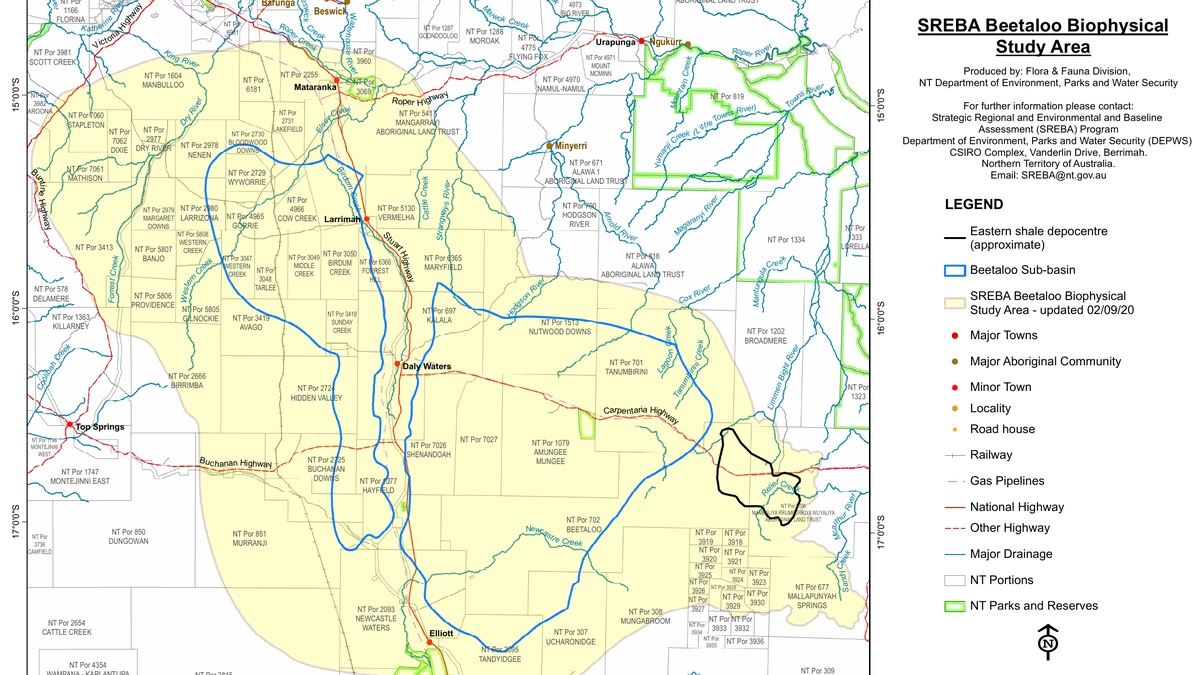
Austin-based Formentera Partners has reached a milestone it has been talking about for months: first commercial gas sales from Australia’s Beetaloo Basin. The development was disclosed on Sept. 7 through partner communications around the Shenandoah South Pilot Project, marking the first time gas from the basin has been sold into the Northern Territory market rather than simply tested or appraised.
The timing is worth stating carefully. The public announcement of first sales arrived on Sept. 7, but the Northern Territory government said first gas actually started flowing on Sept. 1 from Tamboran Resources’ Shenandoah South project. That means this week’s news is not that the basin suddenly produced gas for the first time on Sept. 7; it is that the start of commercial supply has now been confirmed after physical gas began entering the network earlier in the month.
That distinction does not make the moment any less significant. After more than a decade of exploration and appraisal, the Beetaloo has moved into operating supply. Formentera, through its wholly owned subsidiary Daly Waters Energy, sits at the center of that shift alongside Tamboran. On its corporate website, Formentera describes itself as an Austin, Texas-based energy investment and operating platform that is developing 1.9 million net acres in the Beetaloo Basin. The company has spent much of 2026 positioning that Australian exposure as a practical extension of U.S. shale know-how, so first commercial sales carry strategic importance beyond a simple startup update.
Commercial sales turn the Beetaloo from promise into operating supply
The clearest official public confirmation comes from the Northern Territory government’s Sept. 3 update, which said homes, businesses and industry in the Territory were being powered by Beetaloo gas for the first time. The government said more than 40 terajoules a day would flow from the Shenandoah South development, around 60 kilometers south of Daly Waters, through the Sturt Plateau Pipeline and into the Territory gas network.
The same government statement called the event a transition from exploration and appraisal into an operating resource. That wording matters because the Beetaloo Basin has long been promoted as a potentially important new source of domestic gas, yet for years it remained primarily a story about flow-test results, regulatory permissions, environmental scrutiny and infrastructure planning. Commercial sales move the discussion onto different ground. There is now a live supply chain connecting Beetaloo gas to end users in the Northern Territory.
Tamboran’s official ASX announcements archive lists a Sept. 7 release titled “Tamboran delivers first gas sales from the Beetaloo Basin,” providing company-level confirmation of the milestone on the date relevant to this story. While that archive page is broad rather than a single-document permalink, it establishes that the first-sales announcement was formally published by the company on Sept. 7.
For the Territory government, the development is not just symbolic. It said long-term Beetaloo contracts are expected to replace costly emergency gas arrangements, putting downward pressure on local energy prices while improving reliability. In other words, the first commercial molecules matter not only because they validate years of upstream work, but also because they begin to address a practical supply problem in the Territory market.
Infrastructure, contracted volumes and commissioning explain the economics
The commercial start-up rests on infrastructure that has been under construction and commissioning for much of the year. In a Sept. 1 release on its investor site, Tamboran said the Sturt Plateau Compression Facility had commenced gas commissioning using gas from wells on the Shenandoah South 2 pad. The company described the facility as the key processing infrastructure required to deliver gas from the Shenandoah South Pilot Area to the Northern Territory gas market.
Tamboran said the facility can process up to 50 terajoules a day, with 40 terajoules a day contracted to the Northern Territory government under a long-term, take-or-pay gas sales agreement that can run for up to 14 years. It also said gas sold during commissioning would be priced at a discount, reflecting the interruptible nature of supply while start-up work continues. Those details help explain why the first-sales milestone should be read as commercial progress, but not yet as the fully mature operating state the project is ultimately designed to reach.
That nuance is especially important for investors and industry watchers trying to judge how much de-risking this announcement represents. The basin has cleared an important threshold because gas is now being sold. Even so, commissioning-phase sales are not the same thing as long-term plateau operations. Reliability, uptime, realized pricing, well performance and cost control still need to be demonstrated over time if Shenandoah South is to become the foundation for a broader development case across the basin.
Still, the infrastructure work itself appears to have progressed largely in line with plan. Tamboran said the Sturt Plateau Compression Facility project remained on schedule and within its P50 gross budget of A$141 million. If that budget discipline holds through full ramp-up, it strengthens the broader argument long made by Formentera, Daly Waters Energy and Tamboran that Beetaloo gas can move from an appraisal story into a repeatable commercial model.
The linkage between upstream drilling and midstream readiness is one reason Formentera’s role deserves attention. Formentera and its Daly Waters businesses are not just passive acreage owners waiting for someone else to prove the basin. They have been participating in the system that connects wells to market, which makes first commercial sales more consequential for their strategy than a simple royalty or minority-interest update would have been.
Formentera now has proof of concept, but scaling remains the real test
Formentera has spent 2026 presenting itself as a company exporting U.S. shale methods into an underdeveloped Australian basin. That message becomes easier to sell now that the basin’s first commercial gas sales have begun. A live sales stream gives the Austin firm and its subsidiary something more persuasive than prospective acreage maps or well-test charts when discussing the Beetaloo with investors, partners and counterparties.
But first sales do not settle the larger debate around what the Beetaloo can become. The Northern Territory government says the sub-basin is estimated to hold more than 430 trillion cubic feet of gas in place and forecasts that development could generate more than $17 billion in cumulative economic value and support more than 13,000 jobs by 2040. Those are big numbers, and they help explain the political and commercial attention surrounding every project milestone. They are also basin-wide projections, not guaranteed outcomes from Shenandoah South alone.
The near-term operating question is whether commissioning volumes can translate smoothly into dependable contracted deliveries and then into a larger, scalable development template. The strategic question is whether the first commercial sales from Shenandoah South make it easier to unlock further drilling, infrastructure build-out and future domestic or export-linked opportunities. Formentera has already tied part of that longer-term narrative to its strategic partnership with INPEX, which it says is aimed at building a new domestic gas source for Australia and supporting future LNG exports.
There are also competitive and regional implications. The Territory government said Beetaloo Energy Australia is targeting first gas sales from its Carpentaria pilot project by the end of 2026, while Santos is progressing three production wells and INPEX continues exploration and appraisal work across the basin. That means Shenandoah South is not the end of the story. It is the first operating marker in what could become a broader race to establish commercial positions across the Beetaloo.
For now, though, the simplest takeaway is the most important one. Formentera and its partners have crossed a threshold that until recently remained only an objective: gas from the Beetaloo Basin is now being sold. The announcement does not eliminate the execution risks that come with ramping a young gas province, but it gives the basin something tangible it previously lacked. After years of talking about potential, the Beetaloo finally has commercial sales to point to.
More News

Latest News
View all news- Five Tradr Leveraged ETFs Reach October 20 Trading Suspension Date on Cboe
- SEC and French Regulator Sign Oversight Agreement for Cross-Border Investment Advisers
- NCUA Proposes Easing Three Credit Union Rules, Including Investment Reserve Requirements
- Instacart Agrees to $5 Million Settlement Over U.S. Hiring Discrimination Allegations
- GM Authorizes $20 Billion Share Buyback After Reporting $3.3 Billion Quarterly Profit