MasTec Agrees to Acquire Murphy Corporation for About $1.25 Billion
The cash purchase would add a mechanical contractor with projected 2026 revenue of $775 million, alongside a performance-based earnout and new debt financing.
Our editorial standards
MarketReview publishes clear, independently produced financial information using reliable sources and transparent editorial standards.
Read our Editorial Policy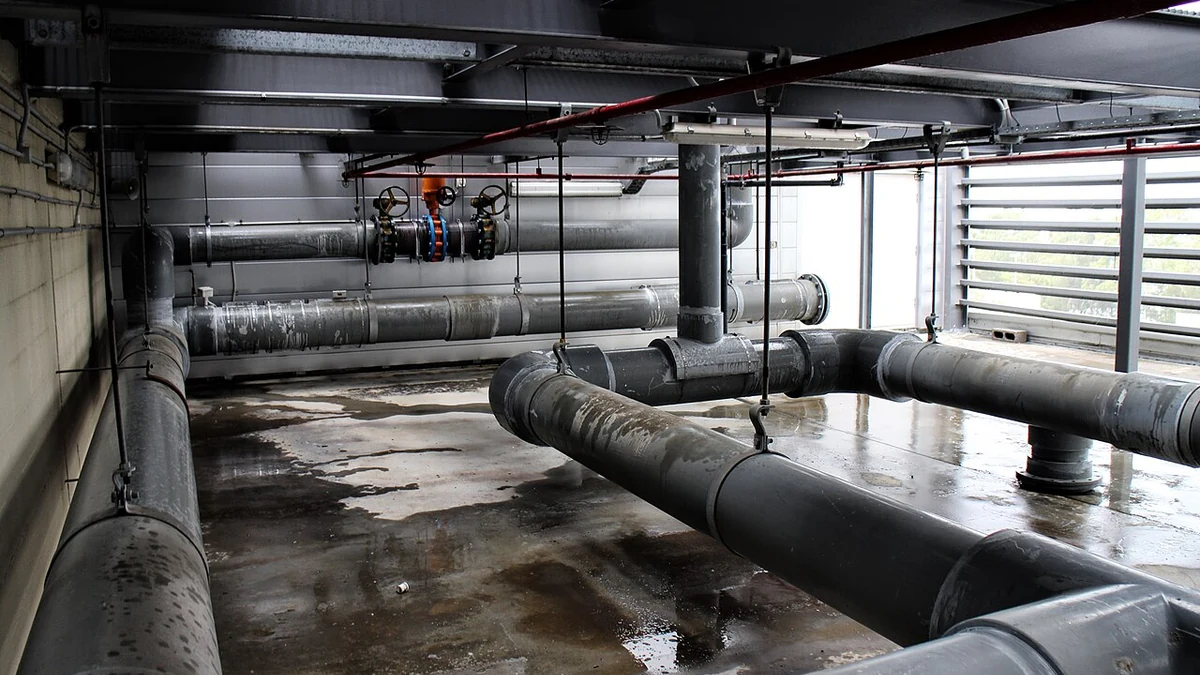
MasTec has agreed to acquire Murphy Corporation for approximately $1.25 billion in cash, giving the infrastructure contractor a larger presence in mechanical construction and maintenance for complex facilities. The agreement, announced November 20, also includes a potential additional payment tied to Murphy’s financial performance after closing.
The purchase adds a business that designs, builds and services mechanical, plumbing and process systems used in settings such as data centers, hospitals and pharmaceutical plants. MasTec, best known for its work across energy, communications and utility infrastructure, expects the acquisition to broaden the work it can perform at customers’ facilities rather than simply add another construction backlog.
Under the definitive acquisition agreement announced by MasTec, Murphy’s existing management team will remain in place, led by President and Chief Executive Officer Patrick Murphy. MasTec expects the purchase to close promptly and said substantially all closing conditions have already been satisfied. The deal had not been described as completed in the announcement.
Cash financing, an earnout and a higher debt load
The $1.25 billion cash price remains subject to customary purchase-price adjustments. Separately, the sellers may receive an earnout based on Murphy’s cumulative financial performance over three years after closing. MasTec did not specify a maximum earnout or a fixed amount that would be paid under that provision, so the headline cash price is not necessarily the final amount spent on the acquisition.
MasTec said it arranged a bank term loan at the same time it signed the purchase agreement. The financing is significant because the buyer is funding the upfront price with cash rather than announcing an exchange of MasTec shares for Murphy equity. Borrowing to make the payment will increase leverage, even as management expects the acquired business to contribute operating earnings and cash flow.
Using September 30, 2026 as the measurement date, MasTec estimated pro forma net leverage of 2.7 times after accounting for the acquisition. It expects that ratio to fall below 2.0 times during calendar 2027. Those figures are company estimates, not a record of debt reduction already achieved, and their realization will depend in part on future operating performance and cash generation.
Murphy is projected to produce roughly $775 million in revenue and $140 million in adjusted earnings before interest, taxes, depreciation and amortization (EBITDA) for calendar 2026. MasTec also said the contractor recorded double-digit growth in revenue and EBITDA during the two years ended March 31, 2026. The 2026 full-year amounts are projections rather than audited results, and adjusted EBITDA is a non-GAAP measure that is not the same as net income.
MasTec expects Murphy to add to revenue, adjusted EBITDA, earnings per share and cash flow from operations immediately following the acquisition. That is management’s forecast, not a guarantee of the eventual financial outcome. The extent of the earnings contribution will depend on Murphy’s results, borrowing costs, purchase accounting and the timing of the closing.
Murphy adds specialist crews and work beyond construction
Founded in 1907 and still family-owned before the proposed sale, Murphy has approximately 1,600 employees, including about 1,200 union craft professionals. Its services span mechanical and plumbing installations, process infrastructure and engineering-intensive work requiring prefabrication, detailed planning and on-site execution. The company also maintains systems after they have been installed, an activity with a different demand pattern from large one-time building projects.
Its customers operate in aviation and defense, healthcare, pharmaceutical production, technology, food processing and advanced manufacturing, among other markets identified by MasTec. These are facilities where heating, ventilation, refrigeration, piping and control systems can be essential to uninterrupted operations. Mechanical work can therefore continue after a new facility opens, through inspection, repairs, equipment replacement and maintenance contracts.
That ongoing work is one of the acquisition’s central attractions. MasTec sees opportunities to expand Murphy’s existing HVAC, plumbing, refrigeration and controls service business, particularly at operating data centers. A construction project may establish relationships with owners and facility operators; subsequent maintenance work can extend those relationships after the original build is finished. How much additional recurring revenue the enlarged group can secure has not been quantified.
Murphy’s technical strengths also address a practical constraint in infrastructure projects: the availability of skilled labor able to install sophisticated systems to demanding schedules. The union craft workforce comes with engineering, preconstruction, building-information-modeling and prefabrication capabilities. MasTec expects those resources to strengthen its ability to take on work inside facilities, complementing its established roles in delivering power and other infrastructure to them.
Patrick Murphy is set to continue leading the business. The retention of the management team matters for a contractor whose customer relationships and project delivery rely heavily on specialist expertise. MasTec has said Murphy will operate as a new group, with its financial results expected to be reported within the buyer’s Clean Energy and Infrastructure segment.
A wider push into critical infrastructure
The purchase follows a period of expansion for MasTec, which operates through communications, power delivery, pipeline infrastructure, and clean energy and infrastructure businesses. Its third-quarter 2026 revenue was approximately $5.2 billion, up 30% from a year earlier, according to the company’s October earnings announcement. Murphy would add a sizable mechanical operation to that broader construction platform, although its projected 2026 sales should not be treated as revenue already consolidated by MasTec.
MasTec has also been expanding in electrical contracting. Its September-quarter filing records the July purchase of Superior Group, a contractor focused on large-load electrical infrastructure and included in the Power Delivery segment. Murphy addresses a different part of complex projects, particularly mechanical systems and the services needed to keep facilities running. The distinction helps explain why the buyer sees a broader opportunity in work at technology, healthcare and industrial sites.
For customers, a wider set of in-house services could allow MasTec to pursue projects that require both supporting infrastructure and work inside the facility. But that opportunity will not automatically become new contracts. Winning work still depends on customer spending, competitive bids, labor availability and the ability to deliver large projects to budget and schedule.
There are financial and operational limits to the expected benefits as well. The new term loan raises the importance of cash generation and debt repayment, and MasTec will need to preserve Murphy’s project execution and service relationships as ownership changes. The company also faces the usual exposure of construction contractors to timing changes, material costs and shifts in client capital budgets. Its stated leverage target for 2027 depends on those conditions developing broadly as anticipated.
For now, MasTec has announced an agreement rather than a completed purchase. The next concrete milestone is closing, after which the company expects to begin reflecting Murphy’s results in its Clean Energy and Infrastructure segment. The eventual size of the performance-based earnout will remain dependent on results over the following three years.
More from Investing
Latest News
View all news- FDIC Publishes Proposed Custodial Deposit Rules Affecting Smaller U.S. Banks
- India’s Forex Reserves Drop $14.2 Billion to $705.3 Billion, Lowest in Over Three Months
- Federal Reserve Releases New Survey of Banks’ Reserve-Management Strategies
- GAO Flags AI-Driven Cybersecurity Risks Across Financial Services and Critical Infrastructure
- U.S. Industry Productivity Growth Remains Uneven, New BLS Data for 2025 Show