OppFi Withdraws Federal Banking Applications for Proposed BNC Acquisition
OppFi withdrew filings submitted to three federal banking regulators, but its agreement to acquire BNCCORP and BNC National Bank remains in effect.
Our editorial standards
MarketReview publishes clear, independently produced financial information using reliable sources and transparent editorial standards.
Read our Editorial Policy
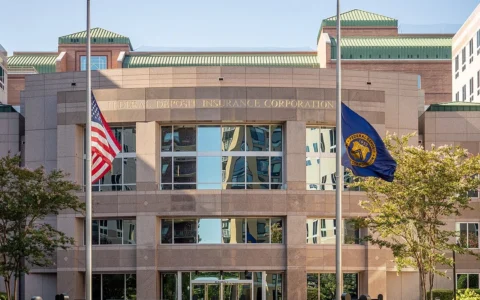
OppFi has withdrawn its federal banking applications for the proposed acquisition of BNCCORP and its subsidiary, BNC National Bank, putting the company’s plan to gain a national bank charter in doubt. The Chicago-based digital finance company said Tuesday, November 3, that it had pulled filings submitted to the Office of the Comptroller of the Currency, the Federal Reserve and the Federal Deposit Insurance Corporation.
The withdrawal is not the same as a formal denial by any of those agencies, and it does not mean the acquisition has been canceled. OppFi’s November 3 securities filing says its merger agreement with BNCCORP remains in effect, even though the applications needed to advance the purchase have been withdrawn.
The announcement leaves an important question unresolved: whether OppFi can find an acceptable way to obtain approval for the acquisition, or whether the purchase will ultimately fail to close. The company did not give a timetable for submitting fresh applications or identify a revised structure for the proposed purchase.
OppFi points to uncertainty in the regulatory review
In its November 3 update, OppFi said it had contacted federal regulators before signing the BNC agreement and had responded to extensive information requests after filing. It attributed the decision to withdraw to what it described as communication restrictions during the review and a lack of clearly articulated standards for assessing its business model.
That explanation is the company’s account of the process, rather than a finding by the three banking agencies. OppFi has not disclosed an adverse final decision from the OCC, Federal Reserve or FDIC. Nor does the withdrawal establish that any regulator would have approved the applications had the company kept them pending.
Todd Schwartz, OppFi’s chief executive officer and executive chairman, said management believes its applications met the statutory criteria for approval. His broader complaint was that the company could not determine how regulators were applying those criteria to a digital lending platform seeking to own a nationally chartered bank.
OppFi said it intends to keep engaging with federal regulators about standards that could govern relationships between financial technology businesses and community banks. That is a statement of intent, not an indication that the agencies have accepted its position or agreed to restart the review.
The distinction between an application and an acquisition agreement matters here. A withdrawn application no longer advances the approval process in the form originally submitted. The contractual agreement between the companies is a separate matter, and OppFi said in its Form 8-K that the agreement had not been terminated as of November 3.
In the same disclosure, the company identified the agreement as one signed on April 28 with BNCCORP and a wholly owned OppFi merger subsidiary. OppFi’s current warning language also acknowledges the possibility of a delayed, restructured or abandoned acquisition. New regulatory filings, if pursued, would not by themselves guarantee a closing.
The bank acquisition was designed to change OppFi’s business model
OppFi announced the proposed $130 million acquisition in April as a way to bring its online lending operation together with a bank that already holds a national charter. The target, BNCCORP, owns BNC National Bank, a commercial bank based in Glendale, Arizona, with banking operations serving individuals and businesses.
Under the announced terms, BNCCORP shareholders would receive $19.375 in cash and 1.90 shares of OppFi Class A common stock for each BNCCORP share. The approximately $130 million figure reflected the deal’s value when announced; the stock portion means its ultimate value is sensitive to OppFi’s share price. Both companies’ boards approved the agreement, subject to shareholder, regulatory and other closing conditions.
The prospective acquisition was much more than a change of ownership on paper. OppFi currently operates a technology-enabled finance platform that works with bank partners to offer consumer lending products. Buying BNC would give it an established banking business, along with a deposit base and infrastructure that management had hoped to use to expand products and funding options.
At the end of 2025, BNC had approximately $1.1 billion in assets and $1 billion in deposits, according to OppFi’s original announcement. Management argued that access to those deposits could diversify funding and reduce reliance on more expensive sources of capital. It also outlined plans to expand into offerings such as secured consumer loans, Small Business Administration lending and wealth management.
Those benefits were projections contingent on the acquisition closing and on successful execution afterward. The withdrawal of the federal applications means OppFi cannot treat them as realized improvements to its current operations. Its original schedule had called for a fourth-quarter 2026 closing, a timetable now subject to substantial uncertainty.
The legal structure is also important. The parties’ SEC registration materials describe a merger through which OppFi would acquire BNCCORP, followed by a bank merger involving BNC. The planned result would place the national bank within OppFi’s corporate structure. Although a merger agreement governs the legal steps, the commercial purpose is OppFi’s acquisition of BNCCORP and its bank.
For BNCCORP shareholders, the unresolved regulatory path complicates an agreement that offered both a fixed cash amount and OppFi shares. For OppFi, the obstacle delays a proposed route toward direct ownership of a bank. Neither outcome should be confused with an already completed acquisition or a formal regulatory rejection.
Full-year guidance stays in place despite the setback
Alongside the regulatory news, OppFi reaffirmed the financial guidance it revised following its third-quarter results. It still expects 2026 revenue of $600 million to $610 million, adjusted net income of $115 million to $120 million and adjusted earnings per diluted share of $1.34 to $1.40.
The adjusted earnings-per-share range assumes approximately 86 million weighted-average diluted shares. Adjusted net income and adjusted EPS are non-GAAP measures, which the company uses alongside its reported results. OppFi said it could not provide a reconciliation of projected full-year adjusted results to the nearest GAAP measures without unreasonable effort because certain adjustments could not be forecast reliably.
The reaffirmation follows a mixed third quarter. In its October 28 earnings release filed with the SEC, OppFi reported revenue of about $149.2 million, down 3.8% from a year earlier, while adjusted net income fell 22.5% to approximately $31.6 million. For the first nine months of 2026, revenue was about $446.3 million, up 1.9% year over year.
Management has also been developing products independent of the pending bank acquisition. During the third quarter, the company launched a line-of-credit product and continued work on its LOLA technology platform. Those initiatives provide context for its assertion that future growth need not depend entirely on gaining a national charter.
Keeping the forecast unchanged does not resolve the acquisition risk. The guidance addresses expected operating performance for the year, whereas the question of bank ownership depends on approvals and the parties’ willingness and ability to carry the agreement forward. OppFi has specifically warned that approval could remain unavailable even if it changes the proposed structure or files new applications.
The next meaningful development will be a concrete change to that regulatory path: a new application, a revised acquisition agreement or a termination notice. Until one is disclosed, the agreement remains in effect, but the federal approvals required to complete the BNC purchase are not in hand.
More from Banking

Latest News
View all news- U.S. Logistics Cost Pressures Reach Their Highest Level Since March 2022
- U.S. Job Openings Hold at 7.5 Million in September as Worker Quits Rise
- U.S. Gold Bar and Coin Demand Plunges 40% to Weakest Level Since 2019
- U.S. Regular Gasoline Prices Fall 11.6 Cents to $4.153 a Gallon in EIA Report
- Silver Futures Slide More Than 3% Intraday as U.S. Rate Concerns Weigh on Precious Metals