
U.S. Gold Bar and Coin Demand Plunges 40% to Weakest Level Since 2019
World Gold Council data showed U.S. demand for gold bars and coins fell to 8 tonnes in the third quarter as muted appetite for newly minted products and dealer inventories weighed on purchases.
Our editorial standards
MarketReview publishes clear, independently produced financial information using reliable sources and transparent editorial standards.
Read our Editorial Policy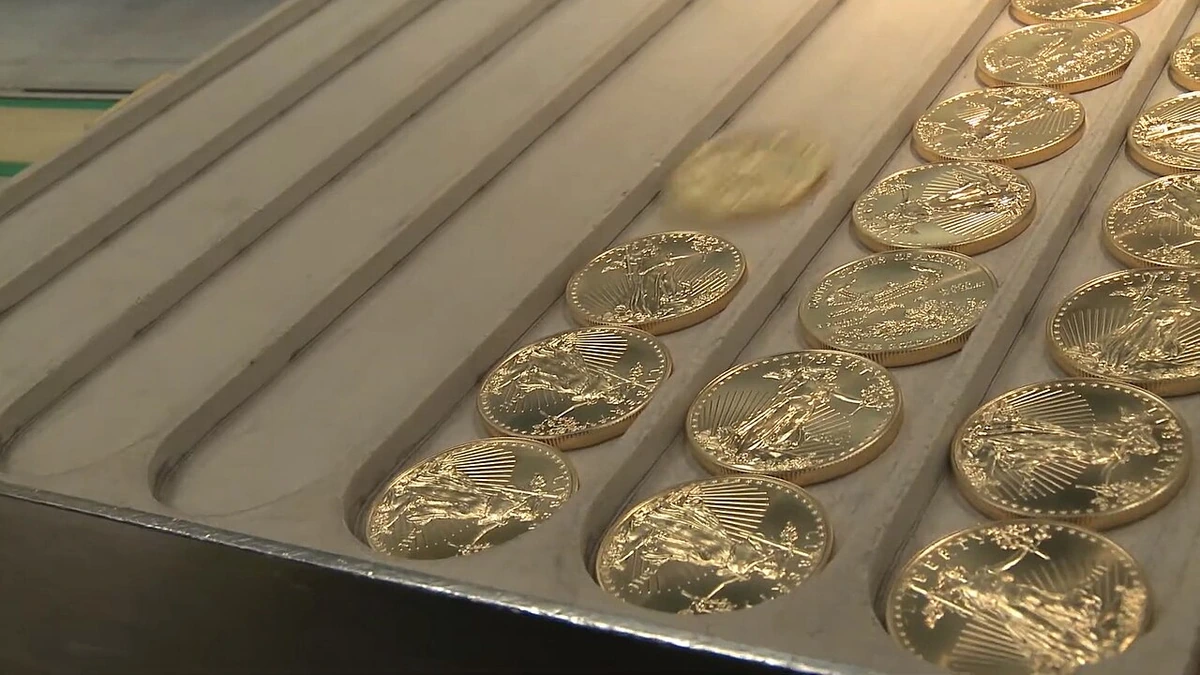
U.S. retail demand for gold bars and coins fell 40% from a year earlier in the third quarter, dropping to 8 tonnes in the weakest showing since late 2019, as investors held back from fresh purchases and dealers met much of the limited buying from existing inventories instead of ordering large volumes of newly minted products.
The figures came from the World Gold Council’s latest quarterly demand report, which showed that U.S. bar-and-coin demand was also down 45% from the second quarter. That made the United States one of the softer major retail bullion markets in a quarter when broader gold investment remained healthy, but was driven more by exchange-traded funds and central-bank buying than by coin shops or small bars.
That divergence matters because it shows the U.S. retail investor has not been responding to gold’s elevated price in the same way as institutional buyers. Gold remained historically expensive in the period, yet rather than chasing the market higher, many individuals appeared to wait for a clearer directional signal or used price rallies as an opportunity to sell existing holdings.
U.S. retail gold buying drops to a post-2019 low
According to the World Gold Council’s Q3 2026 investment update, U.S. demand for bars and official coins fell to 8 tonnes in the third quarter, its weakest quarter since the final three months of 2019. The report said demand for newly minted coins continued the weakening trend seen over the last couple of years, while continued profit-taking further reduced net investment levels.
The drop was steeper than the overall global decline in bar-and-coin demand. Worldwide retail investment in bars and coins fell 19% year over year to 267.8 tonnes, which the council described as a four-year low. U.S. weakness therefore was not simply part of a small, uniform slowdown. It was a sharper retreat within a broader global cooling in physical retail demand.
Price behavior played an important role. The World Gold Council said investors were waiting for a clearer trend in the gold price rather than adding aggressively during a rangebound market. Its broader quarterly report showed the LBMA PM gold price averaged $4,262.2 an ounce in the third quarter, up 23% from a year earlier and the third-strongest quarterly average on record. High prices can support interest in gold as a store of value, but they can also make physical products harder to buy in meaningful size and encourage holders to lock in gains.
The U.S. result also stood out because it came despite continuing geopolitical tension and macro uncertainty, two factors that often support bullion buying. Instead, small investors appeared more selective. With expectations for U.S. interest rates staying higher for longer and equity markets still offering competition for new money, the appeal of committing fresh cash to bullion products appears to have weakened during the quarter.
Dealer inventories and muted coin demand weighed on purchases
The World Gold Council offered several specific reasons for the weak U.S. reading. Demand for newly minted coins remained soft, and one major retailer saw sales subside from previously elevated levels, particularly in bars. At the same time, continued profit-taking added to secondary supply, which changed how the market was being served.
Low gold lease rates were another factor. Those rates made it economical for dealers to keep coins they had bought back from customers rather than send them for melting. As a result, a significant share of new buying could be met from coins already in dealer inventories. That reduced the need for fresh orders from mints or wholesalers and lowered the amount of apparent new demand captured in quarterly physical investment figures.
This dynamic helps explain why the downturn was not simply a story of collapsing investor interest. Some investors were still buying, but the market could satisfy more of that demand from existing stock. That matters in a quarter like this one because headline tonnage data measure net investment demand, not every gross transaction between investors and dealers.
Official U.S. Mint bullion sales figures, which are reported separately by product and updated monthly, provide another window into the physical market, although they are not identical to the World Gold Council’s broader retail-demand estimates. Taken together with the council’s commentary, they reinforce the picture of a market that was quieter than in previous quarters and less reliant on fresh demand for new products.
Broader gold demand stayed resilient as ETFs and central banks led
The weak U.S. retail reading did not mean gold demand more broadly had collapsed. On the contrary, the World Gold Council said total third-quarter gold demand, including over-the-counter activity, slipped just 1% from a year earlier to 1,368.6 tonnes. Investment demand excluding OTC reached 479 tonnes, down 14% from a very strong year-earlier quarter but still supported by a rebound in ETF buying.
Physically backed gold ETFs attracted 211.2 tonnes of inflows in the quarter, taking global holdings to a record 4,256 tonnes, according to the council. Central banks and other official institutions added 321.2 tonnes, up 42% from a year earlier. Those two pillars of demand offset much of the softness in bars and coins and underline how different parts of the gold market can move in opposite directions at the same time.
Regional comparisons show the U.S. was not alone in seeing weaker retail activity, but its decline was particularly notable. European bar-and-coin demand fell 31% year over year to 20 tonnes, with Swiss demand halving to 3 tonnes. India was down 40% to 55 tonnes, although the council said some of that weakness reflected the festival calendar shifting into the fourth quarter this year. China was the main outlier among major markets, with bar-and-coin demand rising 7% to 79 tonnes.
For investors and gold-market participants, the U.S. data highlight an important distinction. Strong bullion prices, ETF inflows and official-sector buying can coexist with a subdued retail coin-and-bar market. In the third quarter, that is exactly what happened. The next question is whether U.S. retail demand revives if price momentum becomes clearer, or whether elevated prices and ready dealer inventories continue to keep newly minted bullion sales under pressure into year-end.
More from Investing

Latest News
View all news- U.S. Logistics Cost Pressures Reach Their Highest Level Since March 2022
- U.S. Job Openings Hold at 7.5 Million in September as Worker Quits Rise
- U.S. Regular Gasoline Prices Fall 11.6 Cents to $4.153 a Gallon in EIA Report
- U.S. Factory Orders Rise 1.8% in September, Led by Aircraft Demand
- OppFi Withdraws Federal Banking Applications for Proposed BNC Acquisition
