
Silver Futures Slide More Than 3% Intraday as U.S. Rate Concerns Weigh on Precious Metals
December silver futures briefly fell below $50 an ounce, with rate-hike expectations resurfacing after two Federal Reserve policymakers voted for higher rates.
Our editorial standards
MarketReview publishes clear, independently produced financial information using reliable sources and transparent editorial standards.
Read our Editorial Policy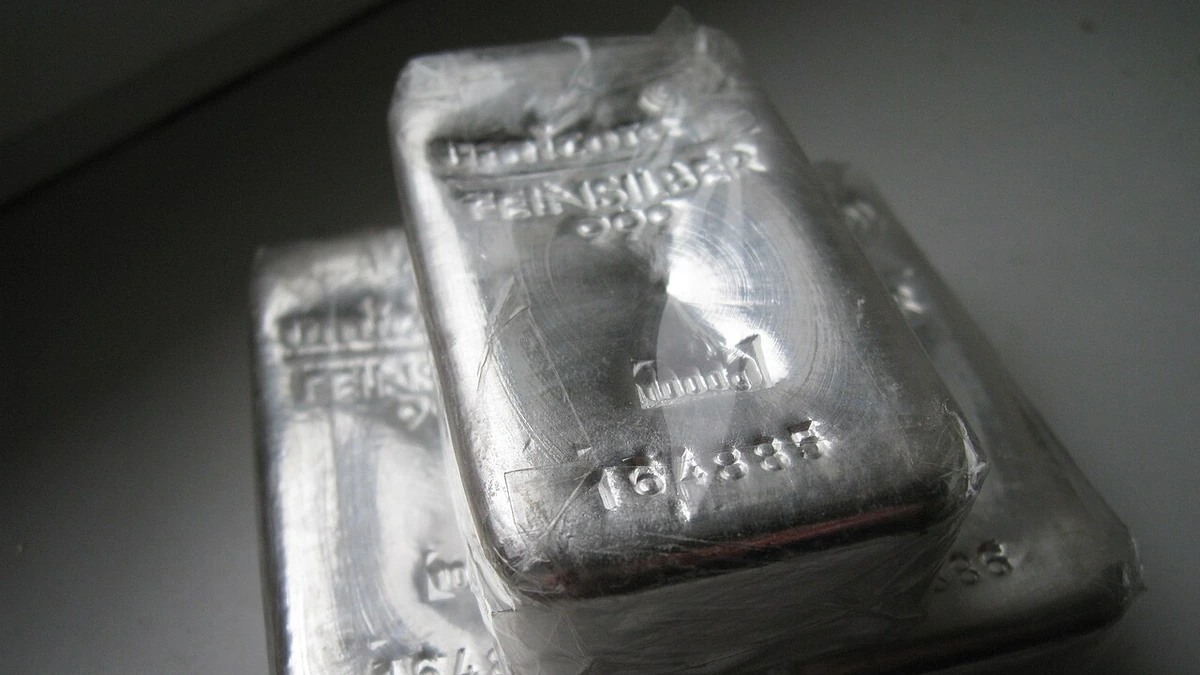
Silver futures fell more than 3% during Tuesday’s trading as concerns about the U.S. interest-rate outlook put fresh pressure on precious metals. The December contract on Comex was quoted at $49.07 per troy ounce, down $1.82, or 3.58%, in an intraday market report by Press Trust of India on November 3.
The move took the contract below $50 after silver had recovered some ground in the previous session. Selling also extended to India’s Multi Commodity Exchange, where December silver futures were quoted at 177,611 rupees per kilogram, a decline of 6,168 rupees, or 3.36%, in the same report. Those figures are observations from trading, not final settlement prices, and the two exchanges use different currencies and units.
Rate expectations are central to the setback. The Federal Reserve held its benchmark lending-rate target steady last week, but the vote was not unanimous: two policymakers wanted an increase. That disagreement, together with concern about persistent inflation and the potential for higher bond yields, left investors weighing whether monetary policy could become more restrictive rather than less.
Silver slips below $50 as the futures market swings
Tuesday’s drop reversed part of Monday’s rebound and showed how quickly the mood around bullion can change. Earlier market updates had Comex silver near $50 an ounce, before subsequent reporting placed the December contract below that level. Prices continued to move during the session, so the more-than-3% fall should be understood as an intraday move rather than a statement about where silver ultimately finished the day.
The quoted U.S. futures contract is a standardized exchange-traded instrument rather than a direct quote for silver coins or bars sold to the public. CME Group’s silver futures market provides a benchmark for traders hedging or taking exposure to the metal. A standard Comex silver futures contract represents 5,000 troy ounces and is quoted in U.S. dollars per troy ounce. That structure also means a seemingly small move in the price per ounce can produce a sizeable change in a futures position’s dollar value.
The decline in India’s December contract provided another view of the selloff, although its percentage move cannot be treated as a perfectly synchronized measure of trading in New York. Contracts on the MCX are denominated in rupees per kilogram, and local trading hours, currency movements and the timing of individual quotes affect comparisons. The common signal was weaker silver futures, not a single identical price across markets.
Gold also came under pressure during the session, according to contemporaneous market reporting, but silver was especially sensitive to the shift in sentiment. Traders were contending with concerns about the dollar, Treasury yields and the possibility of another U.S. rate increase. Market commentators also pointed to a reduction in speculative exposure. Without exchange-position data establishing what individual participants did, it would be too strong to say that forced liquidations or a particular group of investors caused the entire decline.
Fed’s divided rate decision keeps tightening in the conversation
There was no new Federal Reserve rate increase on November 3. At its October 28 meeting, the Federal Open Market Committee voted 10 to 2 to maintain the federal funds target range at 3.75% to 4.00%. The Fed’s policy statement identified Lisa D. Cook and Beth M. Hammack as the two dissenting voters; both preferred a quarter-percentage-point increase instead.
The statement also described economic activity as expanding at a strong pace and inflation as still elevated. It gave no promise that the next meeting would produce a rate increase. Nevertheless, the dissent made it harder to read the hold as a signal that the debate over additional tightening had ended. That is an important distinction for silver: the metal’s price on Tuesday reflected changing expectations about future policy, not a policy action taken that day.
Precious metals do not pay interest. When investors believe yields on cash and government bonds may rise, holding bullion can become less attractive relative to assets that generate income. A firmer U.S. dollar can add another obstacle because internationally quoted metals become more expensive for some buyers using other currencies. These relationships are not mechanical on every trading day, but they help explain why the outlook for rates has been influential in both gold and silver trading.
The inflation backdrop adds a complication. Higher prices can sometimes support demand for metals as a store of value, yet persistent inflation can also make investors expect a tougher response from the central bank. In the current market, reporting from commodities analysts emphasized the second channel, with rate and yield concerns weighing on bullion. That interpretation is consistent with the Fed’s stated caution, although the central bank did not attribute any metals-market move to its own decision.
Industrial demand complicates silver’s outlook
Silver is not simply a smaller version of gold. It has an investment market, but manufacturers also use it in electrical components, solar technology and other industrial products. That dual role creates competing sources of demand. A change in expectations for monetary policy can pull investment money away from bullion, even when longer-term demand for the metal in physical applications remains substantial.
The latest annual figures published by the Silver Institute offer a useful corrective to a simple narrative that demand from high-tech manufacturing must always be pushing silver prices higher. The industry organization reported in April that global industrial silver demand fell 3% in 2025 to 657.4 million ounces. Demand from electrical and electronics applications also declined, with lower photovoltaic usage offsetting gains associated with artificial-intelligence infrastructure, automobiles and power-grid investment.
For 2026, the Silver Institute forecast a further 3% decline in industrial demand, largely reflecting the effort by solar-cell manufacturers to use less silver or substitute other materials. It nevertheless expected the overall silver market to remain in deficit, meaning total demand would exceed new supply during the year. Those estimates are industry forecasts rather than a real-time explanation for Tuesday’s futures selling. They show why a fall in the quoted price need not correspond to a sudden change in factory demand, or prove that the physical market has moved into surplus.
There is also a difference between the price of a futures contract, the spot market and retail prices for fabricated silver products. The intraday Comex decline describes the exchange-traded December contract. It does not mean that every silver bar, coin or industrial supply agreement changed by precisely the same percentage at the same moment. For a market already experiencing sharp reversals, keeping those distinctions clear is more useful than treating a single quote as a universal price.
The next scheduled U.S. data releases will provide a more concrete test of the rate concerns behind the move. The Bureau of Labor Statistics is due to publish the October employment report on Friday, November 6, at 8:30 a.m. Eastern, followed by the October consumer price index on November 10. The Fed’s next scheduled policy meeting is December 8-9. Employment and inflation readings could alter expectations before then, with consequences for yields, the dollar and silver futures.
More from Investing

Latest News
View all news- U.S. Logistics Cost Pressures Reach Their Highest Level Since March 2022
- U.S. Job Openings Hold at 7.5 Million in September as Worker Quits Rise
- U.S. Regular Gasoline Prices Fall 11.6 Cents to $4.153 a Gallon in EIA Report
- U.S. Factory Orders Rise 1.8% in September, Led by Aircraft Demand
- OppFi Withdraws Federal Banking Applications for Proposed BNC Acquisition
