Sweden’s Final Inflation Report Shows Fuel Prices Up 25% Despite 0.9% Headline CPI
Food prices fell 7%, cushioning the impact of more expensive fuel and electricity, while the Riksbank’s preferred inflation measure eased to 1.1%.
Our editorial standards
MarketReview publishes clear, independently produced financial information using reliable sources and transparent editorial standards.
Read our Editorial Policy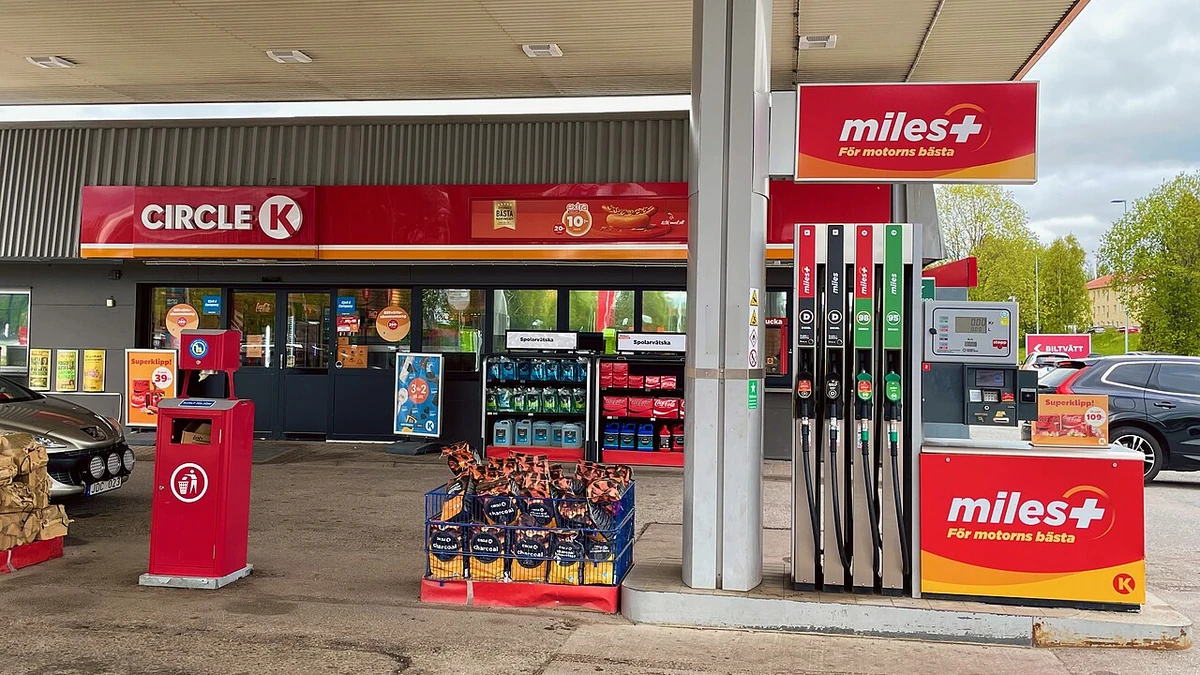
Sweden’s annual consumer inflation eased to 0.9% in October even as fuel prices were roughly a quarter higher than a year earlier, showing how sharp increases in individual household costs can coexist with a modest rise in the overall price index. The final figures, released by Statistics Sweden on Thursday, November 12, put headline CPI inflation below September’s 1.1% rate.
Motorists and electricity users faced higher costs than they did in October 2025, but food and non-alcoholic beverages were considerably cheaper. Those opposing price movements mattered to the overall CPI calculation: the declines in food helped offset the contribution from energy, leaving annual inflation below 1%.
A preliminary estimate a week earlier had already pointed to 0.9% inflation. The full publication supplied the category-level figures behind that reading. Statistics Sweden’s detailed October consumer price report shows that fuel and electricity together added about one percentage point to annual CPI inflation, an effect largely counterbalanced by falling food prices.
Diesel and petrol drove a sharp rise in fuel costs
Prices in the fuel category rose 25.2% in the 12 months through October. The change was uneven within that group: diesel prices increased 38% from a year earlier, compared with 16% for petrol. Both measures refer to annual price changes, not an increase that occurred solely during October.
Electricity also became more expensive, with prices up 14.3% over the year. According to the statistics agency’s contribution breakdown, fuel added 0.5 percentage point to the 0.9% headline inflation rate and electricity added another 0.5 point. Taken together, those two categories exerted more upward pressure than the entire net rise in the index.
A 25% jump in fuel costs does not translate into a similar increase in CPI. The headline index covers a broad basket of goods and services, with each category contributing according to its weight in household consumption. A steep rise in a relatively small part of the basket can have less influence on the total than a modest rise in a category that accounts for more spending.
Fuel prices were still rising during October itself, increasing 3.7% from September. Prices for electricity, gas and other household fuels rose 1.4% on the month. Each of those groups added about 0.1 percentage point to the monthly CPI movement before offsetting price changes elsewhere were taken into account.
September had brought even sharper monthly increases, with fuel prices up 13.3% and electricity prices up 11.7% from August. October therefore showed continued upward pressure from energy, though the month-to-month pace was slower for both categories.
Cheaper groceries offset much of the energy increase
Food and non-alcoholic beverage prices fell 7.0% from October 2025, reducing the annual CPI inflation rate by about one percentage point. The declines covered several familiar supermarket purchases. Statistics Sweden identified dairy products, chocolate, sugar, confectionery and desserts among the items with the largest price decreases.
In CPI terms, the roughly one-point upward contribution from fuel and electricity was matched by the one-point downward contribution from food. Other categories accounted for the remaining net increase. Neither the surge in energy costs nor the fall in grocery prices, taken alone, describes the full inflation picture.
Some services also cost less than a year earlier. Outpatient dental service prices dropped 22.1%, while public transport prices declined 25.9%. Each reduced the annual CPI rate by roughly 0.2 percentage point. The statistical agency linked the lower prices in those two areas to reforms, without treating the decline as evidence of a broader fall across all services.
Housing and eating out moved in the opposite direction. Rents for rental apartments were 3.3% higher than a year earlier and added 0.2 point to CPI. Restaurant and other food-serving services cost 2.7% more, also contributing 0.2 point. The differing changes help explain why the national average does not describe the cost pressures faced by every household in the same way.
Overall CPI was unchanged between September and October, according to the final data. Monthly fuel and household-energy gains were offset in part by a 10.8% decline in package holiday prices, which subtracted 0.2 percentage point from the monthly index. The flat monthly reading followed a 0.9% CPI rise in September, making the slower overall pace particularly visible despite the ongoing increases at fuel pumps.
Year-on-year inflation also depends on the comparison period. CPI rose 0.3% between September and October 2025, whereas the corresponding change this year was zero when rounded to one decimal place. That difference helps explain why the annual inflation rate fell from September to October even though the latest monthly index did not decline.
The Riksbank’s preferred inflation gauge eased to 1.1%
Sweden’s Consumer Price Index with a Fixed Interest Rate, or CPIF, rose 1.1% from a year earlier in October, down from 1.5% in September. CPIF holds mortgage interest rates constant, so changes in household borrowing rates affect the standard CPI differently. Sweden’s central bank uses CPIF, rather than headline CPI, for its monetary-policy inflation target.
According to the Riksbank’s official inflation-target guidance, the target is 2% a year. October’s 1.1% CPIF reading was below it, although a single inflation release does not establish what the bank will do at a future policy meeting. Decisions also depend on the economic outlook and risks not captured by one month of price statistics.
A measure that strips out energy prices showed even weaker underlying price growth. CPIF excluding energy, known as CPIF-XE, rose only 0.1% over the year, compared with 0.5% in September. Its index declined 0.1% between September and October. The contrast between the low energy-excluded rate and the higher CPIF rate is consistent with the final report’s finding that energy was a major contributor to inflation.
For a longer comparison, CPIF inflation stood at 3.1% in October 2025, against 1.1% in the latest report. Sweden’s harmonized inflation measure, used for comparisons across the European Union, registered 0.6% in October, down from 1.0% in September. Those measures serve different purposes and should not be treated as interchangeable.
The November 5 flash estimate had put October CPI, CPIF and CPIF-XE annual inflation at 0.9%, 1.1% and 0.1%, respectively, and those rates were unchanged in the final release. The newly published detail instead revealed the size of the offset between higher energy costs and cheaper food. Statistics Sweden’s next flash inflation estimate is scheduled for December 4.
More News



Latest News
View all news- National Vision More Than Doubles Adjusted Earnings Per Share but Cuts Sales Outlook
- U.S. Existing-Home Sales Plunge 5.5% to Lowest Level Since 2010
- Chicago Fed Releases New Reading on U.S. Financial Conditions
- Fed Governor Barr Warns AI Could Widen Wealth Inequality
- Canadian Building Permits Fall 4.1% as Residential Construction Intentions Weaken