
UK Plans New Bank of England Payments-Innovation Mandate Covering Stablecoins
HM Treasury plans to give the Bank of England a secondary innovation objective for payment systems, extending its remit to support new digital-money infrastructure while keeping financial stability first.
Our editorial standards
MarketReview publishes clear, independently produced financial information using reliable sources and transparent editorial standards.
Read our Editorial Policy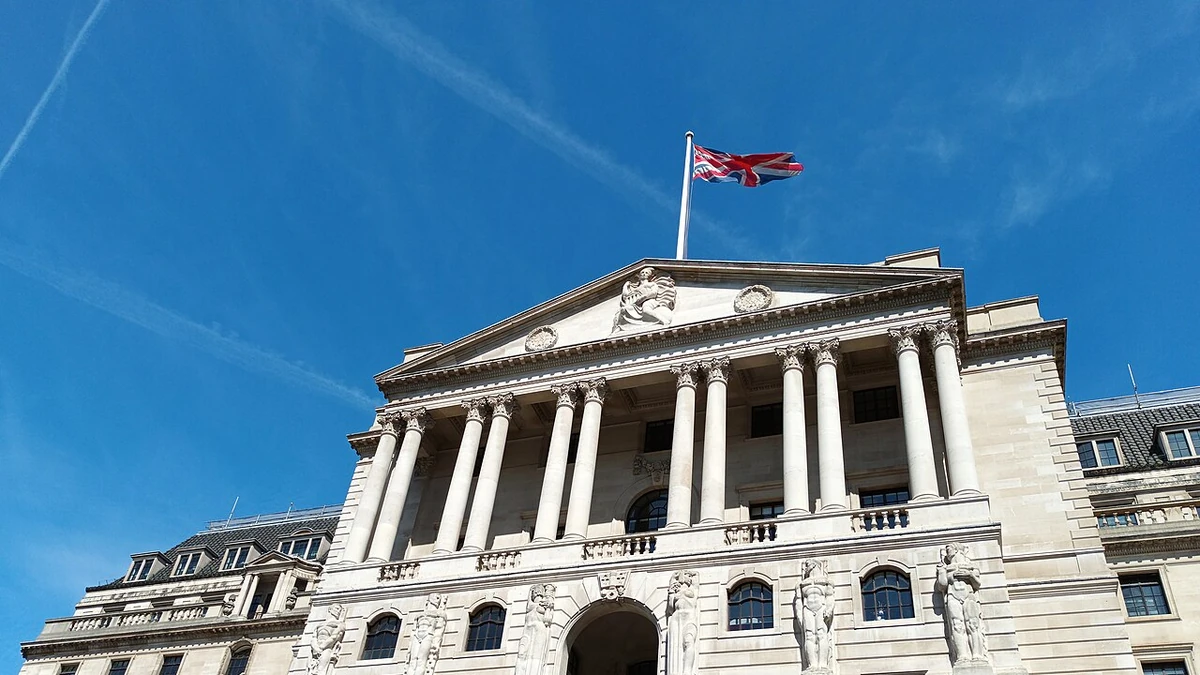
The UK government plans to give the Bank of England a new secondary objective aimed at supporting innovation in payment systems, a move that would formally extend the central bank’s regulatory remit toward newer forms of digital money, including stablecoins. HM Treasury announced the plan on Thursday, saying financial stability would remain the Bank’s primary objective while the new mandate would help the payments framework keep pace with technological change.
In practical terms, the proposal is meant to push the Bank to consider not only safety and resilience when it oversees systemic payment infrastructure, but also whether its approach supports useful innovation. The new objective would apply to payment systems, including those using digital settlement assets such as stablecoins, and the Bank would report annually to Parliament on how it had advanced that goal.
The idea comes as policymakers in the UK try to strike a balance that many financial centres are still grappling with. Officials want to encourage tokenisation, digital money and faster forms of settlement without weakening the safeguards that underpin trust in the financial system. Thursday’s announcement suggests ministers believe the Bank needs an explicit legal nudge to do both at once, rather than relying only on its long-established financial-stability mandate.
A new objective, but not a new priority order
According to HM Treasury’s announcement, the secondary innovation objective would sit below the Bank’s primary financial-stability objective. That hierarchy is central to the proposal. The government said the reform would not require the Bank to support innovation where doing so would undermine stability, and it framed the change as an extension of an approach already used elsewhere in the Bank’s market-infrastructure supervision.
The Bank already has a secondary innovation objective when regulating central counterparties and central securities depositories. Under the government’s plan, the same logic would now be extended to systemic payment systems. That matters because payment infrastructure increasingly overlaps with technologies that did not fit neatly into older categories of banking or settlement, particularly when digital tokens are used to move value or settle obligations.
Ministers also tied the proposal to a broader effort to modernise the UK’s payments landscape. HM Treasury said the government, the Bank and other authorities are already working on an extensive programme to support new technologies and business models. By adding an explicit innovation objective, ministers appear to be trying to make sure regulatory incentives evolve alongside those policy ambitions.
There is also a legislative angle. The government said it expects to implement the change by amending the Financial Services and Markets Bill, which is due back in the House of Lords in early September. That means the policy direction is clear, but the mandate is not yet in force. For now, the key takeaway is that ministers have chosen to move the Bank’s payment-system supervision closer to the model already applied in parts of financial market infrastructure regulation.
For firms building payment technology, an explicit secondary objective can matter even if it does not weaken core safeguards. Regulators make judgments every day about timing, proportionality, guidance and supervisory expectations. A mandate that tells the Bank to weigh innovation alongside stability may shape those judgments, especially in areas where the technology is new but the risks are still manageable.
Stablecoins are a major part of the policy backdrop
Stablecoins are one of the clearest reasons this debate has moved up the UK’s agenda. In June, the Bank of England published a policy statement and draft Code of Practice for systemic stablecoin issuers, describing them as a key step in establishing the UK’s regime for that part of digital finance. The Bank said stablecoins could support faster, cheaper and more flexible payment services, including cross-border uses and programmable functionality, if they are brought within a trustworthy framework.
The June package also showed how far the UK has moved from abstract discussion toward concrete rulemaking. The Bank said systemic stablecoin issuers would be allowed to hold up to 70% of backing assets in short-term UK government debt, with the remainder in central bank deposits. A temporary issuance guardrail would apply to each systemic stablecoin, initially set at £40 billion, and the draft Code of Practice is open for feedback until September 22. Subject to that consultation, the Bank intends to finalise the code by the end of 2026, with regulated stablecoins expected to operate in the UK from 2027.
That existing work helps explain why Thursday’s announcement focused specifically on payment systems using digital settlement assets. The UK’s regulatory architecture for stablecoins already depends on coordination between HM Treasury, the Bank of England and the Financial Conduct Authority. HM Treasury decides whether a payment system is systemic. Once that threshold is crossed, the Bank’s financial market infrastructure regime becomes relevant, while the FCA remains involved in the broader end-to-end framework.
Seen in that context, the proposed innovation objective is less a standalone headline than a policy bridge. It aligns the Bank’s legal objectives more closely with the type of payment activity it is increasingly being asked to supervise. Stablecoins used at systemic scale are not simply another crypto narrative for UK regulators; they are being treated as potential payment infrastructure that may require both tougher oversight and a clearer route for legitimate development.
Not every stablecoin project would fall into the Bank’s orbit. The Bank said its regime would not cover stablecoins used for non-systemic purposes, such as most cryptoasset trading activity, which would remain under the FCA alone. Still, once policymakers start preparing for systemic stablecoins, the question of whether the Bank’s objectives are fit for that world becomes much harder to avoid.
What the change could mean for the UK payments market
The proposal does not, by itself, create a new stablecoin licensing regime or guarantee that new payment products will reach market faster. What it does is signal how the government wants the Bank to approach the choices ahead. A regulator whose statute mentions innovation is being told that cautious supervision is necessary but not sufficient. It also needs to consider whether rules and oversight can accommodate useful change.
That could affect a wide range of issues beyond stablecoins. Tokenised deposits, new settlement mechanisms, and other digitally native payment arrangements may all raise similar questions about how to maintain resilience while allowing firms to test and scale new services. Because the mandate would apply to systemic payment systems, the practical impact may show up most clearly where innovation is moving from pilot stage toward infrastructure-level importance.
For the UK, there is also a competitiveness message. Ministers said the reform forms part of a broader push to keep the country a leading financial-services centre. London’s role in global finance has long depended on a mix of legal certainty, supervisory credibility and market depth. In digital finance, that formula increasingly requires something else as well: a regulatory posture that is open enough to attract investment and development, but clear enough to preserve trust.
Whether the reform achieves that balance will depend less on the announcement itself than on how the Bank uses the objective after it is enacted. Annual reporting to Parliament should create some accountability, but firms will ultimately judge the policy by the tone of supervision, the practicality of rulebooks and the speed with which authorities handle novel business models. If those improve without any sign of compromise on stability, the new objective could become an influential piece of the UK’s payments strategy.
For now, Thursday’s announcement is best understood as a directional policy move. It confirms that the UK wants the Bank of England’s payments oversight to evolve alongside digital money and settlement technology, and that stablecoins are near the centre of that shift. The next steps will play out in legislation, consultation responses and, eventually, in the detailed supervisory decisions that determine how innovation reaches the real economy.
More from Banking


Latest News
View all news- U.S. Producer Prices Surge 1.3% in September, Biggest Monthly Increase Since 2022
- U.S. Retail Sales Rise 0.8% in September to $745 Billion
- U.S. Weekly Jobless Claims Edge Up to 199,000 as Layoffs Remain Low
- Prologis Q3 Core FFO Rises to $1.60 a Share as Leasing Demand Holds Firm
- U.S. Natural Gas Storage Rises 67 Bcf to 3,567 Bcf, EIA Reports
