UK Clarifies VAT Rules for Public and Workplace EV Charging
Public and workplace EV charging stays subject to 20% VAT from November 1 under a clarification that preserves separate relief for qualifying home electricity.
Our editorial standards
MarketReview publishes clear, independently produced financial information using reliable sources and transparent editorial standards.
Read our Editorial Policy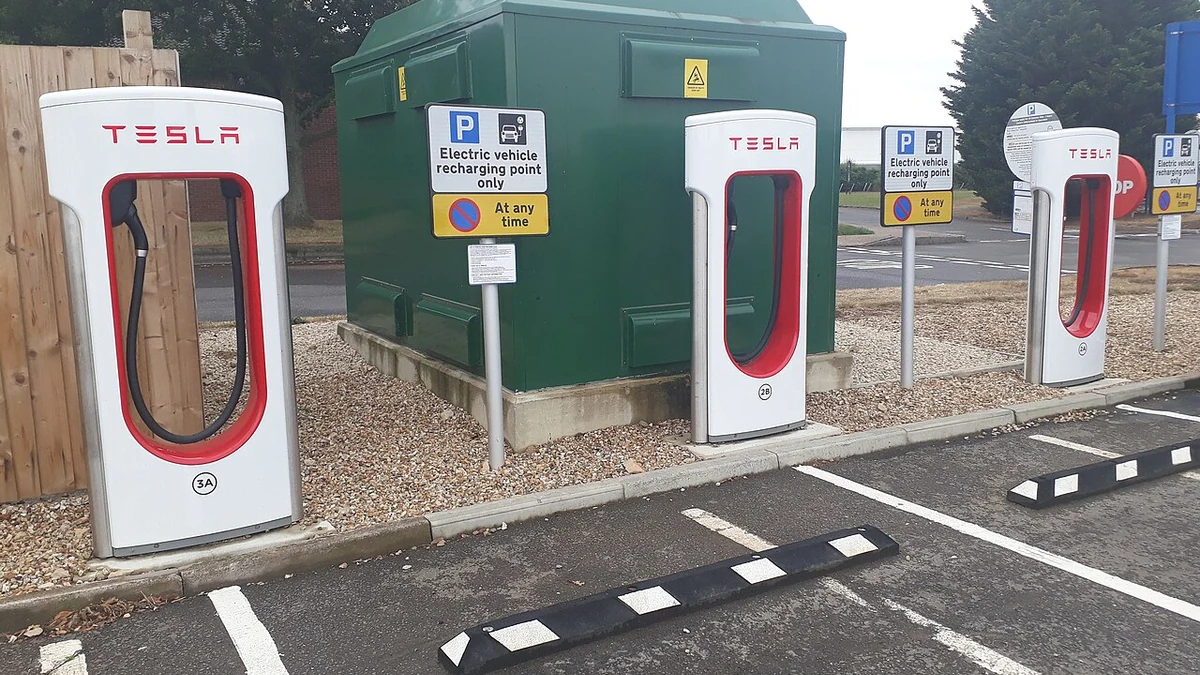
The UK has confirmed that electricity sold through publicly accessible electric vehicle chargers and charging points available to employees or contractors at work remains subject to the standard 20% value-added tax rate. The clarification takes effect for supplies made on or after November 1, 2026, and also establishes that these supplies are not domestic use for Climate Change Levy purposes.
The distinction matters because qualifying household electricity receives more favorable VAT treatment. Rather than introducing a new 20% rate across public charging, the government is putting HM Revenue & Customs’ longstanding position into legislation after a court decision raised questions about whether some public charging purchases could qualify for domestic-energy relief.
Public and workplace chargers stay outside domestic VAT relief
In an October 28 guidance brief, HMRC specified two categories of charging supply that are not treated as domestic: electricity delivered through a publicly accessible EV charge point, and electricity delivered through a charger accessible to employees or contractors at their workplace. These categories generally remain standard-rated, with an exception for qualifying supplies to charities used for non-business purposes.
The rule covers the public charging situations familiar to drivers, including charge points in car parks and other locations open to motorists. A site does not become eligible for domestic electricity relief simply because an individual buys a relatively small amount of power there. Similarly, a charger accessible to staff at a workplace is not treated as domestic merely because the electricity charges someone’s personal car.
For a driver paying to charge at a public site, the 20% rate is not itself a fresh tax increase triggered by November 1. HMRC had already maintained that public EV charging was standard-rated, even as the legal basis for that treatment was challenged. The practical change is the clearer statutory boundary between these charging services and electricity supplied for domestic use.
The clarification concerns the VAT classification of electricity supplied through charging points. It should not be read as a statement that every workplace charging arrangement produces an identical bill for an employee, or that the purchase and installation of charging equipment follow the same rules. Those are separate questions from the classification of the electricity supply addressed in the new measure.
Tribunal ruling brought the charging threshold into dispute
The legislation follows a First-tier Tribunal decision involving Charge My Street Limited and HMRC. In a May 12 brief, the tax authority said the tribunal had found in the operator’s favor over a provision that treats certain small supplies of electricity as qualifying for reduced-rate VAT. The case exposed a gap between the wording of the existing law and how HMRC had been applying it to public chargers.
The tribunal concluded that electricity supplied to an identified person at identifiable premises could fall within that provision if the amount supplied did not exceed 1,000 kilowatt-hours in a calendar month. It said the customer did not need to own or control the premises and that the premises did not have to be a building. A public car park could therefore fall within the interpretation described in HMRC’s earlier brief.
HMRC disclosed in May that it had sought permission to appeal, while maintaining its view that electricity sold through public charge points should attract standard-rate VAT. The November measure addresses the underlying classification prospectively by specifying that publicly accessible and workplace charging supplies are not domestic supplies, including when the quantity of electricity is small.
That history helps explain why the announcement is framed as clarification. The government is not saying that public charging had previously been universally taxed at a domestic rate. It is resolving the statutory uncertainty highlighted by litigation, so operators have a more explicit rule for supplies made from the effective date.
Home charging retains a different VAT position
Drivers who charge a car from an ordinary household electricity supply remain in a separate category. HMRC says electricity used for an EV as part of the general supply to a home can continue to receive domestic VAT relief, and the electricity can still be treated as domestic use for Climate Change Levy purposes. The fact that some household power goes into a vehicle does not, by itself, turn the entire household supply into a public charging service.
That difference is especially visible under the temporary VAT reduction for domestic electricity. Qualifying domestic electricity supplies in England, Scotland and Wales have been zero-rated since October 1, 2026, rather than attracting the usual 5% reduced rate. In Northern Ireland, qualifying domestic electricity remains subject to the 5% reduced rate. Neither domestic treatment is automatically available at a publicly accessible or qualifying workplace charger.
Private residential charging equipment is not necessarily excluded from relief either. HMRC says a separate supply through a stand-alone charging point serving a particular dwelling, residential building or other relevant residential premises may qualify. The distinction depends on the supply and who can access the charger, not simply on whether the charger happens to be installed near homes.
For example, a charging point reserved for residents of a particular residential building is treated differently under the government’s definition from a charger open to the public on a nearby street. The former may fall outside the new electric-vehicle-charging-supply category, while the latter is within it. The final VAT treatment of a residential arrangement still depends on its qualifying circumstances.
Climate Change Levy treatment and public charging costs
The measure deals with more than VAT. Climate Change Levy is an energy tax that generally applies to certain non-domestic supplies, while electricity supplied for domestic use is outside its scope. The government has clarified that electricity supplied through public and workplace EV charging points does not qualify for the domestic-use exclusion, aligning the statutory treatment with the VAT distinction.
That does not mean every EV driver faces a separate new Climate Change Levy line on a charging receipt. The clarification defines the type of supply for levy purposes; the tax accounting and any effect on the price a customer pays depend on the relevant supplier arrangements and applicable rules. Public charging operators and businesses providing workplace charging need to account for the classification correctly.
For suppliers already applying HMRC’s standard-rate VAT policy, the rule may require little change to their customer prices. Operators that had relied on a different interpretation of domestic-use relief, however, must assess how the November 1 rule affects supplies going forward. The guidance also preserves separate treatment for electricity supplied to charities for qualifying non-business purposes.
The tax decision arrives alongside a separate government effort to reduce public charging costs. HM Treasury announced £100 million over two years, beginning in spring 2027, to help lower prices at local, lower-powered public charge points, particularly those used by drivers who cannot charge easily at home. The Treasury estimates that drivers relying on those chargers could save about £150 a year on average, although that is a government projection rather than a guaranteed individual saving.
Ministers also plan an industry-led taskforce to explore whether drivers could use cheaper household electricity tariffs at some public chargers. That proposal is distinct from the VAT rule, which leaves public charging standard-rated. The Department for Transport is expected to provide more detail on the tariff-porting work, while the newly clarified tax treatment applies to qualifying supplies from November 1.
More News



Latest News
View all news- Treasury Sets 5.51% Rate for Newly Issued Series I Savings Bonds
- Oklahoma Overhauls Licensing Rules for Money Transmission Businesses
- New Federal Rules Limit How Medical Billing Disputes Can Be Batched
- Federal Sentencing Guidelines Update Financial Penalties for Economic Crimes
- South Korea Reports October Exports of $115.28 Billion, Up 93.7%