
UK Announces New Satellite-Monitoring Trial Under £3 Billion Space Defence Programme
Project Inaros will trial three ground-based sensors in the UK, Australia and Cyprus as the military satellite Titania joins Britain’s growing fleet in orbit.
Our editorial standards
MarketReview publishes clear, independently produced financial information using reliable sources and transparent editorial standards.
Read our Editorial Policy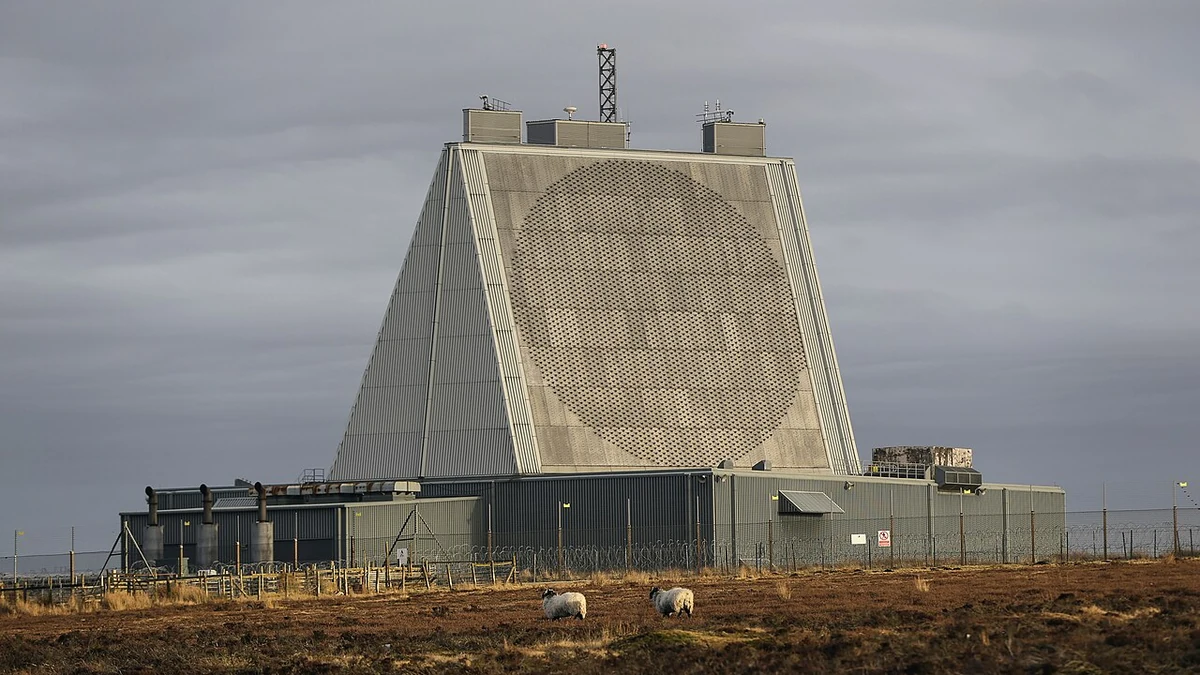
Britain is preparing to test three ground-based sensors designed to detect unusual activity around satellites, adding an experimental layer to its military space-monitoring network. The Ministry of Defence announced Project Inaros on Saturday alongside confirmation that Titania, a new British-built military satellite, reached orbit in October.
The sensors are being developed by British-Australian company Optera in partnership with the National Security Strategic Investment Fund. The trial will use locations in the United Kingdom, Australia and British facilities in Cyprus. The ministry says the technology could eventually provide earlier warning of suspicious movements near UK satellites; it has not said that such a warning service is already operational.
Both developments fall within a defence-space investment programme of more than £3 billion over four years. That figure describes the wider effort to strengthen British capabilities in orbit and on the ground, not the price of the Inaros trial. No separate trial budget or completion date was given in the announcement.
Three sensors will test a different way to detect activity in orbit
The Ministry of Defence announcement identifies the Inaros equipment as neuromorphic sensors. Rather than describing a conventional radar system, officials say the devices mimic aspects of biological sensing by registering changes in light. The aim is to determine whether that approach can help spot unexpected movements involving objects in space.
The distinction between detecting activity and establishing a threat matters. A change in a satellite’s apparent movement can invite closer examination without proving hostile intent. The proposed early-warning role is therefore a prospective use for the sensors, not evidence that the system can already identify an attack or determine why another spacecraft has manoeuvred.
Testing at three widely separated sites gives the project a geographic reach beyond a single domestic installation. In principle, observations from different locations could help a monitoring service assess activity across more portions of the sky. The ministry has not published the trial’s technical coverage, detection accuracy or arrangements for combining the sites’ data, so those potential advantages cannot yet be measured.
Project Inaros will add to, rather than replace, an established British surveillance operation. RAF Fylingdales in North Yorkshire is a long-running missile-warning and space-surveillance facility. The Ministry of Defence has described it as the UK’s primary military space sensor, providing continuous monitoring for Britain and its allies. Its large phased-array radar performs a different job from the experimental light-sensitive equipment being tested under Inaros.
The government has also been expanding the civil and military infrastructure used to assess what is happening in orbit. A January policy response reported that the National Space Operations Centre, in its first full year, issued more than 30,000 collision alerts to UK-licensed satellite operators and monitored 870 uncontrolled re-entries. Those figures describe the existing monitoring workload, not results achieved by Inaros.
The new trial is intended to support UK Space Command units including No. 1 Space Operations Squadron, No. 2 Space Warning Squadron and the newly formed No. 3 Space Effects Squadron. Officials have not detailed how sensor observations would move into those units’ decision-making systems. That is a practical question for any effort to turn a promising detection method into a dependable military warning capability.
Titania adds to the satellite fleet as the ground trial begins
The Inaros announcement coincides with the arrival of Titania in orbit. The Ministry of Defence said the satellite launched in October and is now part of its ISTARI programme, which is intended to build out space-based intelligence, surveillance and reconnaissance capabilities. Titania follows Tyche, the military imaging satellite launched in August 2024, and is to be operated by UK Space Command.
According to the latest ministry account, Titania weighs roughly 100 kilograms, completes an orbit about every 90 minutes and travels at approximately 27,000 kilometres an hour. Officials say it will improve the armed forces’ ability to observe military activity on Earth. Those figures describe the spacecraft and its intended role; they are not performance measures for the separate Inaros sensor trial.
Titania’s technical background also includes work on moving information from space. A 2021 Ministry of Defence announcement described a £9.5 million contract for the satellite and a plan to demonstrate free-space optical communications, a method of transferring data using tightly directed light. The newer announcement links the project to Defence Science and Technology Laboratory and BAE Systems work in Hampshire. The government has not provided a fresh cost breakdown connecting that earlier contract to the new monitoring trial.
UK Space Command’s existing Tyche spacecraft was designed to capture images and video of the Earth’s surface. The government plans to follow Titania with further military satellites named Juno and Oberon, involving Surrey Satellite Technology Limited and Airbus Defence and Space, respectively. That planned fleet is meant to expand the kinds of information available to British forces, rather than making ground surveillance of nearby objects unnecessary.
The two projects address different parts of the same vulnerability. Military satellites can provide information about activity below them, but the satellites themselves need to be monitored for hazards and unusual approaches in orbit. Inaros is about observing the space environment around those assets; Titania is a spacecraft contributing to the wider military capability. Their announcements were paired, but they should not be treated as a single sensor system.
The £3 billion figure covers a much larger defence commitment
The financial scale of the announcement is broader than the hardware in the Inaros trial. The government’s Defence Investment Plan, published in June, allocates £3.2 billion to space capabilities within approximately £298 billion in overall defence investment over four years. The November announcement rounds the space commitment to more than £3 billion. Neither document identifies £3 billion as the cost of the three neuromorphic sensors.
Separate policy announcements show why the space allocation covers more than detecting objects in orbit. The government’s September space strategy set out spending for satellite communications, space control, intelligence gathering and the National Space Operations Centre. It also assigned £880 million to space control and intelligence, surveillance and reconnaissance capabilities and £85 million to the operations centre. These are programme-level figures, not a disclosed Inaros contract value, and should not simply be added to the Defence Investment Plan total as though they were unrelated new funding.
For British industry, the current announcement identifies a developer and a research partnership, but not a purchase of a permanent three-site system. The ministry has named Optera and the National Security Strategic Investment Fund in connection with the sensor work. It has not disclosed the trial’s contract size, the number of units that might eventually be ordered or whether the technology will be procured after testing.
The broader policy objective is to reduce the risk that disruption in space interferes with services used on Earth. Satellites support military communications and navigation, and space surveillance contributes to missile warning. Britain also relies on orbital infrastructure for civilian connectivity and other economic activity. Better information about objects moving near valuable spacecraft could assist operators, although the trial itself is not a system for physically defending satellites.
The immediate developments are therefore at different stages: Titania has reached orbit, while Inaros is an experiment whose operational value still has to be established. The Ministry of Defence has not published a schedule for trial findings or a decision on permanent deployment. Those steps would provide the first concrete indication of whether the new sensing technology becomes a lasting part of the UK’s space-warning network.
More News



Latest News
View all news- Berkshire Hathaway Reports Lower Q3 Operating Earnings, $9.6 Billion in Share Buybacks
- Powerhouse Parramatta Opens as A$915 Million Cultural Project Reaches Milestone
- Bank of Japan Releases Governor Ueda’s Analysis of Japan’s Current Account Surplus
- U.S. Consumer Sentiment Rises to 51.0 in November as Inflation Expectations Ease
- USDA Finalizes WIC Rule Allowing Online Grocery Orders and Digital Payments
