
Cleveland Fed’s Beth Hammack Says Interest Rates Should Rise to Fight Inflation
Cleveland Fed President Beth Hammack said the central bank should add policy restraint now, arguing that inflation remains too high despite recent signs of improvement.
Our editorial standards
MarketReview publishes clear, independently produced financial information using reliable sources and transparent editorial standards.
Read our Editorial Policy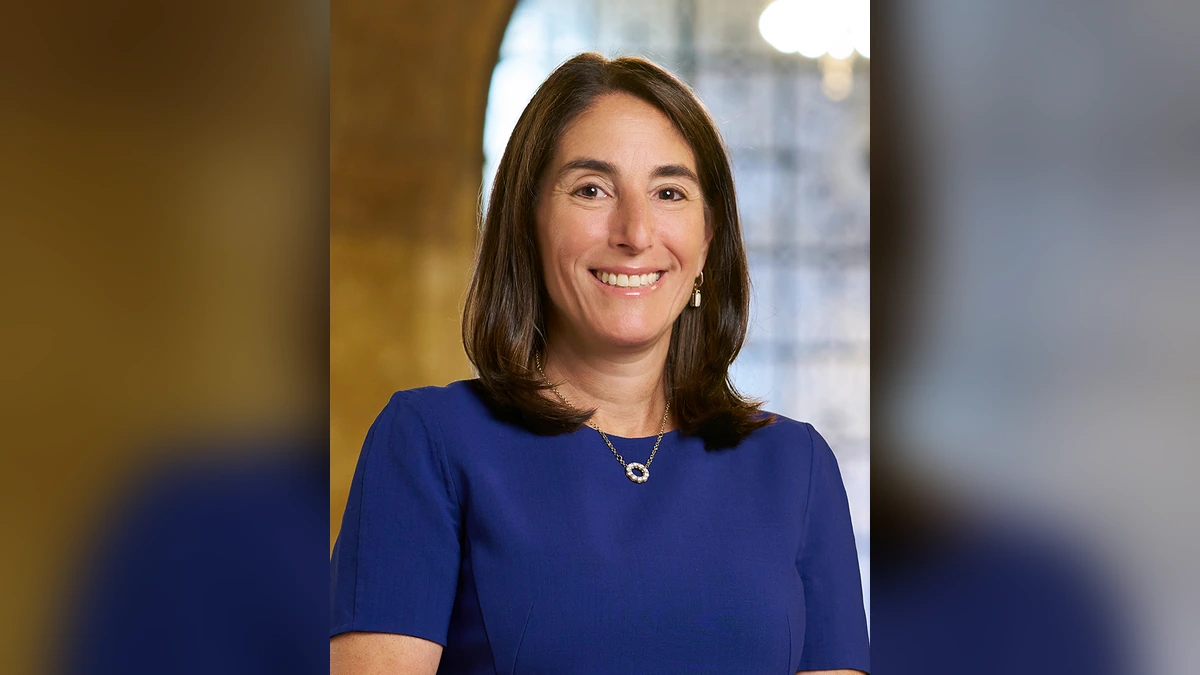
Cleveland Federal Reserve Bank President Beth Hammack said Thursday that U.S. interest rates should be raised now to put more restraint on the economy and bring inflation back toward the Federal Reserve’s 2% goal. Her comments reinforce one of the clearest hawkish positions inside a divided central bank after the Fed left its benchmark rate unchanged last month.
Speaking at a Dayton Area Chamber of Commerce event in Ohio, Hammack argued that current monetary policy is not restrictive enough. Reuters, reporting from the event, said she pointed to strong business appetite for borrowing and investment as a sign that demand remains capable of adding to price pressures. She also said recent improvement in inflation data had not given her enough confidence that inflation would continue falling on its own.
Hammack’s position matters because it is not a new warning delivered in isolation. She was one of three policymakers who voted against the Fed’s July decision to keep the federal funds target range at 3.50% to 3.75%, preferring a quarter-point increase. Her latest remarks show that the softer inflation readings of the past two months have not changed her basic judgment that the Fed should tighten policy sooner rather than wait for more decisive evidence.
Hammack says policy needs more restraint now
Hammack has been building the case for a rate increase for several weeks. In a July 31 statement explaining her FOMC dissent, she said inflation had been too high for too long and that a higher federal funds rate would help restrain economic activity and reduce inflationary pressure. She also argued that the labor market was stable enough for inflation to remain the more pressing side of the Fed’s dual mandate.
Thursday’s remarks added a business-demand argument to that policy view. Hammack said companies she speaks with remain eager to raise money, borrow and invest in growth opportunities. That is positive for economic activity, but in her assessment too much demand can keep pressure on prices when inflation is already above target.
Her concern is not simply that inflation is above 2% today. She has repeatedly focused on the risk that a prolonged period of elevated inflation can make the eventual return to target harder and more costly. At the Dayton event, she questioned whether a slow glide path back to 2% would be acceptable if it meant inflation remained above target for several more years.
Hammack also used examples gathered from the Cleveland Fed’s district to describe how higher prices are affecting households and businesses. Reuters reported that she referred to a Cincinnati retailer raising prices because of uncertainty about future cost pressures, as well as households cutting back because of high gasoline costs. Those anecdotes do not determine monetary policy by themselves, but they help explain why Hammack is placing greater weight on the inflation side of the Fed’s mandate.
Inflation has cooled, but the Fed’s preferred gauge remains above 3%
The most recent consumer-price data give both sides of the policy debate something to point to. The Labor Department reported that the Consumer Price Index rose 0.1% in July and 3.4% from a year earlier, down from a 3.5% annual increase in June. Core CPI, which excludes food and energy, rose 0.2% for the month and 2.5% over 12 months.
Those figures show that some inflation measures are moving in the right direction. They also do not erase the broader problem Hammack is emphasizing. The Fed officially targets inflation measured by the Personal Consumption Expenditures price index, not CPI, and the latest available PCE report showed prices up 3.7% in June from a year earlier. Core PCE inflation was 3.3%.
That gap between recent cooling and still-elevated underlying inflation is central to the disagreement inside the Fed. One argument for waiting is that higher interest rates work with a lag and that additional tightening could become unnecessary if price pressures continue to fade. Hammack’s argument is that the existing policy stance is not delivering enough restraint, so relying on inflation to drift lower could allow above-target price growth to persist for too long.
The distinction also helps explain why a single encouraging CPI report is unlikely to settle the September decision. The Fed will receive more inflation and labor-market information before then, including another PCE release and another CPI report. Policymakers will have to judge whether the recent moderation represents a durable trend or only a temporary improvement within a still-sticky inflation environment.
July dissent sets up a sharper debate for September
The Federal Reserve’s July 29 policy statement shows how far Hammack was from the committee majority at the last meeting. The FOMC voted 9 to 3 to hold the federal funds target range at 3.50% to 3.75%. Hammack, Minneapolis Fed President Neel Kashkari and Dallas Fed President Lorie Logan dissented in favor of a 25-basis-point increase.
The committee said economic activity was expanding at a solid pace, job gains had kept pace with the workforce and unemployment had changed little. It also said inflation remained elevated relative to the 2% goal, partly because of supply shocks that had lifted prices in areas including energy. The majority chose to wait rather than add more restraint immediately.
Hammack is now making clear that she does not view the current rate setting as sufficiently restrictive. That does not mean a September increase is predetermined, nor does one regional Fed president set policy on her own. It does mean the next meeting will begin with a documented bloc of policymakers who already preferred tighter policy in July, with Hammack still arguing publicly for action after the latest inflation readings.
The next major PCE inflation report is scheduled for August 26, followed by the August CPI report on September 11. The FOMC is scheduled to meet September 15 and 16, when officials will have another round of inflation and labor-market data in hand before deciding whether to keep rates unchanged or add the restraint Hammack is calling for.
More from Banking
Latest News
View all news- USDA Releases October Crop Supply and Demand Estimates for Global Grain Markets
- U.S. Consumer Sentiment Falls to 46.3 as Inflation Expectations Rise
- Swiss-Ukraine Reconstruction Agreement Takes Effect, Opening Procurement Route for Swiss Firms
- U.S. Commerce Department Finalizes South Korean Hot-Rolled Steel Subsidy Review
- Treasury Names Judy Shelton Counselor on Currency Policy, With China Focus
