
Hormuz Standoff Continues as Iran Signals No Immediate Return to U.S. Talks
Iran's foreign minister said Tehran has not decided to resume negotiations with Washington, keeping the Strait of Hormuz dispute tied to unresolved U.S. conditions.
Our editorial standards
MarketReview publishes clear, independently produced financial information using reliable sources and transparent editorial standards.
Read our Editorial Policy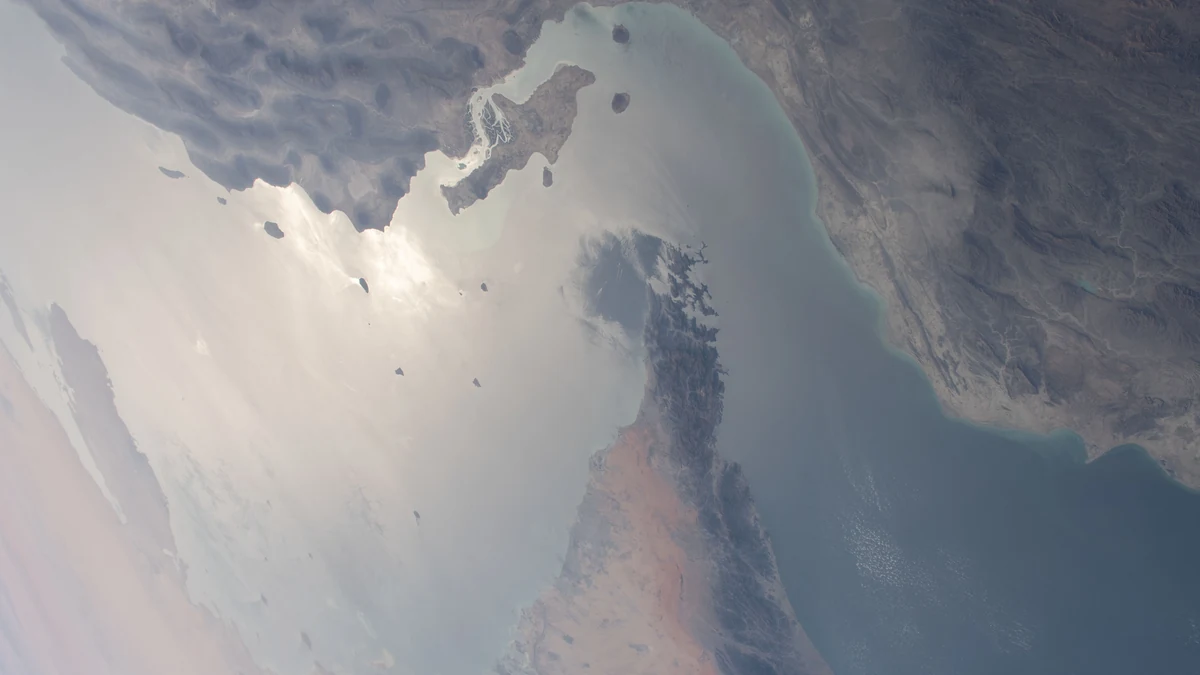
Iran has not decided to resume negotiations with the United States, Foreign Minister Abbas Araghchi said in an interview published by Shahrara News, signaling that the diplomatic track remains stalled even as Tehran and Muscat continue technical work on shipping routes through the Strait of Hormuz.
Araghchi said messages are still being exchanged through Qatar and Pakistan, but he rejected describing those contacts as negotiations. He also drew a clear line between Iran’s discussions with Oman over maritime routes and any decision to reopen the strait, saying renewed shipping would depend on separate conditions that Washington would have to meet.
The distinction leaves the central economic problem unresolved. Shipping through Hormuz remains far below prewar levels, tanker attacks have added another layer of risk, and crude prices ended the week higher. Reuters reported that only two vessels passed through the strait on Friday, with no crude oil shipments visible in the ship-tracking data it reviewed.
Iran separates Oman shipping talks from negotiations with Washington
In the Shahrara News interview, Araghchi rejected reports that a new round of U.S.-Iran negotiations was already under way. He said Qatar and Pakistan were passing messages between the two sides and remained in contact with Tehran, but that the exchanges did not amount to negotiations. He added that Iran had not yet made a decision to restart talks with Washington.
Araghchi also disputed descriptions of the June arrangement between Iran and the United States as a 60-day ceasefire. His account was that the Islamabad memorandum was intended to end the war, while the 60-day period referred to a window for reaching a final agreement. He said the United States later violated that memorandum and fighting resumed. That is Iran’s characterization of the breakdown, not an independently established finding about responsibility for the renewed hostilities.
The foreign minister’s comments on Oman were narrower. He described the Iran-Oman process as technical work on maritime lines for ships using the Strait of Hormuz. According to Araghchi, the previous routes are no longer workable and the two countries are discussing a temporary route that could later be replaced by a final arrangement. Iranian military specialists are also involved in that work.
What the Oman process does not do, in Tehran’s telling, is automatically reopen the waterway. Araghchi said defining a route and authorizing traffic are separate questions. In earlier public statements, Iranian officials have tied broader reopening to U.S. concessions, including relief from sanctions, the release of frozen Iranian assets and compensation related to what Tehran says were violations of the June agreement.
That position cuts against recent U.S. hopes that an Iran-Oman accord could quickly restore normal commercial traffic. Earlier this month, a U.S. official told Reuters that Washington expected an agreement between Iran and Oman and would lift its blockade of Iranian ports once commercial shipping resumed without impediments. Iran has repeatedly said the Oman negotiations alone are insufficient.
Shipping remains severely constrained as attacks add risk
The physical condition of the strait helps explain why the diplomatic language matters to markets. Reuters said analysis from ship-tracking firm Kpler showed only two vessels passing through Hormuz on Friday, compared with more than 130 ships a day before the war. The tracking figures may miss vessels moving with transponders switched off, but they still indicate traffic far below normal levels.
The security picture also deteriorated late in the week. The United Arab Emirates accused Iran of attacking an Abu Dhabi National Oil Company vessel while it was transiting the strait, the third incident involving ADNOC ships in less than a week that Abu Dhabi has blamed on Tehran. ADNOC said no injuries were reported. Iran had not immediately commented on the latest UAE allegation when Reuters reported it.
Separately, the United Kingdom Maritime Trade Operations agency reported that a bulk carrier was struck in the hull by an unidentified projectile in the strait. It was not immediately clear whether that report referred to the same vessel. Those distinctions matter because the available evidence does not establish that every reported strike in the waterway had the same attacker or circumstances.
Oil markets reflected the renewed tension heading into the weekend. Brent crude futures settled Friday at $88.52 a barrel, up $1.45, or 1.67%, while U.S. West Texas Intermediate settled at $82.40, up $1.15, or 1.42%, according to Reuters. The move came as traders weighed the shipping attacks, the lack of progress toward a settlement and additional disruption at Russia’s Novorossiysk export terminal.
The broader supply damage is already visible in official data. The U.S. Energy Information Administration’s August Short-Term Energy Outlook estimates that crude oil and petroleum liquids moving through Hormuz averaged 4.9 million barrels a day in the second quarter of 2026, down from 21.6 million barrels a day in the fourth quarter of 2025 before the conflict began. The EIA assumes shipments will remain severely constrained through August and begin to recover only gradually in September.
The agency also raised its near-term price outlook because of depleted inventories and continued disruption. It forecasts Brent spot crude averaging about $85 a barrel in the third quarter, $11 higher than in its previous monthly outlook, before easing as flows and production recover. The forecast depends on shipping gradually normalizing, so a prolonged Hormuz standoff remains an important downside risk to supply and an upside risk to energy prices.
Diplomatic outreach is widening, but there is still no negotiating track
The absence of formal U.S.-Iran negotiations has not stopped other governments from trying to create an opening. The Associated Press reported that Secretary of State Marco Rubio discussed Iran this week with the foreign ministers of Austria and Greece. Both European ministers then spoke with Araghchi. The State Department said Rubio had not asked them to contact Iran or carry messages, though it acknowledged that Iran had been discussed.
Austria has offered itself as a venue for future talks, while Greece has emphasized freedom of navigation and maritime security. Their involvement adds to efforts by Qatar, Pakistan, Turkey and Oman, but it does not amount to a new negotiating framework between Tehran and Washington. Araghchi’s latest statement makes that distinction explicit.
The political rhetoric has also hardened. President Donald Trump said Friday that the United States has effective control over the strait through its blockade and suggested he would declare Hormuz U.S. territory after defeating Iran. Iran rejected that assertion, with Deputy Foreign Minister Kazem Gharibabadi saying the waterway would be opened or closed under Iranian authority. Neither side’s public claims resolve the underlying legal or military dispute over control of the strait.
Washington is also signaling that economic pressure will continue. Treasury Secretary Scott Bessent said in an interview cited by Reuters that additional measures against Iran would be announced next week, while Defense Secretary Pete Hegseth said the U.S. Navy could maintain its blockade for an extended period by rotating ships through the region.
For energy markets, the next practical tests are more concrete than the rhetoric. Iran and Oman are still working toward a shipping-route arrangement, but Tehran says that document by itself will not reopen Hormuz. At the same time, the United States is preparing additional economic measures rather than announcing a return to negotiations. Unless one of those tracks produces a change, the strait is likely to remain a constraint on Gulf exports and a continuing source of volatility in oil and fuel prices.
More News



Latest News
View all news- U.S. Commerce Department Finalizes South Korean Hot-Rolled Steel Subsidy Review
- Treasury Names Judy Shelton Counselor on Currency Policy, With China Focus
- U.S. Opens Proposed Gulf Offshore Oil and Gas Lease Sale 4 for Review
- Federal Reserve Reports Rising Household Financial Stress Despite Gains in Income and Wealth
- Canada Employment Falls in September as Unemployment Rises to 6.5%
