
Europe’s Heatwaves Expose a Growing Business Insurance Gap
Extreme heat is cutting sales and productivity across Europe, but many of those losses fall outside conventional business interruption cover because no physical damage occurs.
Our editorial standards
MarketReview publishes clear, independently produced financial information using reliable sources and transparent editorial standards.
Read our Editorial Policy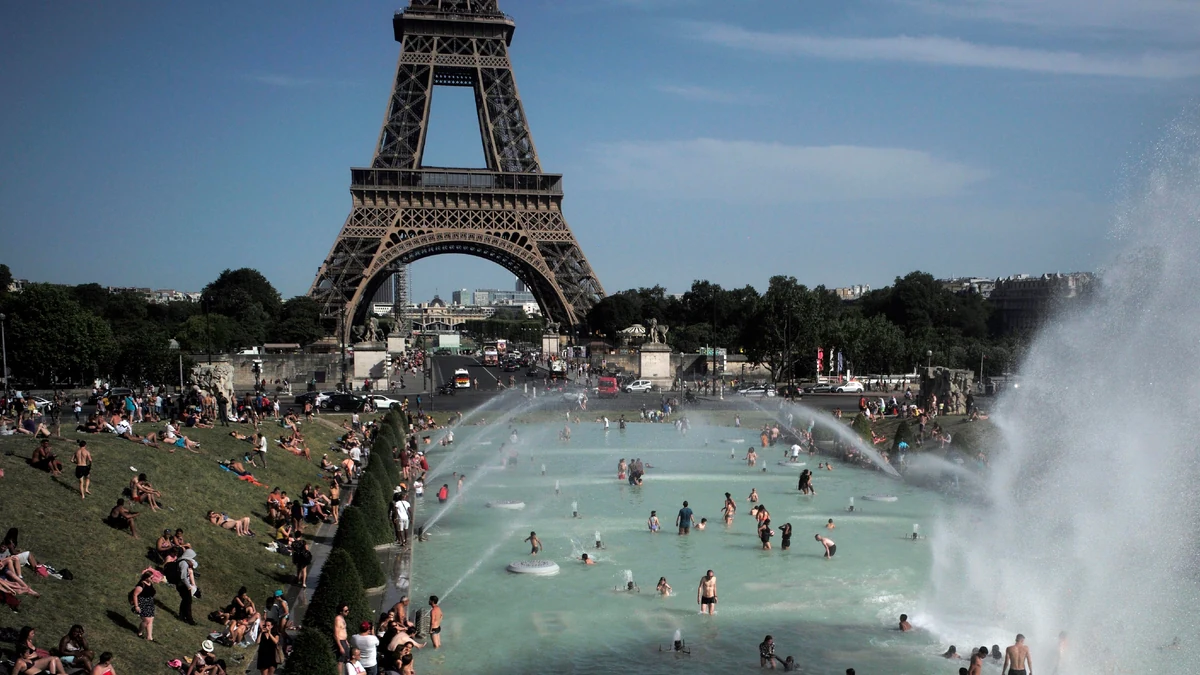
Europe’s latest run of extreme heat is exposing a business risk that conventional insurance often handles poorly: revenue can disappear even when no insured building, machine or other property is physically damaged. Reuters reported on August 16 that the region was enduring its fifth heatwave of the year, with hospitality, manufacturing and other sectors facing weaker demand, lower productivity and higher operating costs.
The size of the mismatch is becoming harder to ignore. Reuters, citing Moody’s, reported that European heatwaves last summer produced about €43 billion in lost economic output but only around €500 million in insured payouts. In the Italian city of Padua, a survey of roughly 600 hospitality businesses found that more than 80% reported turnover declines of about 20% during the recent heatwave, according to Reuters.
The broader climate-insurance backdrop is already weak. European insurance regulator EIOPA says only around one quarter of losses from extreme events in Europe were insured between 1980 and 2024. That figure covers a wide range of natural catastrophes rather than heat alone, but it shows how much climate-related economic damage is already being absorbed by households, companies and governments instead of insurers.
Lost sales do not look like a conventional catastrophe claim
Heat creates a particularly awkward insurance problem because many of its most expensive business effects are indirect. A storm can tear off a roof, a flood can damage machinery and a fire can destroy inventory. Those are visible physical losses that fit familiar property and business-interruption frameworks. A heatwave can leave the premises intact while still cutting the number of customers who show up, slowing outdoor work, forcing shorter shifts, increasing cooling costs or reducing factory output.
That distinction matters for business interruption cover. Many traditional policies are designed to respond when an insured physical loss interrupts operations. Extreme heat can cause a meaningful earnings hit without creating the kind of damage that triggers the policy. Reuters reported: A 2023 survey of 9,000 small and medium-sized firms for Europe’s insurance regulator found 28% had business interruption protection as part of property insurance, while 17% had non-damage business interruption cover.
Moody’s has described several channels through which heat can reduce economic activity. Tourism can weaken when visitors cancel or change plans. Shops may close during the hottest hours or operate for less time. Outdoor workers may need more breaks or may be unable to work safely at the usual pace. Heat stress can also reduce labour productivity and raise the risk of injury. These costs can accumulate across many businesses without generating a single, clearly defined catastrophe claim.
The current European heat cycle has made that exposure more visible. The World Meteorological Organization said June 2026 was the hottest June on record for western Europe, with the region’s average temperature reaching 20.74°C, 3.05°C above the 1991-2020 average. WMO also noted that extreme heat was occurring alongside drought and elevated wildfire risk, which can turn a heat event into a broader operational and infrastructure problem.
Europe’s wider protection gap is already large
Heat also interacts with other hazards in ways that complicate both underwriting and claims. Drought can reduce water availability. Wildfire can damage property and disrupt transport. Power systems can come under pressure as cooling demand rises, while high temperatures may reduce the efficiency or availability of some generation assets. A company can therefore suffer losses through several linked channels even when the original trigger was simply a prolonged period of extreme temperature.
EIOPA has warned that the natural-catastrophe protection gap is significant across Europe and that only about 25% of losses in the European Union have been insured over past decades. In June, the regulator said underinsurance can determine whether a small or medium-sized company recovers from a disaster or closes permanently. It also pointed to rising premiums and increasing exclusions in high-risk areas as hazards intensify.
Those figures should not be read as a heat-specific insurance rate. Flood, storm, wildfire, earthquake and other risks have very different insurance structures, and some countries have public-private schemes that change the share of losses ultimately borne by insurers. The relevance to heat is that the same protection-gap problem becomes more difficult when the loss is spread through lost revenue and weaker productivity instead of destroyed assets.
European authorities are already examining broader ways to share catastrophe risk. In April, EIOPA and the European Stability Mechanism proposed a Europe-wide natural-catastrophe insurance pool and a loan-based backstop for unusually large events. The proposal is aimed at reducing the overall protection gap and stabilising capacity for severe disasters. It would not by itself solve the narrower problem of a restaurant, factory or logistics business losing income during a heatwave without suffering insured property damage.
Parametric cover can fill part of the hole
One approach receiving more attention is parametric insurance. Instead of waiting for an adjuster to calculate the value of physical damage, a parametric contract pays a pre-agreed amount when a measurable trigger is reached. For extreme heat, that trigger could be based on temperature or the number of consecutive days above a specified threshold.
Reuters reported that insurers are exploring such products for heat-related business losses and that similar structures are already used in agriculture. The appeal is straightforward: a payout can be tied to the event that disrupts the business rather than to damage to a building or piece of equipment. That could make the structure more relevant for sectors where heat mainly affects footfall, worker output, transport activity or crop and livestock productivity.
Parametric insurance is not a complete replacement for traditional cover. A fixed trigger has to be chosen carefully so that it reflects the business’s actual exposure, and the payout may not perfectly match the loss. It is better understood as another layer of protection for risks that are difficult to fit inside conventional indemnity insurance.
For many European companies, adaptation will remain at least as important as buying new insurance. Reuters cited insurance specialists calling for businesses to invest in cooling, redesign work practices and stress-test supply chains. The financial logic is simple: if extreme heat increasingly causes losses before there is any physical damage to insure, resilience measures have to reduce the disruption itself, while insurance products evolve to cover the part that cannot be prevented.
More News

Latest News
View all news- U.S. Commerce Department Finalizes South Korean Hot-Rolled Steel Subsidy Review
- Treasury Names Judy Shelton Counselor on Currency Policy, With China Focus
- U.S. Opens Proposed Gulf Offshore Oil and Gas Lease Sale 4 for Review
- Federal Reserve Reports Rising Household Financial Stress Despite Gains in Income and Wealth
- Canada Employment Falls in September as Unemployment Rises to 6.5%
