
Australia’s Unemployment Rate Rises to 4.5% in July
Employment fell by 15,800 people and participation slipped to 66.9%, adding to signs of a gradual easing in Australia’s labour market.
Our editorial standards
MarketReview publishes clear, independently produced financial information using reliable sources and transparent editorial standards.
Read our Editorial Policy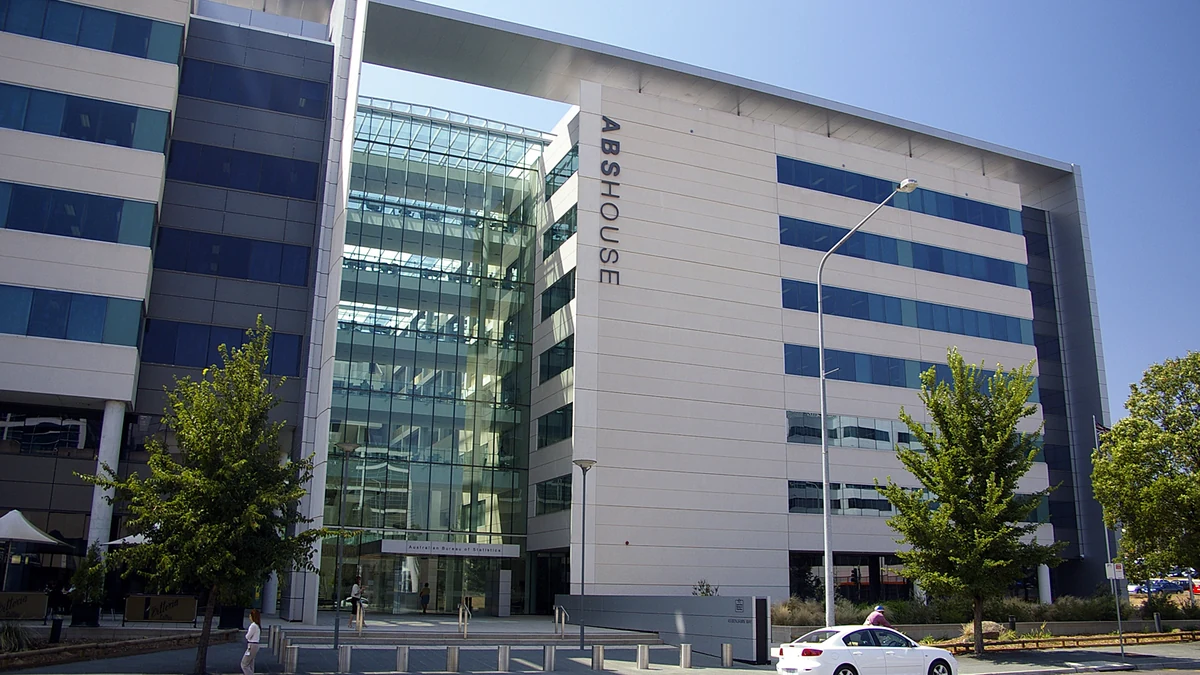
Australia’s seasonally adjusted unemployment rate rose marginally to 4.5% in July, with employment falling by 15,800 people and the number of unemployed increasing by 4,200, according to the Australian Bureau of Statistics. The result extends the gradual easing seen in the labour market this year, although the broader data still do not point to a sharp deterioration.
The July figures were softer across several measures of labour-market participation and activity. The participation rate fell by 0.2 percentage points to 66.9%, while the employment-to-population ratio also declined by 0.2 percentage points to 63.9%. Monthly hours worked dropped by 12.5 million hours, or about 0.6%, to 1.998 billion hours.
In its July Labour Force release, the ABS reported that total employment fell to 14.807 million people in seasonally adjusted terms. Full-time employment increased by 16,300 to 10.211 million, but that gain was more than offset by a 32,200 decline in part-time employment to 4.597 million. The combination helps explain why the unemployment rate moved only modestly even as total employment slipped.
Employment falls even as full-time work rises
The composition of July’s employment decline was uneven. The ABS said male employment fell by 11,000 people, including a 10,000 decline in part-time employment and a 1,000 fall in full-time employment. Female employment decreased by 5,000, with a 22,000 decline in part-time work partly offset by a 17,000 increase in full-time employment.
The unemployment rate was 4.5% for males and 4.4% for females. The youth unemployment rate moved in the opposite direction to the headline measure, falling by 0.3 percentage points to 10.4%. That divergence is another reason not to read the national unemployment rate as a complete summary of conditions for every group in the labour market.
Other measures of spare labour capacity were relatively stable. The seasonally adjusted underemployment rate was 6.4% in July, down marginally on the month on an unrounded basis, while the broader underutilisation rate eased to 10.8%. Hours worked, however, weakened more clearly. The ABS said full-time workers logged 7 million fewer hours and part-time workers 5 million fewer hours during the month. New South Wales and Western Australia were the main contributors to the decline in hours, each down by about 8 million.
Trend estimates, which are designed to smooth some of the volatility in seasonally adjusted monthly data, painted a firmer employment picture. Trend employment increased by 29,300 people, or 0.2%, in July, while the trend unemployment rate edged up to 4.5%. Trend hours worked slipped 0.1%, and the trend underutilisation rate rose by 0.1 percentage points to 10.8%. The difference between the seasonally adjusted and trend measures argues against treating one weak monthly employment print as evidence of a sudden break in labour demand.
Survey changes add uncertainty around the monthly move
July’s Labour Force Survey was also conducted during a transition in the ABS survey system. The July sample contained seven rotation groups rather than the usual eight because three groups left after the June survey and only two new groups entered in July. The ABS said the smaller sample means standard errors are larger than usual for July estimates. The survey is expected to return to eight rotation groups in August.
The agency also revisited weighting adjustments applied to parts of the June sample in New South Wales and Victoria. After reviewing July data, the ABS removed the June weighting adjustment for New South Wales and did not apply it in July. It retained an adjustment for one Victoria rotation group for July. The ABS said it will continue monitoring those groups as they move through the survey.
These details do not invalidate the July results, but they matter when interpreting a small month-to-month change. The ABS specifically recommends using trend data to assess underlying labour-market behaviour because it reduces notable monthly volatility. Its July survey reference period covered the two weeks from June 28 to July 11, with collection continuing through July 25.
The agency is also completing its Labour Force Modernisation project at the end of September. As part of that transition, adjustment factors historically used for supplementary survey effects in February and August are being removed from the August 2026 data onward. The ABS said the change is expected to have only a small effect on the variability of estimates, but it is another technical detail worth keeping in mind when comparing individual monthly releases.
Labour-market easing meets a still-tight monetary backdrop
The July employment report arrives after the Reserve Bank of Australia said labour-market conditions had already eased somewhat more than it expected earlier in the year. On August 11, the RBA left the cash rate target unchanged at 4.35% after three increases in 2026. It said leading labour indicators pointed to only limited further easing in the near term.
In its August Statement on Monetary Policy, prepared using data available through August 5, the RBA described the labour market as still a little tighter than full employment despite the recent cooling. At that point, the latest unemployment rate available to the central bank was 4.4% for June. The RBA’s forecasts showed the quarterly unemployment rate reaching 4.5% in the December quarter of 2026 and gradually rising to 4.8% by the end of 2028.
July’s monthly unemployment rate of 4.5% is consistent with the direction of that gradual-easing forecast, but it should not be treated as confirmation that the full forecast path has arrived early. The monthly figure is volatile, the RBA forecast is expressed on a quarterly basis, and the central bank assesses labour conditions using a wider set of indicators that includes vacancies, job advertisements, underemployment, hours worked and wages.
The policy context also remains complicated by inflation. The RBA’s August assessment said headline inflation was 3.9% over the year to the June quarter and trimmed mean inflation was 3.6%, both above the bank’s 2% to 3% target range. It said domestic capacity pressures remained even as demand growth slowed. A gradually softer labour market could reduce those pressures over time, but the July jobs data alone do not determine the next interest-rate decision.
For now, the clearest signal from the July release is one of continued, uneven cooling rather than a collapse in employment. Total jobs and hours worked fell, participation eased, and unemployment nudged higher, but full-time employment increased and the trend employment measure continued to grow. The next Labour Force release, covering August, is scheduled for September 24 and will provide a cleaner test of whether July’s softness was temporary or part of a more sustained change in hiring and participation.
More News


Latest News
View all news- U.S. Commerce Department Finalizes South Korean Hot-Rolled Steel Subsidy Review
- Treasury Names Judy Shelton Counselor on Currency Policy, With China Focus
- U.S. Opens Proposed Gulf Offshore Oil and Gas Lease Sale 4 for Review
- Federal Reserve Reports Rising Household Financial Stress Despite Gains in Income and Wealth
- Canada Employment Falls in September as Unemployment Rises to 6.5%
