
BW LPG Places $300 Million Convertible Bond to Help Fund Eight New VLGCs
BW LPG fixed a 2.25% coupon and 40% conversion premium on the five-year financing, with net proceeds intended partly for its $940 million Panamax VLGC newbuild program.
Our editorial standards
MarketReview publishes clear, independently produced financial information using reliable sources and transparent editorial standards.
Read our Editorial Policy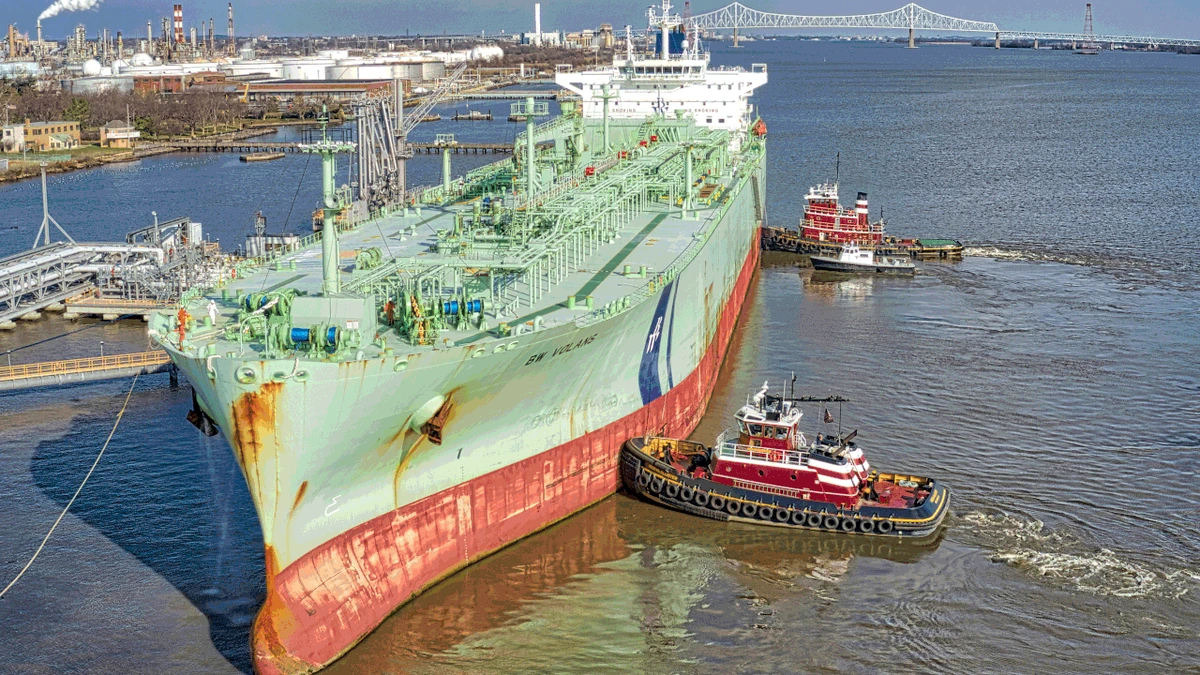
BW LPG placed $300 million of senior unsecured convertible bonds due 2031 on Wednesday, locking in a 2.25% coupon and a 40% initial conversion premium as it raises long-term capital for its fleet program. The company said the net proceeds are intended partly for eight new Panamax very large gas carriers ordered from Hyundai Heavy Industries, with the remainder available for general corporate purposes.
The financing ties a five-year equity-linked bond to one of BW LPG’s largest announced capital commitments. The eight 90,000-cubic-meter vessels carry a total contract value of about $940 million, subject to final technical specifications, and are scheduled for sequential delivery from the start of 2029 through the second quarter of 2030.
BW LPG said in its September 2 placement announcement that the bonds will be issued at par in $200,000 denominations. Settlement is expected on or around September 9, 2026, and the company plans to seek admission of the bonds to listing or trading on a regulated or unregulated market within 90 days of the issue date.
Final terms land within the launch range
Pricing settled at a 2.25% coupon, the midpoint of the 2.00% to 2.50% range BW LPG gave when it launched the offering on September 1. The 40% conversion premium landed at the top of the initial 35% to 40% range. Interest will be paid semiannually in March and September, beginning on March 9, 2027.
At $30.4870 per share, the initial conversion price reflects a 40% premium over the reference share price from a concurrent placement of existing shares, after adjusting downward for the company’s $0.95-per-share cash dividend due on or around September 16. BW LPG said the conversion price is also subject to customary adjustments and includes dividend-protection provisions described in the bond terms.
DNB Carnegie carried out the concurrent share placement for certain bond subscribers that wanted to hedge their equity exposure. Those investors could use short sales of existing BW LPG shares as part of that hedge, but the company said it received no proceeds from those share sales. That distinction matters because the $300 million raised by BW LPG comes from the convertible bonds themselves, not from the associated placement of existing stock.
Unless converted, redeemed or repurchased and cancelled earlier, the bonds are due to be repaid at par on September 9, 2031. Bondholders can require repayment at the principal amount on the third anniversary of issuance and in specified circumstances including a change of control, a free-float event or a delisting event. BW LPG also has a call option from September 30, 2029 if the value of the underlying shares meets the threshold set in the bond terms for the required period, or if 20% or less of the original principal remains outstanding.
Eight Panamax VLGCs carry a roughly $940 million price tag
BW LPG signed the Hyundai Heavy Industries shipbuilding contract on May 30. The order covers eight 90,000-cubic-meter Panamax VLGCs, and the company put the total consideration at about $940 million, subject to final technical specifications. On the headline figures, the $300 million bond principal is roughly 32% of that contract value, although BW LPG has not said how much of the net bond proceeds will be allocated to the ships rather than general corporate purposes.
When it announced the newbuilds, BW LPG described the order as part of its fleet-renewal program and said the Panamax design was intended to add operating and commercial flexibility. The delivery schedule begins in early 2029 and runs through the second quarter of 2030, so the capital requirement extends well beyond the current year. The convertible issue gives the company an additional financing source well ahead of those deliveries while retaining the possibility that bondholders could ultimately receive newly issued shares instead of cash repayment.
Industry supply is also shifting as shipyards work through a large VLGC backlog. In its second-quarter market update, BW LPG said 27 VLGCs had been delivered during 2026 and another 13 were expected by year-end. It put the global orderbook at 155 vessels, equal to about 35% of the existing fleet, with deliveries extending through the fourth quarter of 2030, placing BW LPG’s new ships in a period when the sector already has a sizable pipeline of additional capacity.
BW LPG entered the financing with $773 million of liquidity
Five days before the bond placement, BW LPG reported strong shipping earnings and lower leverage for the second quarter. In its results filed with the U.S. Securities and Exchange Commission, the company reported $120 million of profit attributable to equity holders, or $0.79 a share, and $773 million of available liquidity. Its net leverage ratio was 23.5% at June 30, down from 26.3% at March 31.
Shipping time-charter-equivalent income was $274.9 million in the second quarter, with earnings of $74,000 per available day and $71,600 per calendar day after specified accounting and freight-hedge adjustments. BW LPG also said 92% of available fleet days for the third quarter had been fixed at an average rate of about $88,000 per day. The board declared a $0.95-per-share quarterly dividend, the same dividend that was incorporated into the convertible bond’s initial conversion-price adjustment.
For the bond itself, the immediate milestones are the expected September 9 settlement and the planned application to list or admit the securities to trading within 90 days. The company has framed the financing as a way to diversify its capital sources and support the next stage of fleet development, with the eight Panamax newbuilds scheduled to begin joining the fleet from the start of 2029.
More from Investing
Latest News
View all news- U.S. Consumer Sentiment Holds Near Record Lows as Inflation Expectations Rise
- U.S. Business Growth Moderates in October as Selling-Price Inflation Accelerates
- SEC Sets 2027 Examination Priorities, With Private Credit and AI-Related Risks in Focus
- University of Michigan Research Warns Long-Term Inflation Expectations Could Become Entrenched
- First Citizens Authorizes $1.2 Billion Share Buyback Alongside Third-Quarter Earnings
