Australia’s GDP Grows 0.4% in June Quarter, 2.1% From a Year Earlier
Household consumption rose 0.4% and net trade added to growth for the first time since late 2023, while overall private investment was flat.
Our editorial standards
MarketReview publishes clear, independently produced financial information using reliable sources and transparent editorial standards.
Read our Editorial Policy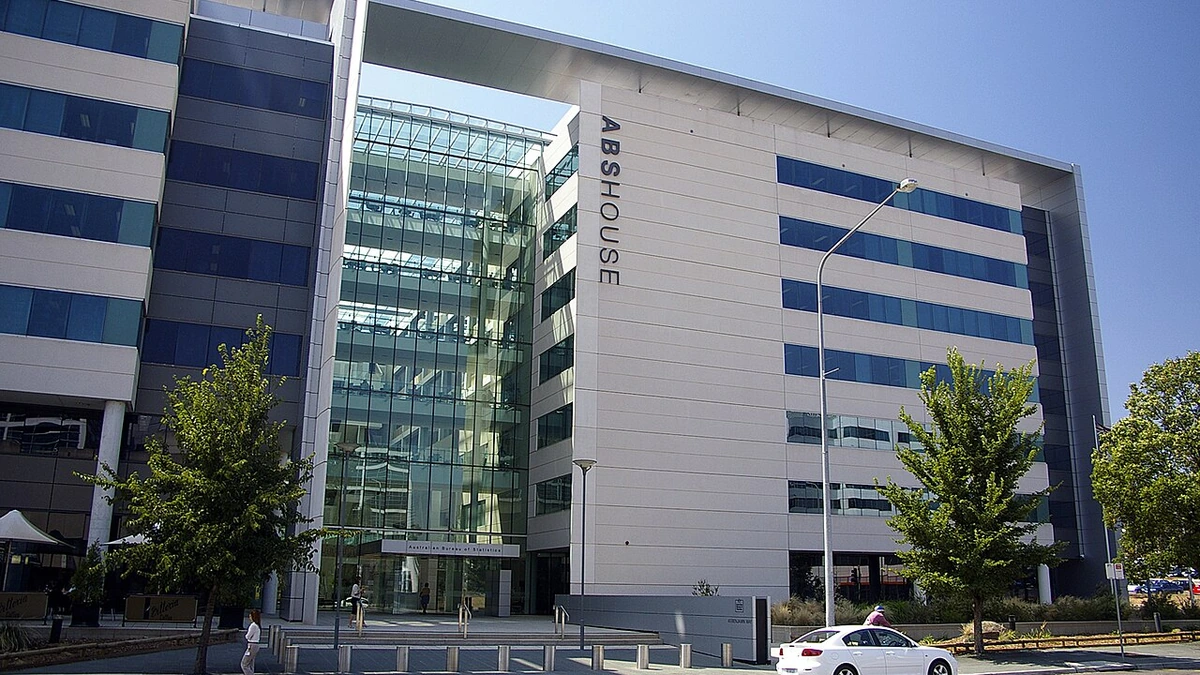
Australia’s economy expanded by 0.4% in the June quarter of 2026, extending growth but at a restrained pace after a 0.3% rise in the March quarter. Gross domestic product was 2.1% higher than in the June quarter of 2025, down from 2.5% through-the-year growth three months earlier.
Higher interest rates, cautious household behaviour and disruption from the Middle East conflict did not stop the economy from expanding, but the pace remained modest. Growth was spread across household spending, government consumption and net exports, while inventories subtracted from activity and private investment made no contribution to quarterly GDP growth.
According to the Australian Bureau of Statistics, GDP per capita was essentially unchanged in the quarter after falling 0.1% in March, and stood 0.7% higher than a year earlier. On a financial-year basis, GDP rose 2.4% in 2025-26 and GDP per capita increased 0.8%, a separate measure from the 2.1% June-to-June growth rate.
For the 2025-26 financial year, growth also strengthened compared with the prior two years even though the latest quarter remained soft. The ABS said service industries, which account for more than 70% of Australian economic activity, were an important source of the stronger annual result. The agency revised some earlier quarterly estimates as well, lowering June-quarter 2025 growth by 0.2 percentage points and raising September-quarter 2025 growth by 0.1 percentage points.
Household spending rose, but the gains were concentrated
Household consumption increased 0.4% and contributed 0.2 percentage points to quarterly GDP growth. The headline increase concealed a mixed spending pattern: discretionary consumption rose 1.4%, while essential consumption fell 0.3%.
Motor vehicles accounted for a large share of the discretionary increase. Household purchases of vehicles rose 10.3% as electric and hybrid sales reached record levels, according to the ABS. Other discretionary categories were much softer, consistent with pressure from living costs and borrowing expenses.
Travel and fuel spending also showed the effect of external shocks. Domestic and international tourism weakened as the Middle East conflict disrupted travel plans, while households cut fuel consumption as prices remained elevated. Milder winter conditions reduced demand for electricity, gas and other fuels, and free public transport initiatives in some states also weighed on household vehicle operating expenditure.
The income side of the accounts offered some support to households. Compensation of employees rose 1.5% in the quarter, while gross household disposable income increased 1.1%. Because disposable income grew slightly faster than nominal household spending, which rose 1.0%, the household saving-to-income ratio edged up to 6.5% from 6.4%.
Net trade adds to growth as coal exports recover
Net trade contributed 0.1 percentage points to GDP growth, its first positive contribution since the December quarter of 2023. Exports of goods and services rose 0.8%, led by coal as production recovered from weather disruptions in the March quarter.
Imports increased 0.5% overall. Goods imports climbed 2.4%, driven by motor vehicles and aircraft, while services imports fell 4.9% as fewer Australians travelled overseas. The ABS said overseas travel for the northern hemisphere summer declined for the first time since the pandemic-era border closures, sharply reducing international travel expenditure.
Inventories moved in the opposite direction, subtracting 0.1 percentage points from quarterly growth. Mining inventories were drawn down as export demand, particularly for coal, exceeded production. Motor vehicle wholesalers and retailers built non-mining inventories in anticipation of continued demand for electric and hybrid vehicles.
Production data also showed that growth was reasonably broad across industries, even though the overall GDP increase remained modest. Gross value added rose 0.5%, with 14 of 19 industries expanding. Professional, scientific and technical services grew 2.3%, while mining and financial and insurance services each rose 1.3%. Manufacturing fell 1.9%, and administrative and support services declined 1.4%.
Investment is uneven as the RBA expects slower growth
Private investment was flat in the June quarter after a strong run in several areas. Business investment declined 0.5%, with machinery and equipment spending easing after exceptionally strong data-centre-related imports in the March quarter. At the same time, new building work associated with data centres remained elevated, engineering construction was supported by renewable energy and mining projects, and dwelling construction increased.
Company income improved even as investment growth cooled. Gross operating surplus for private non-financial corporations rose 2.5%, led by mining, while financial corporations recorded a 2.4% increase as loan balances and margins expanded. Nominal GDP rose 0.8%, compared with the 0.4% increase in real output, and Australia’s terms of trade fell 1.6% during the quarter.
The GDP release arrives against a restrictive monetary-policy backdrop. In its August Statement on Monetary Policy, the Reserve Bank of Australia said domestic growth was expected to remain subdued in 2026 as higher inflation, softer housing conditions and earlier cash-rate increases weighed on demand. The RBA left the cash rate target at 4.35% and forecast year-ended GDP growth of 1.9% for June 2026 and 1.4% for December 2026; the June national accounts outcome of 2.1% was above the bank’s August projection for that period.
Even so, the composition of the quarter points to caution rather than a broad acceleration. Household consumption grew, but the increase leaned heavily on vehicle purchases, business investment eased, and the positive trade contribution came alongside inventory drawdowns. The ABS is scheduled to publish the September-quarter national accounts on December 2, 2026, which will show whether growth slowed further as the RBA expected or proved more resilient.
More News


Latest News
View all news- U.S. Crude Inventories Fall 3.1 Million Barrels in Latest EIA Report
- Thermo Fisher Scientific Reports 9% Revenue Growth to $12.14 Billion
- OCC Issues Final Rule to Implement GENIUS Act Stablecoin Regulations
- Ohio Auto Parts Manufacturer Agrees to Pay $3 Million Over PPP Loan Allegations
- CFTC Announces $9.2 Million Penalty in Louisiana Forex Fraud Case