


What matters most in a cash back credit card
The most important choice is not the issuer or even the highest advertised percentage. It is how much complexity you are willing to manage for a higher return. A flat-rate card can reward every purchase the same way with almost no ongoing work, while category cards can pay more in selected areas of the budget. Rotating-category cards can raise the ceiling further, but they ask you to activate offers and pay attention to a calendar.
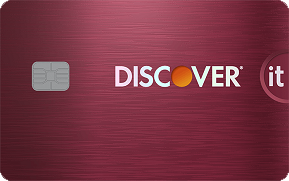
Citi Double Cash sits at the simple end of that spectrum with a 2% total cash-back structure as you buy and pay. Freedom Unlimited adds permanent bonus categories while keeping a useful 1.5% base rate. Blue Cash Preferred and Capital One Savor target specific household spending, and Discover it Cash Back rewards someone who is willing to rotate spending toward activated 5% categories when they are useful.
The right structure is the one you will actually use for years, not the one that wins a spreadsheet under perfect conditions. If category tracking feels like work, a slightly lower but consistent return can be the better product. If you already know where most of your money goes and the bonus categories line up naturally, the extra effort can produce meaningfully more cash back.
The three cash-back structures to understand
Flat-rate cash back
Flat-rate cards pay the same core rewards rate across ordinary purchases, which makes them easy to use as a default card. Citi Double Cash is our flat-rate pick because its structure can produce 2% total cash back as you buy and pay. The advantage is consistency: there is no need to remember whether a restaurant, grocery store or gas station happens to be an elevated category that month.
Fixed bonus categories
Fixed-category cards pay more in categories that stay relatively predictable. Freedom Unlimited permanently rewards dining and drugstores above its base rate, Savor emphasizes groceries, dining, entertainment and popular streaming, and Blue Cash Preferred pays especially high rewards at eligible U.S. supermarkets and on select U.S. streaming subscriptions. These cards work best when their elevated categories represent a meaningful part of your normal budget.
Rotating categories
Rotating-category cards change the elevated earning categories during the year. Discover it Cash Back can earn 5% in activated quarterly categories up to the quarterly maximum, then 1%, which creates more upside when the categories are useful but also more work. The structure is attractive for someone willing to activate categories and direct eligible spending to the card without buying more simply to chase the higher rate.
Use your actual spending to compare rewards rates
A cash-back rate becomes meaningful only after it is applied to the purchases you actually make. Pull a few recent months of transactions and look at broad categories such as groceries, dining, travel, gas, streaming and everything else. You do not need a perfect budget model. The purpose is to see whether the categories a card rewards are large enough to change the annual result.
Consider a simple example. On $1,000 of spending that falls outside Freedom Unlimited's higher-earning categories, a 1.5% rate produces $15 while a 2% flat rate produces $20. That five-dollar difference can be reversed if part of the same spending moves into Freedom Unlimited's 3% categories. The useful question is not whether 2% is bigger than 1.5%, but how often each rate will apply across a year.
The same logic becomes more important with higher category rates. A 6% supermarket rate can produce substantial value for a household that spends near the eligible cap, but the benefit is smaller for someone who shops mostly at merchants that do not qualify or spends relatively little on groceries. A rewards comparison should use the full spending pattern, including the lower rate earned when a purchase falls outside the headline category.
Do the math before paying an annual fee for cash back
Blue Cash Preferred is the only card in our five with an ongoing annual fee, although American Express currently waives the fee for the first year before charging $95. Its 6% cash back at eligible U.S. supermarkets on up to $6,000 in purchases per year can make that fee easy to justify for the right household, but the fee should be compared with the extra rewards the card produces over a strong no-fee alternative.
If $6,000 of eligible supermarket spending earns 6%, that is $360 before the annual fee. A 3% card would earn $180 on the same amount and a 2% card would earn $120. Subtracting a $95 ongoing fee leaves $265 from the supermarket spending before considering Blue Cash Preferred's other categories. That is still a strong result, but the advantage shrinks when grocery spending is lower or when purchases happen at merchants outside the eligible supermarket category.
The general rule is simple: an annual fee should buy measurable incremental cash back or benefits you would use anyway. If the extra earning only barely covers the cost, a no-fee card is easier to keep and less dependent on maintaining a particular spending pattern year after year.
Merchant categories can change the rewards you actually earn
Bonus-category rewards depend on how a merchant is coded for the card network, not only on what you purchased. A business that sells groceries may not be categorized as an eligible grocery store, and a restaurant purchase processed through another merchant can sometimes code differently from a direct charge. Capital One, for example, excludes superstores such as Walmart and Target from Savor's grocery-store category.
This matters because a household can overestimate a category card by assuming every purchase that feels like groceries, dining or entertainment will receive the elevated rate. Check the issuer's category definitions, especially when a large part of the projected rewards depends on one type of spending. Third-party payment services and merchants operating inside larger businesses can also create unexpected results.
A useful base rate provides some protection when a purchase does not qualify. Double Cash can still produce 2% total cash back as you buy and pay, Freedom Unlimited falls back to 1.5% and Savor earns 1% outside its elevated categories. The fallback rate is part of the product, not a footnote, because real-world merchant coding will not always match the category labels in your budget.
Maximize cash back without turning rewards into a second job
The easiest way to improve cash-back earnings is to give each card a clear job. A flat-rate card can handle everything that does not earn more elsewhere, while one targeted card can cover a large category such as groceries or dining. That captures much of the value available from a multi-card setup without requiring you to remember a different card for every merchant.
If you use rotating categories, activate them early and decide in advance which ordinary expenses might qualify. Do not manufacture spending to fill a quarterly cap. The goal is to redirect purchases that were already in the budget, not to spend an extra dollar in order to earn a few cents back. The same principle applies to welcome bonuses: shift planned expenses when useful, but do not let a threshold create new purchases or interest-bearing debt.
Redemption habits matter too. Cash back is most useful when you actually redeem it rather than allowing a large balance to sit unused indefinitely. Whether you take a statement credit, deposit the rewards to an account or use another issuer-supported option, choose a method that makes the value easy to recognize and keeps the rewards connected to a financial goal you care about.
Welcome offers and 0% APR periods are useful secondary features
Cash-back cards often compete with temporary offers that make the first year look much richer than the years that follow. Freedom Unlimited and Savor currently offer $200 after $500 in purchases during the first three months, Citi Double Cash offers $200 after $1,500 in six months, and Blue Cash Preferred currently offers $250 after $3,000 in six months. Discover uses a different model by matching the cash back earned during the first year rather than requiring one fixed spending threshold.
These offers matter, especially when two cards have similar ongoing economics, but they should not determine the card by themselves. The spending requirement needs to fit purchases that were already planned, and the card's regular earning structure should remain competitive after the promotion ends. A welcome bonus that causes extra spending or an interest-bearing balance has failed at its basic purpose.
Introductory APR periods deserve the same treatment. Several cards on this list combine rewards with temporary 0% financing, but a cash-back page is still primarily about rewards. If reducing interest on a large balance is the main objective, compare dedicated 0% APR or balance-transfer cards, where promotional length and transfer fees receive more weight than cash-back earning rates.
Cash-back redemption is simple, but the rules still vary
Cash back is easier to understand than many travel currencies because the reward is ultimately expressed in dollars, but issuers still handle redemption differently. Some programs allow statement credits or deposits, while others offer purchases with rewards, gift cards or additional options. There can also be differences in minimum redemption amounts, timing and what happens to unused rewards if an account is closed.
Those rules rarely matter enough to rescue a weak earning structure, but they can break a tie between otherwise similar cards. A rewards balance is more useful when you can redeem it in a way that fits how you manage money and without waiting for an unnecessarily high threshold. Read the program terms rather than assuming every “cash back” card handles redemptions identically.
We also do not assign extra value merely because a cash-back program can be converted into points or used through a broader rewards ecosystem. That flexibility can be useful, particularly for someone who already uses related travel cards, but the cash-back comparison starts with the value the card provides as a cash-rewards product.
Cash back or travel rewards?
Cash back is usually the easier choice when you want predictable value and do not want to think about transfer partners or award pricing. A 2% cash-back return is easy to recognize, while the value of travel points can depend on where and how they are redeemed. Cash rewards are also flexible because they are not tied to a future trip.
Travel rewards can make more sense when travel is already a meaningful part of your spending and you are willing to use the program actively. Transferable points, airline miles and hotel points can sometimes provide value or benefits that cash back does not, but they also introduce more rules and more uncertainty. The better rewards currency is the one you will actually redeem well.
If you are undecided, start with your spending and travel behavior rather than the maximum value quoted for a points redemption. A cash-back card is not a lesser choice simply because it has fewer exotic redemption options. Simplicity is part of the value when it makes the rewards easier to earn and use consistently.
Common mistakes with cash-back credit cards
The first mistake is choosing for the highest category rate without checking the rest of the earning structure. A 5% or 6% category can be excellent, but annual fees, spending caps, merchant eligibility and a 1% fallback rate can change the full-year result. Compare the entire budget rather than one attractive percentage.
The second mistake is letting rewards justify a balance. Cash back is a small return on spending and is rarely large enough to offset sustained credit-card interest. If you expect to carry debt, the APR and repayment plan deserve more attention than the rewards rate, even when the card offers an introductory financing period.
The third mistake is overcomplicating the setup. Managing several cards can increase rewards, but every additional account creates another due date and another set of terms to monitor. Add a second cash-back card when it covers a meaningful gap in the first card, not because maximizing every possible category has become an end in itself.
Caps and exclusions can matter more than the headline rate
A high cash-back percentage can be less valuable than it first appears when the elevated rate applies only to a limited amount of spending. Blue Cash Preferred pays 6% at eligible U.S. supermarkets on up to $6,000 in purchases per year before the rate drops to 1%, while Discover's 5% rotating categories apply only up to the quarterly maximum after activation. A household that routinely spends beyond those limits needs to calculate the rewards earned after the cap, not just the amount earned before it.
Exclusions can matter just as much as caps. A grocery bonus may not include superstores or warehouse clubs, and an entertainment or travel category can depend on merchant coding. If much of your projected value comes from one category, read the issuer's definition carefully and compare it with the merchants you actually use. A slightly lower rewards rate that applies reliably can be more valuable than a higher rate that misses a large part of your spending.
The easiest way to avoid overestimating a card is to calculate the full year in layers. Apply the elevated rate only to spending that clearly qualifies and remains within the cap, then apply the lower rate to the rest. That produces a much more realistic comparison than multiplying the entire category budget by the largest percentage on the issuer's page.
When a second cash-back card is worth the extra account
A second cash-back card makes sense when it adds a meaningful earning category rather than duplicating what the first card already does. A flat-rate card such as Double Cash can handle purchases that do not earn a higher rate elsewhere, while Blue Cash Preferred can target eligible supermarket spending or Discover it Cash Back can take over during useful 5% quarters. This approach can capture much of the upside of a multi-card strategy without requiring a different card for every merchant.
The improvement should be measured in dollars, not percentages. If adding another card would increase annual cash back by only a small amount, the extra due date and account management may not be worth it. The case is stronger when one category represents a large share of the household budget or when the second card adds a useful feature the first one lacks, such as a long introductory APR period.
Keep the setup easy enough that the rewards do not interfere with payment discipline. The best cash-back strategy is still one where purchases remain within the budget and statement balances are handled on time. A more complicated wallet that earns slightly more but makes spending harder to track is not automatically an upgrade.
What we looked for in a cash-back card
For cash-back cards, we focused on how reliably the rewards structure turns ordinary spending into usable value. That means looking beyond the largest advertised percentage to the base earning rate, the breadth of bonus categories, annual fees, spending caps, activation requirements and the amount of attention the card needs throughout the year.
We also wanted the five picks to serve different spending styles. A flat-rate card should be easy to use everywhere, while a category card needs enough extra earning power to justify its limits or added management. The final list therefore favors distinct strengths rather than five products that look different but reward essentially the same behavior.