




Build the decision around spending that repeats every month
Rewards cards are easiest to compare when you ignore the welcome bonus for a moment and look at where your ordinary money goes. Dining, groceries, gas, transit, travel, streaming and uncategorized purchases repeat throughout the year, so those categories usually matter more to long-term value than one large purchase made to earn a new-card offer.
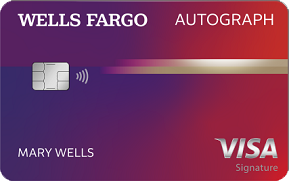
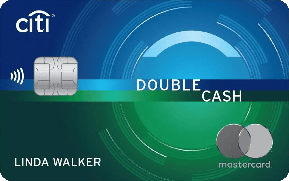
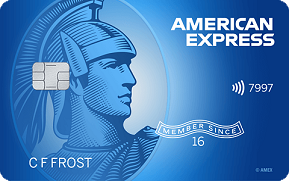
The five cards on this page represent different ways to capture that spending. Wells Fargo Autograph spreads elevated rewards across several common categories without an annual fee, Capital One Venture Rewards uses a simple 2-mile-per-dollar base rate, Citi Double Cash uses a flat cash-back structure, and Blue Cash Preferred concentrates unusually high cash back in selected household categories. Chase Sapphire Preferred sits between those models with flexible points and several bonus categories.
Start with a rough annual spending picture rather than trying to optimize every transaction. If most purchases fall outside any card's bonus categories, a strong flat-rate card may outperform a more complicated card with a higher headline rate. If a large share of the household budget sits in a few predictable categories, a category card can earn substantially more without requiring more spending.
Flat-rate rewards trade maximum upside for consistency
A flat-rate rewards card pays the same base rate across a broad range of purchases, which reduces the need to remember categories or switch cards at checkout. Capital One Venture Rewards earns 2 miles per dollar on ordinary purchases, while Citi Double Cash earns 2% total cash back as purchases are made and paid. Both approaches can work well for spending that does not fit neatly into groceries, dining, travel or another bonus category.
Category cards can create more upside when their bonus areas line up with the budget. Blue Cash Preferred currently earns 6% cash back at U.S. supermarkets on up to $6,000 in purchases per year and 6% on select U.S. streaming subscriptions, plus 3% on transit and at U.S. gas stations. Wells Fargo Autograph earns 3 points per dollar across a broader set of categories, including restaurants, travel, transit, gas and EV charging, popular streaming services and phone plans.
The comparison is not simply 2% versus 3% or 6%. A card paying a higher rate in categories you rarely use can produce fewer rewards than a lower flat rate applied to almost everything. Calculate the likely annual rewards from your own mix of purchases and then subtract any annual fee before deciding which structure is actually more generous.
Cash back, points and miles solve different problems
Cash back is the easiest rewards currency to understand because its value is expressed directly in dollars. Citi Double Cash, for example, can be redeemed for cash back through options such as statement credit or direct deposit, while its rewards are tracked through Citi's ThankYou system. Blue Cash Preferred earns Reward Dollars that can be redeemed according to American Express redemption options.
Points and miles can provide more redemption choices, but the value of each unit can depend on how it is used. Chase Sapphire Preferred points can be redeemed through Chase options or transferred to participating travel partners, while Capital One Venture miles can be redeemed for travel and other options or transferred to participating loyalty programs. That flexibility can be valuable for someone willing to compare redemptions before using a large balance.
Do not assume that a point, mile and cent of cash back are equivalent just because each reward uses a single number. A 3X category can be more or less valuable than 3% cash back depending on the redemption path and the value you actually obtain. The cleanest comparison is the amount of useful value you expect to redeem, not the number of reward units displayed in the account.
Make the annual fee earn its place every year
An annual fee can be reasonable when the additional rewards and benefits exceed what a no-fee alternative would provide on the same spending. Chase Sapphire Preferred and Capital One Venture Rewards each currently charge $95, while Blue Cash Preferred has a $0 introductory annual fee for the first year and then $95. Wells Fargo Autograph and Citi Double Cash have no annual fee.
For a category card, estimate how much additional cash back the higher rates generate before giving the fee full credit. Blue Cash Preferred's supermarket rate can be valuable for a household that spends heavily at eligible U.S. supermarkets, but a smaller grocery budget may not create enough incremental value over a no-fee alternative. The same logic applies to a travel-oriented points card whose strongest features are rarely used.
Revisit the calculation after the first year. A welcome bonus can make almost any competitive rewards card look attractive during year one, but the annual fee becomes a recurring expense while the new-card bonus does not. A card deserves to stay in the wallet because its ongoing rewards and benefits continue to justify its cost.
Separate the welcome bonus from the long-term rewards rate
Welcome offers can represent substantial first-year value, but they are temporary. Chase Sapphire Preferred and Capital One Venture Rewards currently advertise large point or mile bonuses tied to spending several thousand dollars within three months, while Wells Fargo Autograph and Citi Double Cash use lower spending thresholds for their current offers. The size of the bonus should always be considered with the amount you must spend and the time available to do it.
A bonus is most useful when normal planned expenses are enough to qualify. Redirecting groceries, utilities, insurance or a purchase that was already budgeted can make sense if the merchant accepts the card without an offsetting fee. Buying extra items, accelerating purchases you would not otherwise make or carrying an interest-bearing balance to meet a threshold changes the economics quickly.
When comparing two cards, calculate the first year twice: once including the welcome offer and once without it. The second calculation approximates what the account may look like in later years and prevents a temporary bonus from hiding an earning structure that is poorly matched to your spending.
Every extra rule reduces the value of a headline rewards rate
High rewards rates often come with conditions. A category may have a spending cap, require activation, apply only to purchases coded a certain way or depend on booking through the issuer's travel platform. Those restrictions do not make the reward unhelpful, but they determine how much of the advertised rate is realistically available.
Blue Cash Preferred's 6% U.S. supermarket rate is capped at $6,000 of qualifying supermarket purchases per year before the rate drops to 1%. Portal bonuses on cards such as Chase Sapphire Preferred and Capital One Venture Rewards apply to eligible bookings through the issuer's travel platform rather than every hotel, flight or rental-car purchase. Understanding those boundaries matters more than memorizing the largest percentage on the marketing page.
Complexity has a cost of its own. A theoretically optimal card that requires constant tracking can produce less real value than a simpler card you use correctly every month. If you routinely forget category rules, a flat-rate card can be the more profitable choice even when its headline rate is lower.
Earning rewards is only half of the system
A rewards balance has little practical value until it is redeemed for something useful. Before choosing a card, check how the issuer lets you use rewards, whether there are minimum redemption requirements, whether different redemption methods produce different values and what happens if the account is closed. Those details can matter just as much as the earning rate for someone who accumulates rewards slowly.
Simple cash-back cards reduce much of this friction because the cardholder is usually choosing among cash-oriented redemption options rather than searching for an award itinerary. Flexible travel points and miles can create more opportunities, but they can also require comparing portal prices, transfer partners and award availability. Neither approach is universally better.
Redeem with a purpose rather than allowing rewards to accumulate indefinitely because a large balance feels satisfying. Issuers control their rewards programs and can change redemption rules or values subject to their terms. Points and miles are most useful when they are converted into a benefit you already wanted, not when they remain an abstract number in an account.
One good rewards card can beat a complicated five-card setup
Using multiple rewards cards can improve category coverage, but each additional account introduces another statement, due date, rewards balance and set of rules. A two-card setup combining a strong flat-rate card with one category card can capture much of the available upside without requiring a different card for every purchase.
For example, a household could use a category-focused card for groceries and transit while directing uncategorized purchases to a flat-rate card. Another person may prefer one flexible points card because keeping all rewards in one ecosystem makes redemptions easier. The best setup is the one that remains manageable when the novelty of optimization wears off.
Do not open several cards at once simply to cover every possible rewards category. Applications can affect the credit profile, and multiple spending requirements can encourage purchases that were not part of the budget. Add another card only when it fills a recurring gap large enough to justify another account.
Rewards lose quickly to credit card interest
Rewards cards work best when purchases are paid without carrying expensive revolving debt. A card earning 2%, 3% or even 6% in a category cannot offset months of interest at a typical rewards-card APR. If a purchase needs long-term financing, the interest rate and repayment plan should take priority over the rewards earned on the transaction.
Some rewards cards also offer introductory financing, which can be useful when the promotion fits a planned expense. Wells Fargo Autograph and Blue Cash Preferred currently include introductory purchase APR periods, while Citi Double Cash's current introductory financing is focused on balance transfers rather than purchases. Those details belong in the financing decision, not in the calculation of how rewarding the card is.
Paying in full also makes rewards easier to evaluate because every dollar earned is incremental value rather than a small offset against borrowing costs. If the budget cannot support full repayment, a lower-rate or 0% financing product can be a better tool even if its rewards are modest or nonexistent.
The rewards structure should fit your habits without changing them
A credit-card rewards program is valuable when it rebates spending that would have happened anyway. It becomes less useful when bonus categories cause you to choose a more expensive merchant, book through a portal you would otherwise avoid or make purchases simply because the card offers extra points. The reward is a discount on spending, not a reason for the spending.
This is also why a card that looks less exciting on paper can be the better long-term choice. Citi Double Cash's flat-rate structure does not require category planning, while Venture Rewards applies its 2-mile base rate broadly. For someone who wants a card that works predictably across an uneven mix of purchases, that consistency can matter more than maximizing a few categories.
Review the account after several months and compare the rewards actually earned with what you expected. If most spending is receiving the base rate while an annual fee continues to be charged, the card may be mismatched to the budget. A rewards strategy should become easier with experience, not require increasingly complicated behavior to justify itself.
What made a rewards structure worth recommending
For this list, we looked first at how consistently a card can reward ordinary spending. We compared annual fees, base earning rates, bonus categories, category caps and restrictions, redemption flexibility, introductory offers and whether the card remains useful after the first-year bonus is gone. We gave less weight to a large welcome offer when the ongoing rewards structure was narrow or expensive to maintain.
The final group is intentionally varied because rewards are not one product category in practice. It includes flexible points, broad no-fee bonus categories, flat-rate miles, flat-rate cash back and a high-earning household category card. That range lets the comparison focus on how someone spends and redeems rather than forcing every card into the same rewards strategy.