German Factory Orders Rise 2.5%, but Large Contracts Drive the Gain
German manufacturing orders rose 2.5% in July, but orders excluding large-scale contracts fell 1.4% as ship, rail and aircraft orders dominated the monthly increase.
Our editorial standards
MarketReview publishes clear, independently produced financial information using reliable sources and transparent editorial standards.
Read our Editorial Policy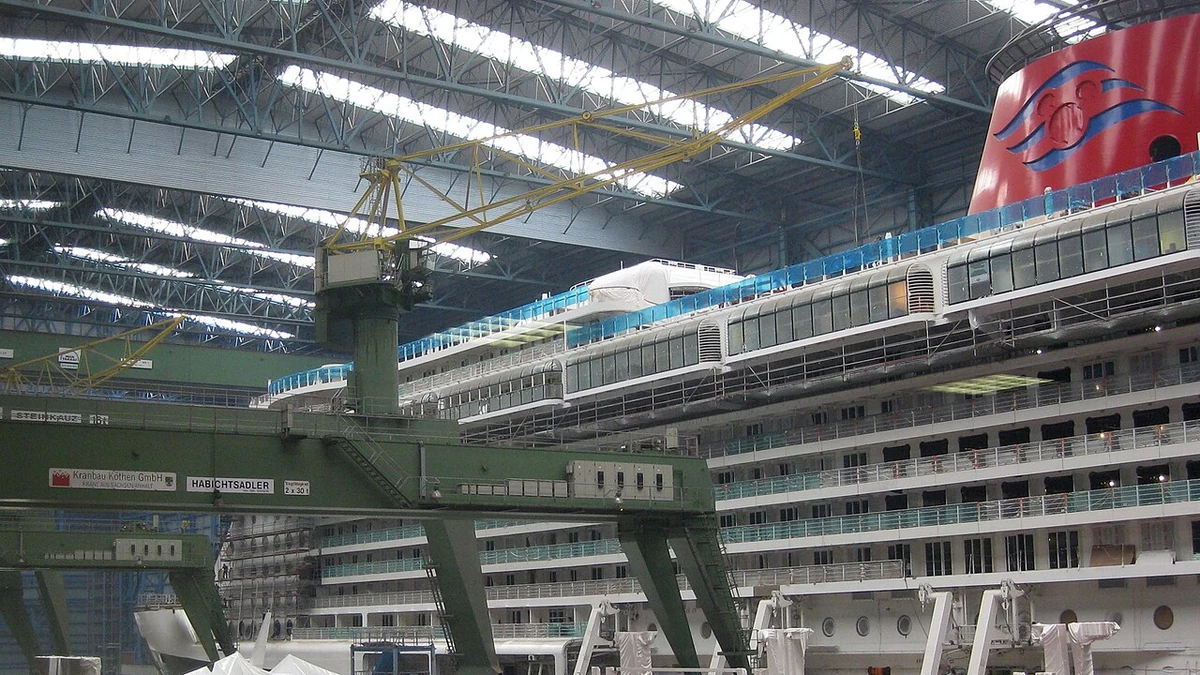
German manufacturers received 2.5% more new orders in July than in June on a price-adjusted, seasonally and calendar-adjusted basis, giving the headline measure another monthly gain. The strength was much narrower than the top-line figure suggests: orders excluding large-scale orders fell 1.4% from the previous month.
Compared with July 2025, new manufacturing orders were 13.1% higher after calendar adjustment. The three-month picture also looked positive at first glance, with orders from May through July up 2.9% from the preceding three months. Excluding large-scale orders, however, the same three-month comparison showed a 2.2% decline. That gap makes the composition of the July increase more important than the headline alone.
In its July manufacturing-orders release, the Federal Statistical Office (Destatis) said the rise was almost entirely attributable to the manufacture of other transport equipment, a category that includes aircraft, ships, trains and military vehicles. Its provisional data showed that unusually large orders in those industries were big enough to offset weakness elsewhere in German manufacturing.
Ship, rail and aircraft orders dominate July
Orders in other transport equipment surged 126.4% from June after seasonal and calendar adjustment. Destatis attributed the jump to an exceptionally high volume of large-scale orders, particularly for ships, railway rolling stock and aircraft. The scale of that move means the July result cannot be read as a uniform increase in demand across German factories.
Autos moved sharply in the opposite direction. New orders in the automotive industry fell 12.5% from June, making that sector the largest negative influence identified by Destatis. The contrast matters because transport-related manufacturing is not one single demand story: a large batch of ship, rail or aircraft orders can lift the broader index even when orders in the auto industry weaken.
Across the major goods groupings, capital-goods orders rose 2.4% on the month and intermediate-goods orders increased 4.3%, while consumer-goods orders fell 4.8%. Those figures add to the mixed picture beneath the headline, with gains in business-oriented categories alongside weaker consumer-goods demand.
The geographic split was similarly uneven. Domestic orders climbed 9.1% in July, while foreign orders fell 2.1%. Orders from euro-area customers increased 12.1%, but demand from outside the euro area dropped 10.1%. The overall 2.5% gain therefore did not come from a broad improvement in overseas demand. It combined a strong domestic rise and firmer euro-area business with a sizeable decline from non-euro-area customers.
Recent gains have also been sensitive to large orders
The less volatile three-month comparison reinforces the caution around July’s headline. Total orders in May through July were 2.9% higher than in the previous three months, but the measure excluding large-scale orders was down 2.2%. In other words, the broader order book improved only when the biggest orders were included.
June’s result was also revised higher. Destatis now puts the month-on-month increase at 3.7%, compared with the initially reported 3.1%. Even before that revision, the June release showed that large orders had an important influence: machinery and equipment orders rose 12.7%, computer, electronic and optical-product orders increased 22.7%, and several establishments in those sectors reported large-scale orders. Excluding large orders, June manufacturing orders fell 0.5%.
May showed a different version of the same volatility. The initial May headline increase of 1.9% was later revised to 0.3% because of an adjustment for price changes. Within the original May release, other transport equipment orders had jumped 85.0% from April because of several large-scale orders. That category then fell 41.7% in June from its elevated May level before surging 126.4% in July. The sequence illustrates how exceptionally large orders can produce sharp month-to-month swings in the aggregate series.
Those orders are still economically meaningful. The important distinction is that their size can make the monthly headline a less reliable guide to the breadth of near-term manufacturing demand. Destatis therefore publishes a measure excluding large-scale orders and also highlights the three-month comparison, which helps show whether the overall direction is being driven by exceptional bookings.
Because the July figures are provisional, revisions also remain part of the picture. Destatis measures new orders using price-adjusted indices with 2021 set to 100 and applies seasonal and calendar adjustment using the X13 JDemetra+ method. The statistics cover selected branches of manufacturing rather than every industrial activity, so they are best read as a high-frequency demand measure for the sectors included.
Turnover and production remain more restrained
Other official industrial indicators have not yet shown the same strength as the July order headline. Real manufacturing turnover fell 1.5% in July from June after seasonal and calendar adjustment and was 0.6% lower than a year earlier after calendar adjustment. New orders capture incoming demand, while turnover reflects activity that has moved further through the production and sales process, so the two measures can diverge from month to month.
Industrial production had been improving more gradually before the July order data. In June, real industrial production rose 0.2% from May after seasonal and calendar adjustment. Production excluding energy and construction was unchanged on the month and stood 0.8% below its June 2025 level after calendar adjustment. Auto production increased 3.6% in June even though July auto orders later fell sharply, another reminder that monthly orders and output do not move in lockstep.
Germany also entered the third quarter with a sizeable backlog. The real stock of manufacturing orders rose 0.8% in June from May and was 9.3% higher than a year earlier. Destatis estimated that the backlog represented 8.9 months of work at the prevailing turnover rate if no new orders were received. Capital-goods producers had the longest coverage at 12.4 months, reflecting a pipeline that can extend well beyond a single monthly order reading.
The broader economy has been expanding, but not at a pace that removes the need to distinguish between concentrated and broad-based industrial gains. German gross domestic product rose 0.3% in the second quarter from the first after price, seasonal and calendar adjustment, and was 1.0% higher than a year earlier. Destatis said exports were an important driver, with price-adjusted exports up 3.7% from the second quarter of 2025 and goods exports up 5.0%.
The July release remains provisional, and June’s monthly order gain was already revised from 3.1% to 3.7%. Subsequent production and turnover data will provide a more direct test of whether the unusually large ship, rail and aircraft orders translate into a broader increase in German factory activity.
More News


Latest News
View all news- Union Pacific Third-Quarter Profit Rises 16% to $2.1 Billion as Freight Volumes Grow
- Nasdaq Q3 Revenue Jumps 13% as Annual Recurring Revenue Reaches $3.4 Billion
- Census Bureau Releases New Business Conditions Data Covering U.S. Employers
- Blackstone Reports Third-Quarter Earnings With Assets Under Management Near $1.4 Trillion
- BEA Expands State-Level R&D Economic Statistics With New 2024 Estimates