
SigmaRoc Agrees €118 Million Purchase of Lithuania’s AB Dolomitas
The European lime and minerals group will pay €90 million in cash and €20 million in shares for AB Dolomitas, plus €8 million for non-core assets, with closing expected in the fourth quarter.
Our editorial standards
MarketReview publishes clear, independently produced financial information using reliable sources and transparent editorial standards.
Read our Editorial Policy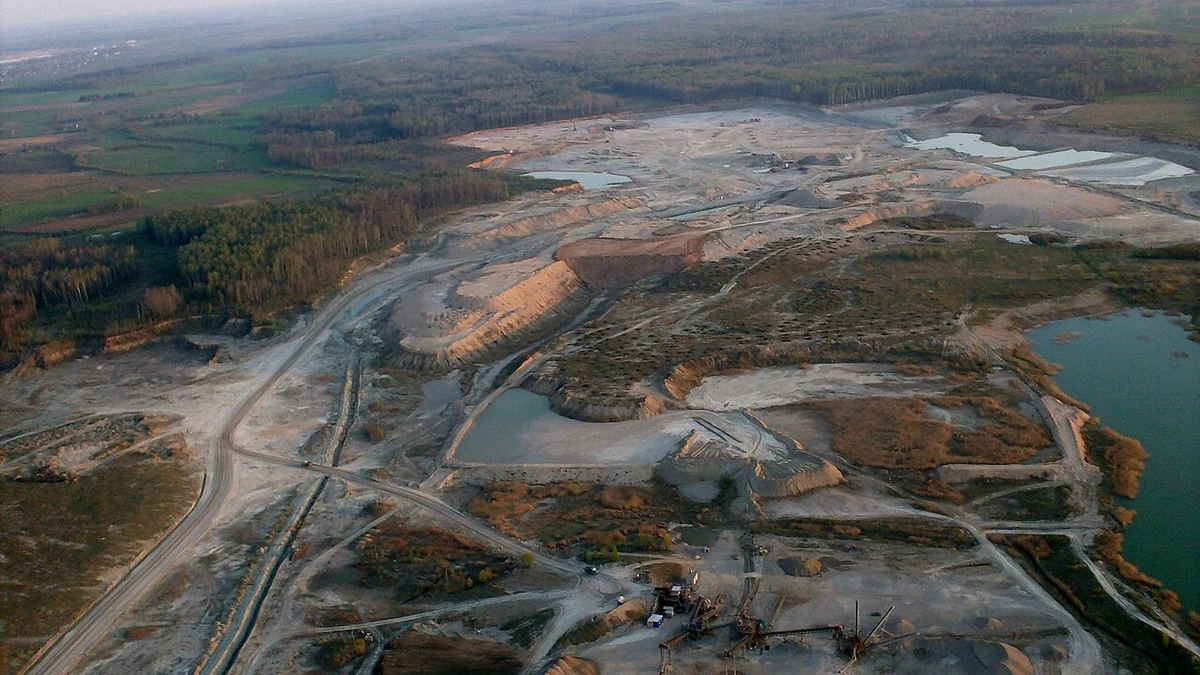
SigmaRoc has agreed to acquire Lithuanian dolomite producer AB Dolomitas from its current shareholders for €110 million on a debt- and cash-free basis, while paying a further €8 million for specified non-core assets. The €118 million total planned outlay would add a business with about 3.5 million tonnes of annual dolomite production and roughly 25 years of reserves and resources to the London-listed lime and minerals group.
The acquisition is expected to close in the fourth quarter of 2026, subject to regulatory consents, and SigmaRoc said it expects the purchase to add to earnings in 2027. AB Dolomitas generated €70 million of revenue and €18 million of EBITDA in 2025, which implies an EBITDA margin above 25% on the figures disclosed by the buyer.
Cash, shares and the extra €8 million asset purchase
Under the acquisition terms announced through the London Stock Exchange, SigmaRoc will pay €90 million in cash and €20 million in newly issued SigmaRoc shares for AB Dolomitas. The share component consists of 13,333,334 new shares issued at 129 pence each, a price based on SigmaRoc’s four-week volume-weighted average price through September 3, 2026. The sellers requested the share component and will be subject to a 12-month lock-in.
SigmaRoc said the cash portion will be funded from existing resources. The additional €8 million cash payment is for non-core assets that are separate from the main €110 million purchase price, including an industrial section of land near the port of Klaipėda. Management said the site could be developed for importing or exporting aggregates and for other processing activities, while noting that those assets currently make no material contribution to AB Dolomitas’s EBITDA.
The new shares will lift SigmaRoc’s issued share count from 1,114,854,530 to 1,128,187,864 after admission to AIM, based on the company’s announcement. That means the vendor shares would represent about 1.2% of the enlarged share count. Admission is expected shortly after the acquisition closes, and the new shares will rank equally with SigmaRoc’s existing ordinary shares.
Dolomitas adds Baltic capacity and long-lived reserves
AB Dolomitas was established in 1964 and produces more than 40 product variations, including mineral filler, from high-grade dolomite. SigmaRoc said the business has about 25 years of reserves and resources at current estimates, with potential to secure enough additional material for roughly another 20 years. The company also operates its own logistics network, including trucks, open rail wagons and terminals serving Lithuania’s main cities.
The producer’s Petrašiūnai quarry is its main production base, according to AB Dolomitas. Crushed dolomite of multiple fractions is extracted there and distributed to sales locations in Vilnius, Kaunas and Klaipėda. If the acquisition closes, that production base and distribution network would give SigmaRoc an established operating footprint rather than a greenfield project that still needs to be developed.
SigmaRoc already has quarrying and distribution operations in Lithuania, Latvia and Estonia. It plans to place AB Dolomitas within its Baltics platform as an operating business unit, giving the group additional scale and a broader product range in markets where it is already active. That fits SigmaRoc’s stated strategy of acquiring asset-backed minerals businesses in fragmented European markets and improving them within larger regional platforms.
SigmaRoc describes dolomite as a high-magnesium limestone material that can serve its core segments. Management highlighted steelmaking as an important end market and specifically pointed to an emerging “green steel” sector as a prospective source of demand. The announcement also grounds the rationale in AB Dolomitas’s existing revenue, production base, logistics network and reserves, rather than depending only on that newer end market.
Purchase follows a stronger first half for SigmaRoc
The agreement was announced alongside SigmaRoc’s interim results for the six months ended June 30. Group revenue rose 2.5% from a year earlier to £523.1 million, while underlying EBITDA increased 11.3% to £131.2 million. The underlying EBITDA margin improved to 25.1% from 23.1%, and underlying profit before tax rose 11.4% to £75.1 million.
Cash generation and leverage also improved during the first half. SigmaRoc reported £67.0 million of underlying free cash flow, up from £61.9 million a year earlier, while net debt declined to £462.6 million from £498.4 million. Covenant leverage fell to 1.66 times EBITDA from 2.04 times at June 2025. Those stronger balance-sheet metrics provide context for management’s decision to fund the cash part of the AB Dolomitas purchase from existing resources.
SigmaRoc also said it had increased acquisition funding capacity through an €825 million investment-grade facility with a €300 million accordion. Its published investment framework targets annual organic growth of 3% to 5%, an EBITDA margin above 24% and return on invested capital above 15%, while leaving room for further purchases in Europe’s lime and minerals sector. Chief Executive Max Vermorken said the balance sheet “retains plenty of capacity for further acquisitions,” even after the AB Dolomitas agreement.
The remaining milestone is regulatory approval. SigmaRoc expects completion during the fourth quarter of 2026, after which the vendor shares are due to be admitted to AIM and AB Dolomitas will become part of the group’s Baltic operations. Until those consents are obtained and the purchase closes, AB Dolomitas remains owned by its current shareholders.
More from Investing


Latest News
View all news- U.S. Median Weekly Pay Rises 1.5%, Trailing 3.5% Consumer Inflation
- U.S. Mortgage Applications Drop 5.3% Even as 30-Year Rate Falls to 7.41%
- U.S. Energy Department Offers Up to 315,000 Barrels From Heating Oil Reserve
- U.S. Crude Inventories Fall 3.1 Million Barrels in Latest EIA Report
- OCC Issues Final Rule to Implement GENIUS Act Stablecoin Regulations
