Digital Realty Opens 6.4-Megawatt Nairobi Data Center as iColo Rebrands
The new NBO2 facility connects customers to more than 100 networks, two internet exchange points and a satellite teleport.
Our editorial standards
MarketReview publishes clear, independently produced financial information using reliable sources and transparent editorial standards.
Read our Editorial Policy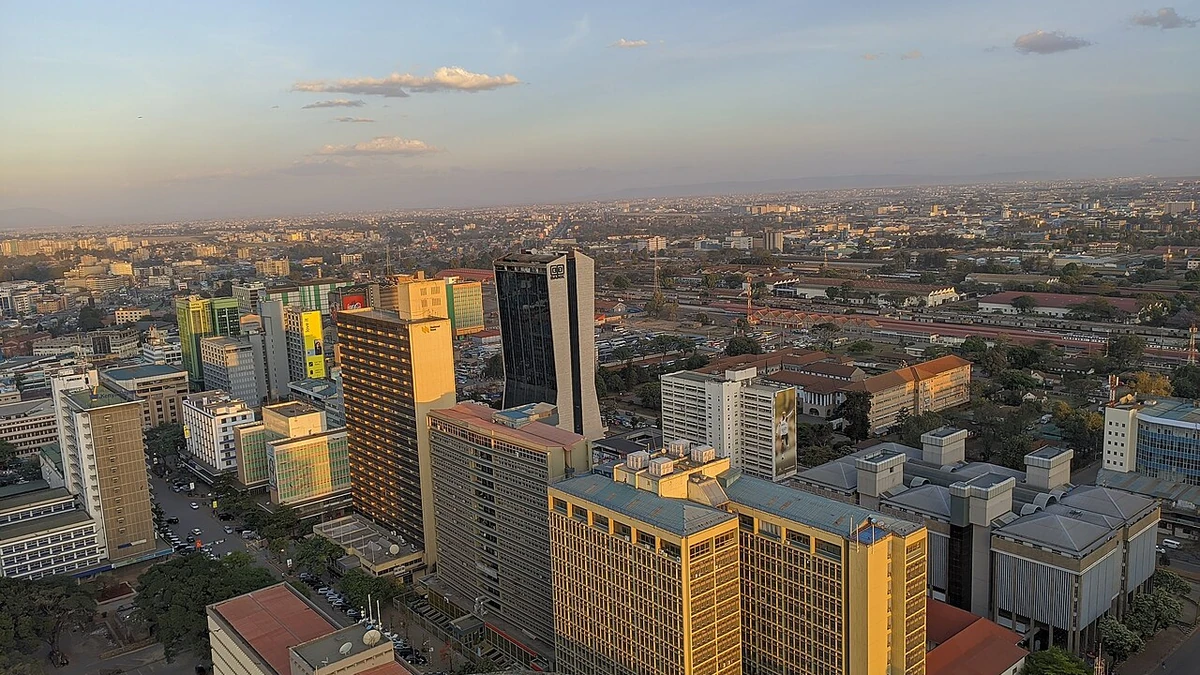
Digital Realty opened its 6.4-megawatt Nairobi Two data center, or NBO2, on September 7, expanding its Nairobi campus as the iColo name moves to the Digital Realty brand in Kenya and Mozambique. The announcement gives the company both additional physical capacity in East Africa and a single customer-facing brand across the two iColo markets.
NBO2 sits alongside Nairobi One, or NBO1. Digital Realty said customers at the campus can connect to more than 100 networks, two internet exchange points and a satellite teleport, giving cloud, enterprise, content and connectivity providers several ways to reach partners and end users across the region.
The company’s official NBO2 facility page lists 2N UPS redundancy, N+2 cooling redundancy, onsite security personnel and PCI-DSS and ISO 27001 certifications. Those operating details help frame NBO2 as a production facility rather than a future development announcement: the site is open and being marketed for deployments now.
NBO2 adds capacity and more routes into Nairobi
The 6.4 MW figure gives a measure of the new site’s scale, but Digital Realty put equal emphasis on interconnection. A data center that can link customers to a large set of carriers, internet exchanges and other service providers can serve as a meeting point for traffic as well as a place to install computing equipment, which is central to the company’s strategy in Nairobi.
The satellite teleport is one part of that design. Digital Realty said it provides an additional path to locations where terrestrial infrastructure is limited, expanding the options available for geographically distributed connectivity. The company did not claim that satellite access replaces fiber or other ground-based networks; it presented the teleport as another route that can support resilience and reach.
Two internet exchange points also give customers a way to exchange traffic locally rather than sending every connection through a distant hub. Digital Realty tied that capability to content delivery, cross-border connectivity and data-sovereignty strategies. Its stated objective is to let customers keep critical data and applications in the region while maintaining links to global platforms, partners and routes to market.
NBO2 therefore extends a campus that already included NBO1 rather than creating a separate Nairobi presence from scratch. The campus model can matter to customers that need room to grow while staying close to existing network relationships. Digital Realty’s release focused on that mix of local capacity and network density rather than presenting the opening primarily as a large hyperscale power project.
iColo takes the Digital Realty name in Kenya and Mozambique
The second part of Monday’s announcement is the brand change. iColo is transitioning to the Digital Realty name in Kenya and Mozambique, bringing the local operations under the same public-facing identity that Digital Realty uses for its wider data center platform. The release did not announce a new acquisition or a change in ownership structure; it described a rebranding that coincides with the NBO2 opening.
Wanja Muriithi, Digital Realty’s country general manager for Kenya, described the move as the next stage of iColo’s development within a global platform. In practical terms, the company is presenting Nairobi customers with the local network ecosystem built under iColo while making the Digital Realty brand more prominent for customers that operate across several markets.
That distinction is important because the rebrand and the facility opening solve different business problems. NBO2 adds usable capacity and connectivity in Nairobi. The brand shift is about how the Kenyan and Mozambican businesses are presented to customers and how they sit within Digital Realty’s global sales and platform identity. Treating the two as the same event would overstate what the company announced.
Digital Realty said the Nairobi campus is intended to support businesses serving customers in Kenya, elsewhere in Africa and internationally. The company’s broader pitch is that enterprises should be able to keep infrastructure close to users and local data requirements while still connecting into its global platform. Whether individual customers achieve that balance will depend on their own network design, service providers and regulatory requirements.
The Nairobi opening arrives during a strong demand cycle
NBO2 is opening while Digital Realty is reporting high demand across its global portfolio. For the second quarter of 2026, the company reported $1.9 billion of revenue, up 29% from a year earlier, and signed bookings expected to generate $307 million of annualized GAAP base rent at 100% share. Its signed-but-not-commenced lease backlog reached $1.9 billion of annualized GAAP base rent at 100% share at quarter-end.
Those figures are global and should not be read as a measure of demand specifically at NBO2. They do, however, show the financial backdrop for Digital Realty’s continued capacity additions. The company ended the second quarter with more than 300 facilities across more than 55 metropolitan areas and more than 30 countries, so a 6.4 MW opening in Nairobi sits inside a much larger development and interconnection program.
The Nairobi release also highlights a different part of the data center market from the multi-hundred-megawatt campuses often associated with artificial-intelligence training. Digital Realty emphasized carrier neutrality, internet exchanges, local data handling and cross-border connectivity. For East African customers, those features can be as relevant as raw power capacity when the main requirement is to place applications near users, networks and business partners.
Digital Realty has already scheduled guided tours of NBO2 for September 9 through September 11, giving customers and industry participants an early look at the new facility. That makes the immediate next step concrete: the site has moved from development into operation, while the company begins presenting the former iColo operations in Kenya and Mozambique under the Digital Realty name.
More from Investing
Latest News
View all news- U.S. Consumer Sentiment Holds Near Record Lows as Inflation Expectations Rise
- U.S. Business Growth Moderates in October as Selling-Price Inflation Accelerates
- SEC Sets 2027 Examination Priorities, With Private Credit and AI-Related Risks in Focus
- University of Michigan Research Warns Long-Term Inflation Expectations Could Become Entrenched
- First Citizens Authorizes $1.2 Billion Share Buyback Alongside Third-Quarter Earnings