
RBA’s Sarah Hunter Discusses Inflation, Housing and Government Spending Ahead of Rate Decision
Sarah Hunter said government spending is one component of aggregate demand, while above-target inflation and a relatively rapid housing downturn remain important inputs to the RBA’s September policy decision.
Our editorial standards
MarketReview publishes clear, independently produced financial information using reliable sources and transparent editorial standards.
Read our Editorial Policy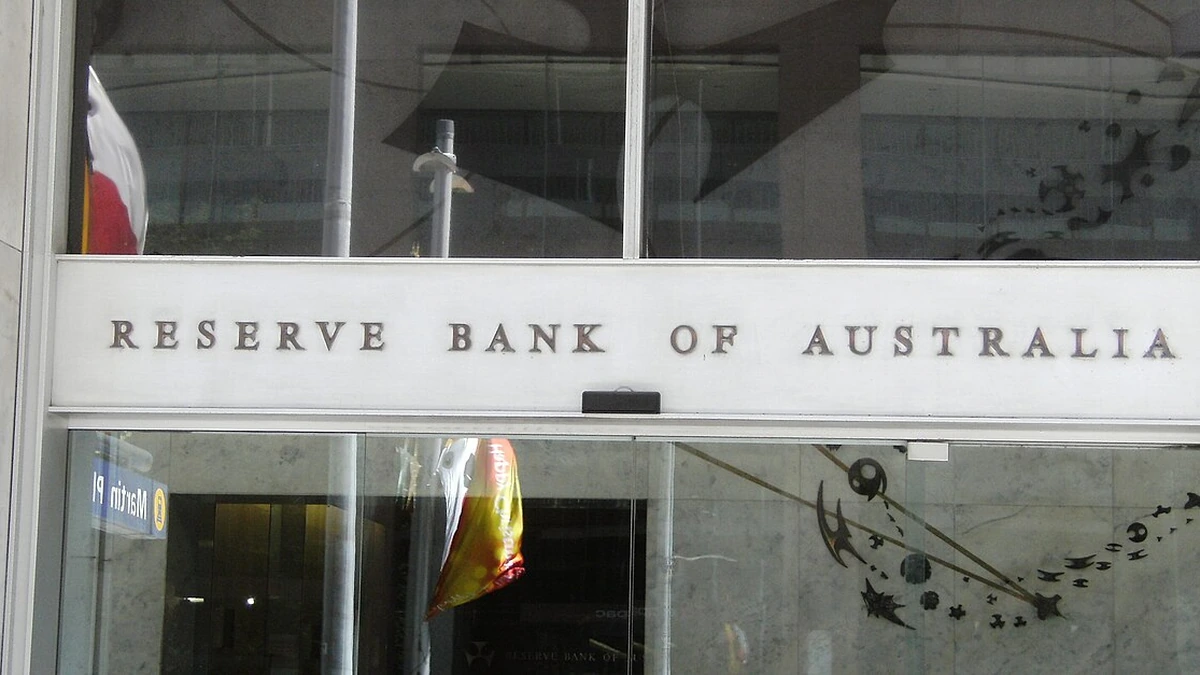
Reserve Bank of Australia Assistant Governor (Economic) Sarah Hunter said the central bank remains focused on bringing inflation back to target while weighing a softer housing market, slower growth and government demand as parts of the same economy-wide picture ahead of its September interest-rate decision. Her comments underline that the RBA is not treating any one of those forces as decisive on its own, and they do not amount to a signal that the Monetary Policy Board has settled on its next move.
The RBA published the interview on September 22, but noted that Hunter’s participation was recorded on September 7. That timing matters because the discussion reflects the information set available to her earlier in the month, even though the interview has been released one week before the Board’s September 29 decision. The cash rate target is currently 4.35%, after three increases in 2026 and an unchanged decision at the August meeting.
In the RBA’s published transcript, Hunter described the policy process as a broad assessment of global conditions, domestic activity, the labour market and inflation. She said the staff combines official data, modelling and information from the Bank’s liaison program before advising the Board on the outlook and what it could mean for monetary policy.
Inflation remains the immediate policy problem
Hunter repeatedly returned to inflation and the cost of living as the issue the RBA is trying to address. She said the distinction can become overly technical in public debate because rapid inflation is, in practical terms, the reason households experience a fast-rising cost of living. The Bank’s objective is to return the rate of price growth to a pace consistent with its 2% to 3% inflation target.
The latest consumer-price figures available when the interview was recorded showed inflation still above that band. The Australian Bureau of Statistics reported that the Consumer Price Index was 3.5% higher over the year to July, down from 3.8% in June, while trimmed mean inflation was 3.6%. Housing was the largest contributor among the major expenditure groups, with prices in that category up 5.0% over the year.
Hunter pointed to two broad sources of pressure. One is the effect of the Middle East conflict on oil and other input costs. The other is domestic capacity pressure, including in parts of construction where labour and other resources remain tight. That distinction is important for the policy outlook because the RBA has said it is watching not only headline price shocks but also whether broader domestic inflation proves persistent.
There are also clearer signs that demand has slowed. ABS national accounts released on September 2 showed real GDP rising 0.4% in the June quarter and 2.1% from a year earlier. Hunter said some cooling was expected and is part of how higher interest rates work, but she also stressed that the Board remained concerned about inflation and could consider further tightening if upside risks materialise.
The August Statement on Monetary Policy made the same balance explicit. RBA staff expected underlying inflation to remain above the target band for some time, with trimmed mean inflation above 3% until mid-2027 before easing toward 2.5% by early 2028. The staff assessment was that risks to the inflation outlook were skewed to the upside, even as slower demand and a weaker housing market created meaningful downside risks to activity.
Government spending is one part of aggregate demand
On government spending, Hunter avoided the common framing that fiscal policy can be isolated as the single cause of inflation or high interest rates. She said the RBA does not make judgments about the merits of specific elected-government policies. Instead, it looks at total federal and state spending, taxation and how those settings affect demand across the economy.
That public demand is then considered alongside household consumption, business investment, dwelling construction, exports and imports. Hunter said the relevant question for inflation is how total demand compares with the economy’s sustainable supply capacity. In the RBA’s current assessment, aggregate demand is still running somewhat above that capacity, which is why domestic inflation pressure has not fully disappeared.
The latest public-sector data illustrate why the label “government spending” can hide very different movements. In the June quarter, real general government final consumption expenditure rose 0.6%, while total public gross fixed capital formation fell 1.3%, according to ABS government finance statistics. Public demand was expected to add 0.1 percentage point to quarterly GDP growth. Those figures do not by themselves establish how much fiscal policy is contributing to inflation, but they show why the RBA folds public activity into a wider demand-and-supply assessment rather than treating it as a standalone policy verdict.
Hunter has used the same framework in other recent appearances. The central bank’s task, as she described it, is to take fiscal settings as given, combine them with the private-sector side of the economy and judge whether overall demand is consistent with low and stable inflation. That approach also means the monetary-policy implication of government spending can change depending on what households, businesses and the economy’s productive capacity are doing at the same time.
Housing is slowing, but house prices are not the RBA’s target
Housing formed the other major strand of the interview. Hunter said the RBA pays close attention to the market because it is an important channel through which monetary policy affects borrowing, household wealth, turnover and construction. She was also explicit that “house prices are not our target,” and said the Bank has no preferred level or growth rate for property prices.
Even so, the speed of the recent downturn is part of the policy calculation. Hunter described the fall in prices over recent months as relatively rapid compared with previous downturns. The RBA’s August assessment said national housing prices had fallen 1.6% from their March peak, after a long period of strong gains, and attributed the slowdown to a mix of higher interest rates, federal tax changes and weaker sentiment. Governor Michele Bullock said on September 18 that prices had fallen in most capital cities but were still around 50% above their early-2020 level.
Hunter also pushed back on the idea that higher mortgage rates mechanically produce higher rents. She said rental markets are highly local and that rents are set mainly by the balance between demand and available supply. A landlord with a mortgage may want to lift the rent after a rate increase, but the achievable rent is still constrained by competing properties and local conditions. In her account, the persistent difficulty has been getting enough new housing supplied, with planning delays and construction constraints slowing the response.
The housing downturn could have mixed effects across households. Lower prices may make a purchase more achievable for some first-home buyers, while higher borrowing costs or weaker income conditions can work in the opposite direction. Hunter therefore stopped short of describing the downturn as unambiguously positive or negative for younger buyers.
She also said the RBA was not seeing systemic mortgage stress at the time of the interview. Negative equity remained less common than before the pandemic, according to Hunter, and she cited repayment buffers accumulated by many borrowers. That does not mean individual households are not under strain, but the Bank’s financial-stability assessment has so far distinguished those cases from a system-wide problem.
The Board meets on September 28 and 29, with its decision statement scheduled for 2:30 p.m. AEST on September 29. Before then, the ABS is due to publish August labour-force data on September 24. The public release of August CPI is scheduled for September 30, the day after the rate decision, leaving the Board to weigh the inflation data already available alongside newer information on jobs, activity, housing and the risks identified in its August forecasts.
More News

Latest News
View all news- OCC Report Finds Restrictive Banking Policies at Nine Major U.S. Banks
- Morgan Stanley Reports $20.3 Billion in Quarterly Revenue as Wealth Assets Grow
- U.S. Treasury Removes Venezuelan Official Jorge Rodríguez From Sanctions List
- Federal Reserve Researchers Examine Liquidity Risks as Retail Investors Enter Private Credit
- CMS Says Duplicate Health Insurance Subsidy Checks Could Save $1.5 Billion Annually
