
Fed’s Barr Says Further Rate Adjustments Likely as Inflation Risks Rise
Michael Barr said additional policy tightening is likely to be needed after the Fed’s September rate increase, as inflation risks have risen while labor-market risks have receded.
Our editorial standards
MarketReview publishes clear, independently produced financial information using reliable sources and transparent editorial standards.
Read our Editorial Policy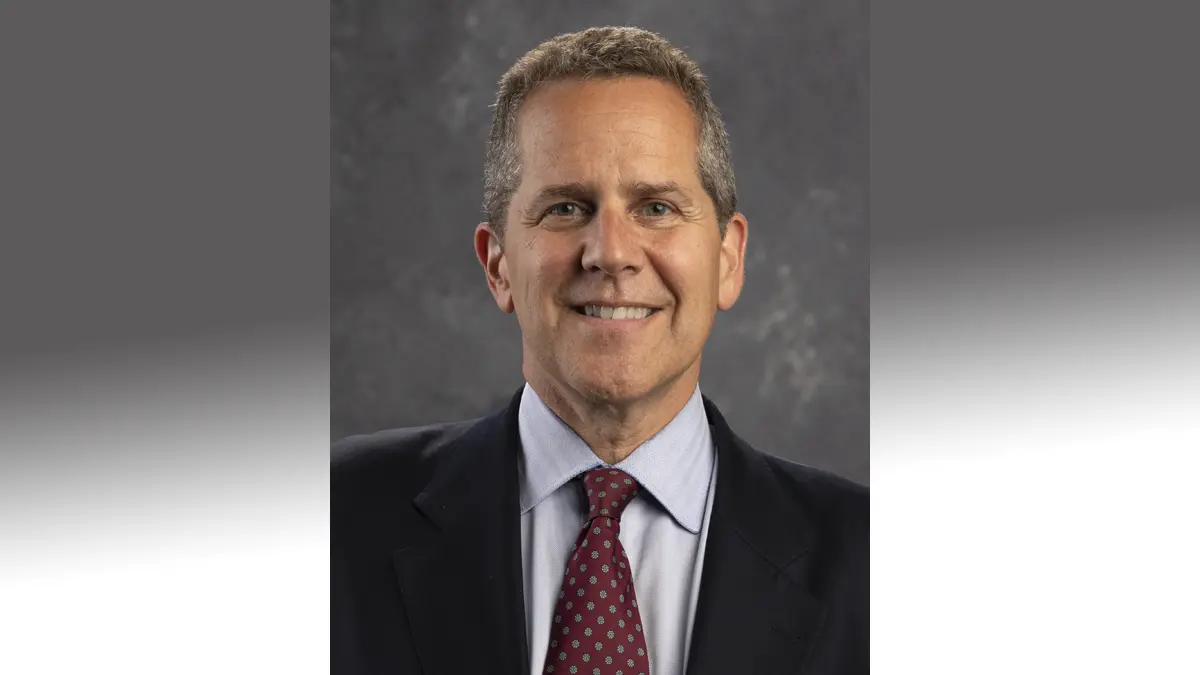
Federal Reserve Governor Michael Barr said further monetary-policy adjustments are likely to be needed to bring inflation back to the central bank’s 2% target, one week after the Fed raised interest rates for the first time since 2023.
Barr said economic growth remains strong and the labor market is solid, but inflation is still above target and is not clearly moving back toward 2% quickly enough. He also said the balance of risks has shifted: inflation risks have increased, while risks to the labor market have receded.
In remarks at a Federal Reserve Bank of Chicago housing-affordability summit on September 23, Barr said he supported the Federal Open Market Committee’s September rate increase and viewed it as an adjustment in the right direction after policy had become “out of position.” His base case, he said, is that further policy adjustments will probably be needed to return inflation to target in a timely way.
Barr did not specify the timing or size of any additional moves. His comments nevertheless add to the case for a tighter policy path after the September meeting, when Fed officials raised the target range for the federal funds rate by 25 basis points to 3.75% to 4.00%.
Barr sees the inflation risk shifting higher
Barr tied the change in his policy view to a series of shocks that have added upward pressure to prices over roughly the past year and a half. He pointed to tariffs, the conflict in the Middle East, continued disruptions from Russia’s war in Ukraine and, more recently, strong investment demand connected with the buildout of artificial-intelligence infrastructure.
The assessment marks a firmer stance than the one Barr described earlier this month. In a September 1 speech, he said the labor market was stable and economic growth was solid, but inflation had remained too high for more than five years. At that point, he said he could support taking more time if incoming data gave him confidence that inflation was moderating toward 2%. If inflation was not easing sufficiently, he said, the Fed should act decisively to raise rates.
The September 16 decision answered that question for the immediate meeting. The FOMC voted 12-0 to raise the federal-funds target range by a quarter percentage point. Its statement described economic activity as expanding at a solid pace, domestic spending as resilient, productivity growth as strong and capital investment as robust. It also said job gains had kept pace with the workforce and the unemployment rate had changed little.
The committee’s message on inflation was more direct. It said inflation remained elevated and that the rate increase would support a timelier return to the 2% goal. Barr’s comments a week later place him among officials who believe that one increase may not be enough if the current inflation trajectory persists.
That does not mean a preset series of hikes has been announced. Monetary-policy decisions remain meeting by meeting, and the Fed’s next scheduled gathering is October 27-28. Barr’s remarks describe his base case rather than a commitment to a particular rate path.
September projections moved toward a higher policy path
The Fed’s September Summary of Economic Projections reinforces the broader shift toward tighter policy, although the projections represent individual views from the full group of participating policymakers and do not identify Barr’s own forecast.
The median projection for the federal-funds rate at the end of 2026 rose to 4.1%, compared with 3.8% in the June projections. With the current target range at 3.75% to 4.00%, that median is consistent with some additional tightening before year-end, but it is not a promise that the FOMC will take a particular action at its next meeting.
The change extends beyond 2026. The median projected rate for the end of 2027 moved to 4.1% from 3.6% in June, while the 2028 median rose to 3.9% from 3.4%. Those revisions suggest that participants collectively expect policy to remain restrictive for longer than they did three months earlier.
Inflation projections also edged higher. The median forecast for headline personal consumption expenditures inflation in 2026 rose to 3.7% from 3.6% in June. The median core PCE projection increased to 3.4% from 3.3%. For 2027, officials still projected headline inflation at 2.3% and core inflation at 2.5%, putting both measures above the Fed’s goal after this year.
At the same time, the labor-market outlook improved. The median unemployment-rate projection for the fourth quarter of 2026 fell to 4.1% from 4.3% in June, and the median GDP growth forecast for 2026 increased to 2.3% from 2.2%. That combination helps explain Barr’s description of the risk balance: stronger activity and a steadier labor market give policymakers more room to focus on inflation without the same degree of concern that tighter policy will collide with a rapidly weakening jobs picture.
The risk assessments in the September projections were also heavily tilted toward inflation. Seventeen of 18 participants judged risks to headline PCE inflation as weighted to the upside, while 15 of 18 said the same for core PCE inflation. Those assessments do not dictate policy, but they show that Barr’s concern about rising inflation risk is broadly present within the policymaking group.
Housing shows the tradeoff behind higher rates
Barr delivered the monetary-policy comments in a speech focused primarily on housing affordability, giving the rate discussion an immediate household context. Higher short-term policy rates can feed through to longer-term borrowing costs, including mortgages, even though mortgage rates are also influenced by inflation expectations, Treasury yields and other market forces.
He acknowledged that mortgage rates are high compared with pre-pandemic levels and said the combination of elevated home prices and borrowing costs has put homeownership beyond the reach of many families. Barr argued that the Fed’s role is not to target mortgage rates directly, but to restore price stability. Lower and more stable inflation, in his view, is an important condition for sustainably lower borrowing costs over time.
The housing data he cited show how difficult that tradeoff has become. The Federal Reserve Bank of Atlanta’s Home Ownership Affordability Monitor stood at 68 in July 2026, which Barr described as its lowest level in 21 years. On that measure, a reading below 100 indicates that a median-income family cannot afford a median-priced home at prevailing mortgage rates.
He also pointed to the longer-run gap between housing costs and household incomes. From 2000 through 2024, inflation-adjusted median household income increased about 17%, while real U.S. house prices increased roughly 70%. For renters, about half of households are cost burdened, meaning at least 30% of income goes toward rent, and about one-quarter spend at least half of their income on rent.
Those affordability pressures do not change the Fed’s inflation mandate, but they illustrate why the path ahead is difficult. Additional tightening can raise borrowing costs in the near term, while allowing inflation to remain persistently above target can also erode household purchasing power and keep longer-term rates elevated.
Barr’s September 23 message is therefore both a policy signal and a statement about sequencing. He sees inflation as the more pressing risk after the recent improvement in the labor-market outlook, and he supported last week’s rate increase as a necessary recalibration. The next test comes at the October 27-28 FOMC meeting, when policymakers will decide whether the incoming data justify another adjustment or support holding the new range steady.
More News

Latest News
View all news- Cintas Raises FY2027 Outlook After Q1 Revenue Jumps 10.9%
- Paychex Q1 Revenue Rises 6% as Net Income Climbs 12%
- General Mills Reaffirms FY2027 Outlook as Q1 Organic Sales Stay Flat
- Forward Industries Announces $25 Million Direct Offering to Buy More Solana
- Cracker Barrel Ends Fiscal 2026 With Lower Sales, Sets 2027 Outlook
