
FINMA Closes Julius Baer Case and Orders CHF250 Million Capital Buffer
FINMA also requires prior approval for shareholder distributions and will confiscate about CHF 10 million in profits tied to Russian PEP client groups.
Our editorial standards
MarketReview publishes clear, independently produced financial information using reliable sources and transparent editorial standards.
Read our Editorial Policy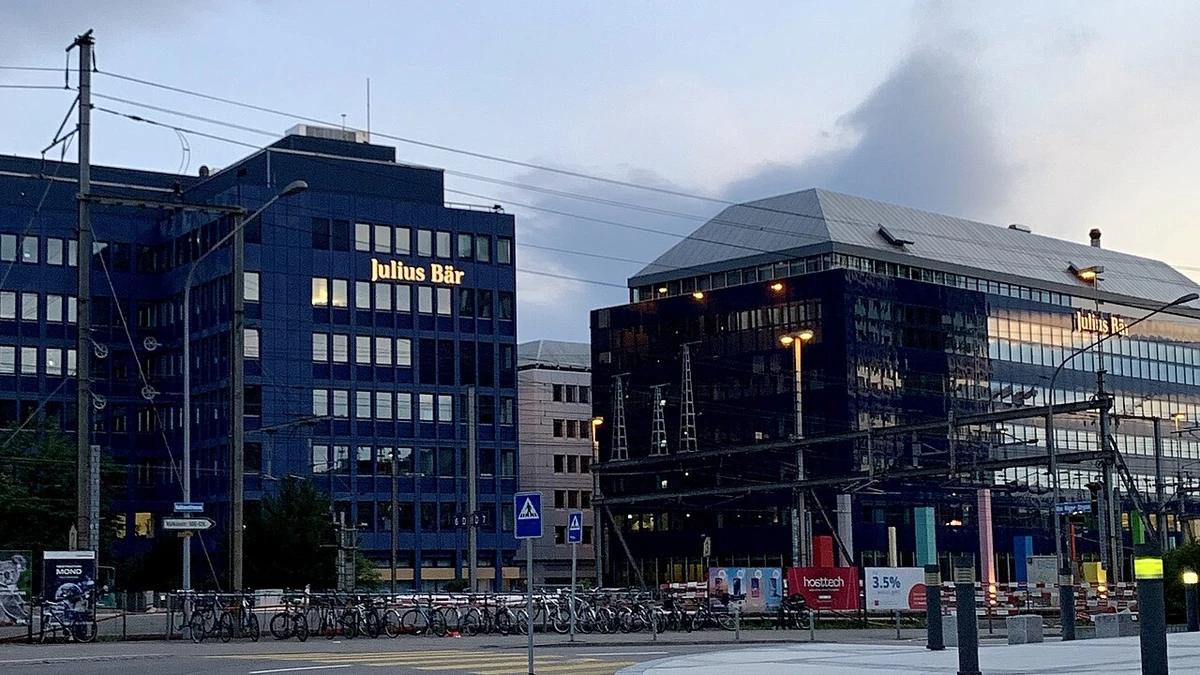
Switzerland’s financial regulator has concluded its enforcement proceeding against Julius Baer and ordered the bank to hold an additional CHF 250 million of capital while it continues to shed client assets that no longer fit its revised risk appetite. The measure leaves the bank under tighter capital and distribution oversight even as FINMA closes the combined investigation.
The case covered two sets of conduct: private-debt lending to a European group and business relationships involving clients linked to two Russian politically exposed persons, or PEPs. FINMA said the bank committed serious breaches of supervisory law, including failures in risk management and anti-money-laundering controls. The regulator also said its ruling is not yet legally binding and that separate proceedings have been opened against three former employees who may bear responsibility for breaches of supervisory rules or internal policies.
Under the measures set out in FINMA’s decision announcement, Julius Baer must keep the extra capital in place until the planned divestment of client assets that fall outside the bank’s new risk appetite is complete. Shareholder distributions, including dividends, require FINMA’s prior approval. The regulator is also confiscating about CHF 10 million in profits it says the bank generated in violation of supervisory provisions in connection with the two Russian PEP client groups.
FINMA ties the case to private-debt and AML failures
FINMA’s credit findings go back to a private-debt business Julius Baer began developing in 2018. Unlike its traditional Lombard lending and mortgage activities, the loans in this business were generally backed by unlisted shares rather than conventional collateral. Starting in September 2019, the bank granted eight loans to a European group and its founder. FINMA said the total value of those loans rose quickly and exceeded CHF 1 billion during 2022 and 2023.
The regulator concluded that Julius Baer did not have the organisation, staffing, internal rules or controls needed for the scale and risk of that activity. It said the bank ignored warning signs, repeatedly exceeded its own debtor limits and failed to meet regulatory requirements for reporting concentration risks. FINMA also identified conflicts of interest and incentive problems around the client relationship.
By the end of 2023, the remaining exposure stood at CHF 586 million and was ultimately written down in full. Julius Baer had already announced in early 2024 that it would leave the private-debt business and refocus lending on mortgages and Lombard loans. The loss was large enough to weigh heavily on the bank’s 2023 results, and Julius Baer later continued a broader credit review aimed at reducing legacy risks outside its core wealth-management strategy.
The anti-money-laundering part of the case centered on clients associated with two Russian PEPs. FINMA said Julius Baer did not adequately investigate the origin of assets over a period of years despite the clients’ high-risk profile. The regulator also found insufficient scrutiny of adverse information and suspicious behavior, along with failures to meet reporting duties under Swiss anti-money-laundering law. In one case, the bank used a 2019 exception to its know-your-client policy after an employee supported the PEP client, even though that employee had close personal ties to the client’s family.
The current action is the fifth enforcement proceeding FINMA says it has concluded against Julius Baer in less than a decade. That history matters to the regulator’s assessment of culture. In a 2020 case, FINMA had already found serious anti-money-laundering and risk-management failures involving business linked to Venezuela and FIFA. In the latest proceeding, FINMA said recurring weaknesses showed that earlier remedial measures had not produced the required change in the bank’s risk and compliance culture.
CHF 250 million buffer is lower than the interim requirement
For investors, the capital measure is important not only because of its size but because it replaces a tougher interim requirement. In its response to the FINMA decision, Julius Baer said the additional CET1 capital requirement has been reduced to CHF 250 million from CHF 500 million. The bank said the new requirement corresponds to a de facto minimum CET1 capital ratio of 9.4%.
Julius Baer reported a CET1 ratio of 18.5% at the end of June 2026, compared with 17.4% at the end of 2025. Its first-half results also showed CHF 4.3 billion of CET1 capital and CHF 23.3 billion of risk-weighted assets. Those figures leave a sizeable reported cushion over both the bank’s internal floor and the regulatory minimum that applied at the end of June. The new CHF 250 million buffer nevertheless remains an additional supervisory constraint until the client-asset divestment is finished.
FINMA’s approval requirement for shareholder distributions creates a separate practical limit on capital returns. Julius Baer paid an ordinary dividend of CHF 2.60 per share for the 2025 financial year. Future distributions now sit within the regulator’s approval framework while the enforcement measures remain in force.
The bank also said it has submitted a request to FINMA concerning its share-buyback program and is awaiting final approval. Julius Baer did not say in its announcement that approval had been granted. The distinction is material because the bank is trying to resume normal capital management while still operating under measures designed to ensure that remediation is completed.
Remediation remains under FINMA oversight through 2032
Closing the enforcement proceeding does not end supervisory follow-up. FINMA requires Julius Baer to provide reports through 2032 covering its risk, error and compliance culture and the measures taken to improve them. A temporary restriction introduced in September 2025 on new business relationships with PEP clients from high-risk countries is to be phased out gradually as the bank completes the divestment of client assets that no longer match its risk appetite.
Some emergency restrictions have already been reduced or lifted. FINMA said changes in the bank’s risk profile and remedial work allowed it to ease earlier measures affecting capital, liquidity, lending and new high-risk PEP relationships. The regulator also acknowledged changes made over the past two years at board and executive-management level, noting that the current management team was appointed after the conduct that led to the findings.
Julius Baer says it has wound down private debt, revised its risk and compliance framework, strengthened its first and second lines of defense, clarified the roles of Risk, Legal and Compliance, changed compensation mechanisms and renewed senior management. The bank has framed those steps as part of its 2026–2028 strategy, which is centered on returning to its core wealth-management business while rebuilding organic growth.
The regulatory timetable now gives the market several concrete milestones to watch. The CHF 250 million extra-capital requirement remains until the relevant client-asset divestment is complete, shareholder distributions require FINMA approval, the share-buyback request is still pending, and culture-related reporting continues through 2032. The ruling itself can still be challenged because FINMA says it is not yet legally binding, while the regulator’s proceedings against the three former Julius Baer employees continue separately.
More from Banking

Latest News
View all news- U.S. Job Openings Hold at 7.1 Million in August as Hiring Remains Muted
- Uranium Energy Q4 Production Jumps 157% as Costs Fall; Company Ends Fiscal Year Debt-Free
- U.S. Consumer Confidence Drops to 81.9, Lowest Since 2014
- RBA Raises Cash Rate to 4.60% as Inflation Risks Build
- Japan’s 40-Year JGB Auction Clears at 4.125% as Bids Reach ¥928 Billion
