Norges Bank Raises Policy Rate to 4.50% as Inflation Stays High
Norges Bank delivered a 25-basis-point increase after November inflation remained well above its 2% target, while signaling that rates would likely stay high for some time.
Our editorial standards
MarketReview publishes clear, independently produced financial information using reliable sources and transparent editorial standards.
Read our Editorial Policy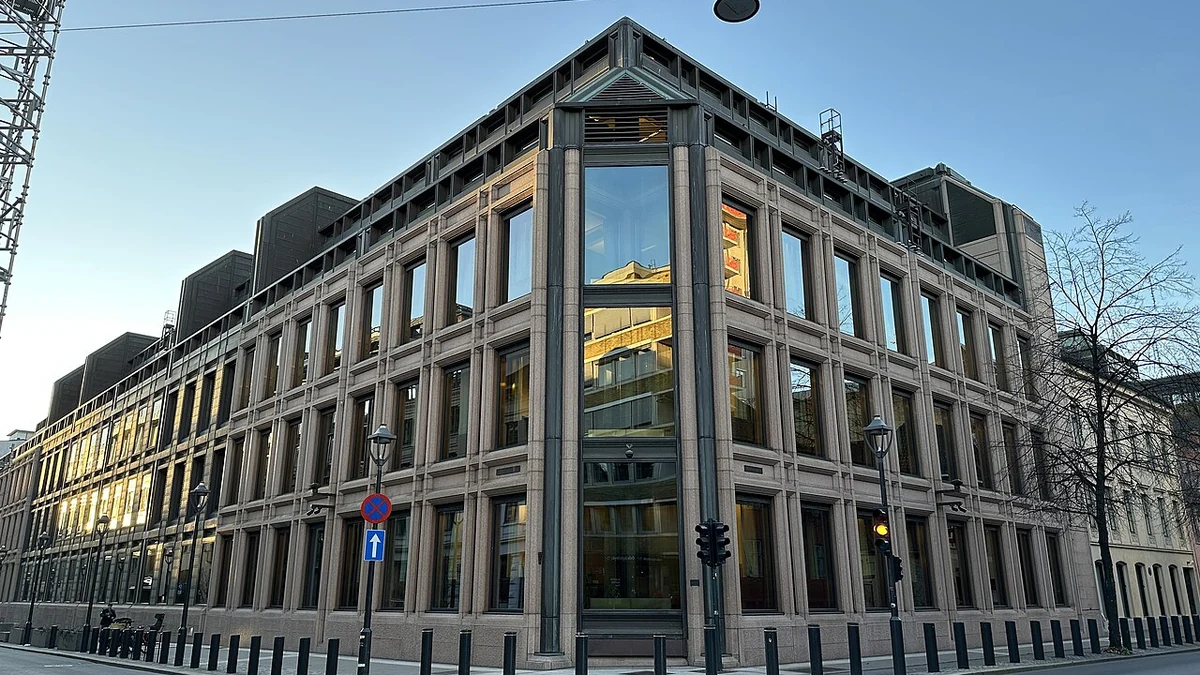
Norges Bank raised Norway’s policy rate by 25 basis points to 4.5% at its December 2023 meeting, extending a tightening cycle aimed at bringing inflation back toward the central bank’s 2% target. The decision pushed the rate to its highest level in years even as signs of slower economic activity were becoming more visible.
The increase was announced on December 14 after the Monetary Policy and Financial Stability Committee met the previous day. It followed a pause at 4.25% in November and was broadly consistent with the signal Norges Bank had given in September, when policymakers said another increase was likely around the end of the year if inflationary pressures remained persistent.
In its December rate announcement, Norges Bank said the committee voted unanimously to lift the policy rate from 4.25% to 4.5%. The bank also indicated that the rate was likely close to the level needed to return inflation to target within a reasonable time horizon and would probably stay around 4.5% for some time.
Why Norges Bank tightened again
Inflation had eased from earlier peaks, but the latest readings still showed price growth well above the central bank’s objective. Statistics Norway reported that the consumer price index was 4.8% higher in November 2023 than a year earlier. The CPI adjusted for tax changes and excluding energy products, a measure closely watched for underlying inflation, rose 5.8% over the same period.
Norges Bank saw a mixed picture. Lower energy prices and weaker international price pressures were helping to pull headline inflation down, while economic growth had slowed. At the same time, domestic cost pressures remained strong. The bank projected wage growth of 5.5% for 2023, and it said higher labour costs and elevated prices for many intermediate goods were likely to keep inflation above target even as imported inflation eased.
The krone was another concern. Norges Bank said the currency had weakened further, making imported goods and services more expensive in local-currency terms and increasing the risk that inflation would remain elevated. That gave policymakers a reason to tighten despite evidence that earlier rate increases were already restraining household demand and business activity.
The committee was therefore balancing two risks. Raising rates too far could deepen the slowdown and put unnecessary pressure on households and companies. Stopping too soon could allow inflation to remain high for longer, making it harder and potentially more costly to restore price stability. The December decision showed that the committee still viewed the inflation risk as large enough to justify one more quarter-point increase.
Rate path points to an extended hold
The December Monetary Policy Report did not point to a rapid reversal after the hike. Norges Bank’s forecast indicated that the policy rate would remain around 4.5% until autumn 2024 before gradually declining. The central bank stressed that this path was a forecast rather than a promise and could change if inflation, the krone or economic activity developed differently from its projections.
The move capped a year of repeated tightening. Norges Bank entered 2023 with a policy rate of 2.75%, raised it to 3% in March and 3.25% in May, then delivered a larger half-point increase to 3.75% in June. Further quarter-point increases took the rate to 4% in August and 4.25% in September. The bank held at 4.25% in November before lifting again in December.
That sequence mattered because monetary policy works with a delay. By December, the central bank was already emphasizing that the full effect of earlier increases had not yet reached the economy. Mortgage costs had risen sharply for many households, financing conditions for businesses had tightened, and weaker purchasing power was weighing on consumption. The committee’s message was that rates might not need to rise much further, but they would need to stay restrictive long enough to bring inflation down sustainably.
The December forecast also preserved flexibility in both directions. If business costs remained elevated or the krone weakened more than expected, Norges Bank said inflation could stay high for longer and another increase might be necessary. If the economy slowed more sharply or inflation fell faster than projected, policymakers could lower rates earlier than the baseline path suggested.
Households face more pressure as growth cools
The rate increase arrived as Norway’s economy was losing momentum. Norges Bank assessed that mainland economic growth had slowed substantially, with mainland GDP close to unchanged between the second and third quarters of 2023. Its regional contacts expected activity to be broadly flat in the fourth quarter and to decline in the first quarter of 2024, although conditions varied widely across industries.
Households were already absorbing the effects of higher borrowing costs and elevated consumer prices. Norges Bank projected a 1.5% fall in real household disposable income in 2023 and expected consumption to remain weak through the winter and spring. Housing investment was also expected to decline, while petroleum investment, exports and public demand were providing some support to overall activity.
The labour market remained comparatively resilient, which gave the central bank room to keep policy tight. Employment was high and unemployment low, though the bank expected unemployment to edge upward as growth softened. Wage growth was projected to slow from 5.5% in 2023 to 5.0% in 2024, while lower inflation was expected to allow real wages to begin recovering.
For Norges Bank, the December move was therefore less about accelerating the tightening cycle than about reinforcing the level of restraint it considered necessary to finish the inflation fight. The central bank said it expected to keep the policy rate at 4.5% for some time, while leaving the next move dependent on incoming inflation, currency and activity data. Its next policy decision was due in January, giving the committee another set of economic readings to assess before deciding whether the December increase had been enough.
More from Banking

Latest News
View all news