
Bank of England Survey Shows Household Credit Availability Fell in Q3
British lenders reported less mortgage and unsecured credit availability as home-loan demand weakened, with a slight recovery in supply expected in Q4.
Our editorial standards
MarketReview publishes clear, independently produced financial information using reliable sources and transparent editorial standards.
Read our Editorial Policy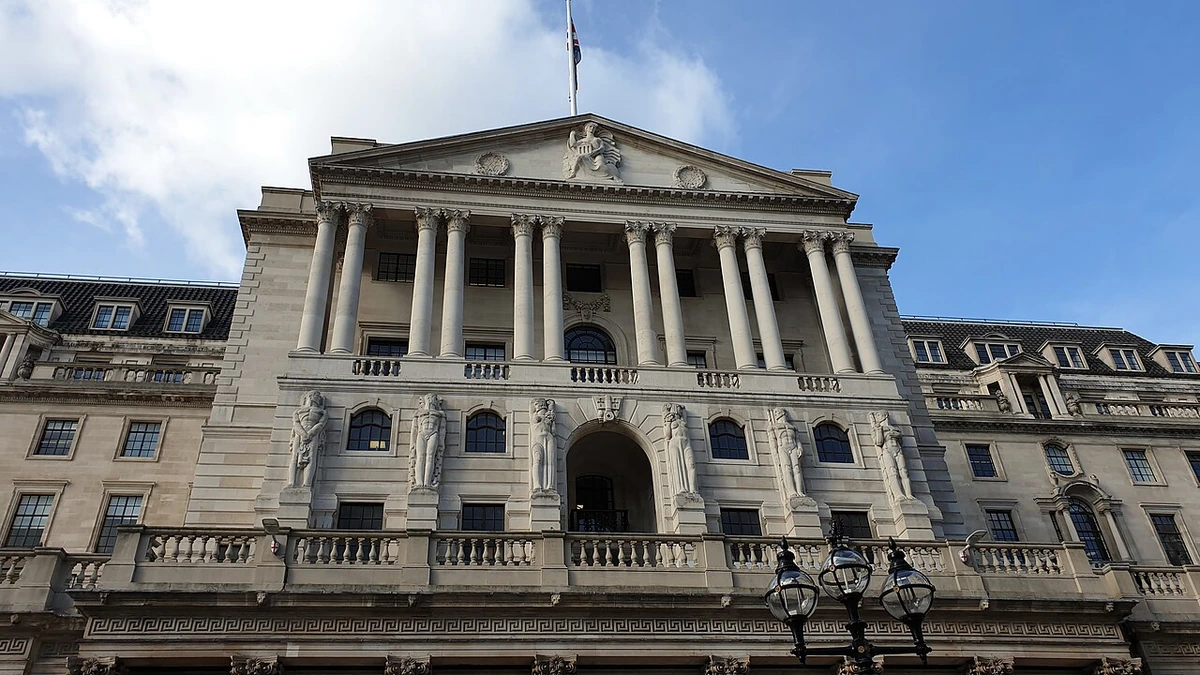
British banks and building societies reported that they made less mortgage and unsecured credit available to households in the three months through August 2026, the Bank of England said on Thursday. Demand for home-purchase mortgages weakened sharply, and lenders also reported a further increase in defaults on unsecured borrowing.
The net balance measuring the availability of secured household credit fell to -15.5 in the third-quarter survey from +2.6 in the preceding quarter. The equivalent measure for unsecured credit moved to -11.0 from +24.3. Both readings indicate a decline in availability, in contrast with the more accommodating conditions lenders had reported earlier in the year.
The Bank’s Credit Conditions Survey for 2026 Q3 was published on October 8 and reflects responses gathered between August 17 and September 4. Its quarterly labels refer to successive three-month periods ending in February, May, August and November, rather than calendar quarters. The net balances summarise lenders’ assessments of whether conditions became more or less favourable. They are not percentage changes in the number or value of loans supplied.
Mortgage availability declined as borrowing demand reversed
Mortgage lending became less available to households with both relatively large and small deposits, according to the detailed survey responses. For borrowers with loan-to-value ratios above 75%, the net availability balance was -19.9, compared with -12.6 for borrowers whose loan-to-value ratios were 75% or lower. That points to a broader reduction in availability, with a more negative reading for higher loan-to-value borrowing. It does not mean all lenders withdrew those mortgage products.
The proportion of household secured-loan applications being approved also fell on balance, with a reading of -10.5. In the prior quarter, the corresponding figure was -8.0. Approval trends matter alongside stated credit availability because a bank can continue to advertise mortgages while becoming more selective about the applications it accepts. The survey cannot establish an individual applicant’s chances of obtaining a loan, but it suggests that reported supply conditions were becoming less favourable at the aggregate level.
Lenders’ market-share objectives contributed negatively to secured credit availability in Q3, with a balance of -14.1, against +1.3 in Q2. Responses about other influences were mixed, however, so the survey does not establish a single cause for the retreat. Changes in pricing, competitive priorities and decisions about which borrowers to serve can move in different directions during the same period.
The demand figures were more emphatic. The balance for house-purchase mortgage demand fell to -37.1 from +14.9 in Q2, while demand for remortgaging shifted to -32.5 from +42.5. Lenders also reported lower demand for both prime house-purchase lending and buy-to-let borrowing. The reversal suggests that fewer prospective borrowers sought these products from the surveyed institutions, although the measure describes reported changes in demand, not a count of completed property sales or refinancing agreements.
Separate Bank of England lending statistics provide some perspective on the weaker mortgage market. Net approvals for home purchases declined to 54,900 in August from 55,900 in July, below the roughly 60,100 monthly average recorded over the previous six months. Approvals for remortgaging slipped to 34,000 from 34,600. Net mortgage borrowing nevertheless increased to £4.4 billion in August from £4.1 billion in July, showing why lending flows and changes in demand should not be treated as interchangeable.
Mortgage pricing offered another distinction. Respondents said the spreads they charged on secured lending, measured relative to Bank Rate or relevant swap rates, narrowed in Q3, even as overall mortgage availability declined. At the same time, the Bank’s separate monthly statistics showed that the effective interest rate paid on newly drawn mortgages increased to 4.60% in August from 4.45% in July. A narrower lending spread does not necessarily produce a lower mortgage rate when underlying funding benchmarks are moving.
Unsecured credit tightened while loan defaults rose
The decline in unsecured credit availability covered borrowing such as credit cards and personal loans. Lenders reported a falling proportion of approved applications for other unsecured loans, at a net balance of -11.3 after +8.0 in Q2. The equivalent reading for credit card application approvals was -2.6, which the Bank’s interpretation treats as broadly unchanged. These differences are important: the broad decline in credit availability did not translate into the same reported approval trend for every unsecured product.
Household demand for unsecured borrowing was considerably steadier than mortgage demand. Overall unsecured-loan demand was unchanged on balance, at -1.9, and credit card demand was also broadly unchanged at -3.6. Demand for other unsecured lending edged higher, with a reading of +8.4. The supply figures therefore point to lenders becoming less willing or able to offer some forms of credit even though the survey did not register a comparable broad decline in consumers’ appetite for unsecured borrowing.
Credit performance was another area of concern. The reported net balance for default rates on total unsecured lending stood at +23.4 in Q3, indicating that defaults increased. Defaults on credit cards were also reported to have increased, with a +25.7 reading, as were defaults on other unsecured loans at +10.2. The positive balances should not be read as default rates of 23.4%, 25.7% or 10.2%; they describe the direction of lenders’ reported changes. Defaults on secured household loans, by contrast, decreased slightly on balance during the period.
Those reported credit-quality pressures sit alongside continued borrowing. In the Bank’s August money and credit release, net consumer-credit borrowing increased to £2.5 billion from £2.1 billion in July. Credit card borrowing accounted for £1.2 billion of the August flow, up from £0.9 billion. The effective rate on interest-charging credit cards also increased, to 21.55% from 21.45%. Borrowing can keep growing in cash terms while lenders report that credit has become less readily available to new applicants.
For borrowers, availability and affordability are separate questions. Someone who qualifies for a loan may still face higher repayments as market interest rates change, whereas another applicant may find that a lender has narrowed its eligibility criteria or reduced the amount offered. The survey tracks lenders’ broad assessment of supply, demand, pricing and defaults rather than isolating those effects for each household.
Lenders anticipate modest relief, but the outlook is provisional
Looking ahead to the three months through November, the surveyed lenders expected secured credit availability to increase slightly, with a positive net balance of +5.1. They forecast a similarly modest improvement in unsecured availability, at +5.6. The expected return to positive territory contrasts with the Q3 readings, but the figures are forecasts reported by lenders rather than improvements that have already occurred.
Mortgage demand could also recover from its recent weakness. The expected balance for house-purchase lending demand was +9.8, while remortgaging demand was expected to increase more clearly, with a +23.1 balance. Yet lenders still anticipated rising defaults on total unsecured lending, at +18.6, and on credit cards in particular, at +23.1. Any easing in supply therefore would not, by itself, amount to an all-clear on household credit stress.
The timing limits what can be concluded about current conditions. The Q3 responses were collected before September 4, so the survey does not reflect subsequent shifts in financial markets, borrowing rates or the economic outlook. The Bank’s Monetary Policy Committee kept Bank Rate at 3.75% in September by a 6-3 vote, with three members preferring an increase to 4%. Its published minutes also noted that household borrowing rates had been affected by increases in market interest-rate expectations. Those developments provide context, not an explanation proven by the earlier lender survey.
The next Bank Rate decision is scheduled for November 5, 2026, while the Bank has scheduled the next Credit Conditions Survey for January 14, 2027. The January release will offer a fuller check on whether lenders’ expectations of slightly better household credit availability were borne out in the three months through November.
More from Banking


Latest News
View all news- USDA Releases October Crop Supply and Demand Estimates for Global Grain Markets
- U.S. Consumer Sentiment Falls to 46.3 as Inflation Expectations Rise
- Swiss-Ukraine Reconstruction Agreement Takes Effect, Opening Procurement Route for Swiss Firms
- U.S. Commerce Department Finalizes South Korean Hot-Rolled Steel Subsidy Review
- Treasury Names Judy Shelton Counselor on Currency Policy, With China Focus
