
OCC Report Finds Restrictive Banking Policies at Nine Major U.S. Banks
A review of nine major national banks found reputation-based and industry-specific policies that could limit services for customers engaged in lawful activities.
Our editorial standards
MarketReview publishes clear, independently produced financial information using reliable sources and transparent editorial standards.
Read our Editorial Policy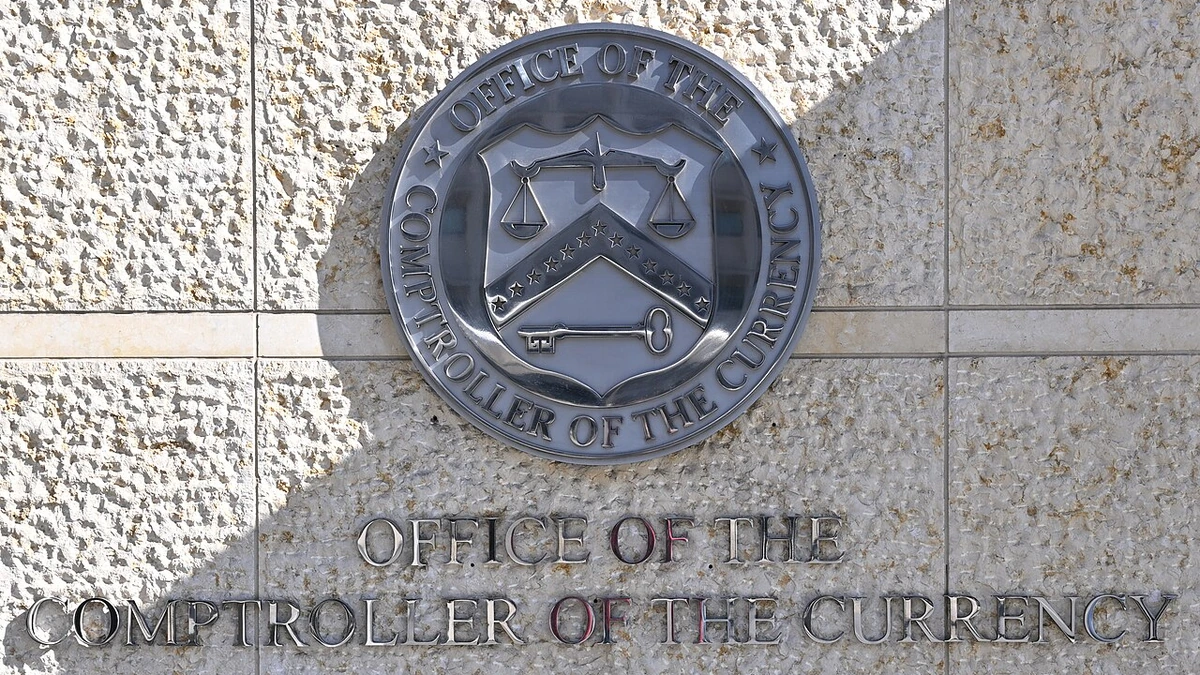
Nine of the largest U.S. banks maintained policies that could restrict financial services because of customers’ political or religious beliefs, affiliations or lawful business activities, the Office of the Comptroller of the Currency said Wednesday. The regulator’s findings cover practices in place at different points between 2020 and September 2025 and add detail to a federal examination of so-called debanking.
The review covered JPMorgan Chase Bank, Bank of America, Citibank, Wells Fargo Bank, U.S. Bank, Capital One, PNC Bank, TD Bank and BMO Bank. The OCC said all nine had policies that could encourage or influence denials of banking services on grounds other than an individualized assessment of financial risk. That finding does not mean the regulator established that every account closure, rejected applicant or financing decision at those banks was improper.
In its October 14 report announcement, the OCC said it examined nearly 100,000 complaints involving institutions it regulates and received about 50,000 bank documents totaling roughly 420,000 pages. The materials covered policies, internal procedures and individual customer decisions. The complaint count measures material considered during the review, not a verified tally of customers wrongfully denied service.
The findings put a spotlight on how financial institutions decide whom to serve. Banks routinely assess fraud, credit, compliance and operational risks. The OCC’s concern is narrower: whether broad judgments about a customer’s public profile, beliefs or line of work substituted for objective, customer-specific risk criteria. The agency has not announced fines against the nine banks in connection with Wednesday’s release.
Reputation risk and industry restrictions drew scrutiny
The OCC grouped the problematic policies into two broad types. One involved reputation risk, an assessment of the potential damage to a bank from public association with a customer or business. The other involved restrictions aimed at entire industries, sometimes limiting access to loans or other financial products without reference to a particular applicant’s financial or operational circumstances.
A reputation-based decision can be difficult for a customer to understand or challenge. If a bank treats an unpopular affiliation or a controversial but legal business as a reason for exclusion, the decision may rest on standards that the customer cannot readily see. The regulator said some of the approaches it reviewed lacked clear benchmarks and objective risk-based criteria.
Industry rules ranged from outright prohibitions to additional approvals before a customer could obtain services, according to the OCC’s published review materials. Sectors identified included oil and gas exploration, coal mining and power generation, firearms and ammunition, detention facilities, tobacco and e-cigarettes, and digital assets. The restrictions were not necessarily identical from one bank to another or across all products within a single bank.
Energy financing provides one example of the distinction. The OCC said most of the institutions restricted financing for oil and gas exploration, development or production in the Arctic, often as part of broader environmental commitments. It also found that most restricted financing for new coal mines or coal-fired plants, or expansions of existing operations. Some policies went further by excluding companies above a stated level of revenue from coal-related activities.
A bank may have legitimate reasons to decline a loan, limit exposure to a sector or reject a customer that presents an identifiable financial-crime risk. The question raised by the report is whether a bank is making that decision for a documented risk connected to the applicant or for a general judgment about a lawful activity. The OCC is challenging the latter approach, not announcing that every applicant must receive every service.
Examples show the reach of political and sector-based decisions
The OCC’s public summary includes cases from different political directions. It said one bank declined to provide services to a public education organization in February 2023 because the organization’s political arm endorsed only Democratic candidates. In another case, a bank-owned payment processor closed the account of a merchant selling merchandise associated with President Donald Trump and the Make America Great Again movement in February 2021.
Those examples are consequential because they involve access decisions tied, according to the regulator, to political identity rather than an independently described credit or operating problem. The public overview does not identify the banks involved in each example. It would therefore be misleading to assign either case to a named institution without further evidence.
The OCC also described restrictions affecting manufacturers and sellers of certain firearms and accessories. Most of the reviewed institutions limited some services to detention facilities, the agency said, and some bank policies referred specifically to immigration detention centers. Tobacco manufacturers, e-cigarette businesses and related suppliers faced limits at many institutions, though the affected products and services varied.
Digital-asset businesses formed another category. The OCC said many banks placed restrictions on exchanges, issuers or administrators of digital assets, sometimes citing financial-crime concerns. That reason is not inherently the same as political or reputational discrimination: banks have legal obligations to control money laundering and other illicit-finance exposure. The regulatory issue is whether those obligations were evaluated against the actual customer and activity, or used as an undifferentiated basis to exclude a lawful sector.
The consequences of losing banking access can be serious even without a loan or deposit loss. A company that cannot maintain ordinary accounts or process payments may struggle to pay workers, collect receipts or continue basic operations. But the OCC’s published figures do not establish how many customers were harmed by the specific practices it criticized, nor do they provide a bank-by-bank count of substantiated discriminatory closures.
Regulators are reconsidering how banks make access decisions
The investigation followed Executive Order 14331, issued on August 7, 2025, which directed federal banking regulators to review policies and practices that could result in politically motivated or otherwise unlawful denial of financial services. The OCC announced its review of the nine banks in September 2025 and released preliminary findings that December. Wednesday’s report is a more extensive account of the policies it says it identified.
The agency has already changed parts of its own supervisory approach. It removed reputation-risk considerations from bank examinations and clarified how potentially improper debanking can factor into licensing reviews and evaluations under the Community Reinvestment Act. In June 2026, the OCC, Federal Reserve and Federal Deposit Insurance Corporation said they had removed additional reputation-risk references from shared supervisory documents.
Those steps draw a distinction between banks’ risk management and regulators’ use of reputation as a supervisory concept. Removing reputation risk from examination materials does not remove the need to comply with anti-money-laundering laws, sanctions requirements or other banking rules. The regulatory aim, as described by the agencies, is to assess material financial risks with greater precision rather than allowing broad reputational concerns to drive decisions.
The OCC said it has improved its complaint intake and review processes and is considering additional changes intended to discourage discriminatory access restrictions. Its public report materials identify further rulemaking, greater transparency, analysis of account-closure notices and work involving suspicious activity report confidentiality among the areas under consideration. These are potential or continuing measures, not all newly adopted requirements.
Comptroller Jonathan Gould acknowledged that some large banks had taken steps to rein in the practices, but said the efforts may not go far enough. The agency plans to assess whether further changes to the supervisory and regulatory framework are necessary. Wednesday’s announcement did not detail a new penalty for each lender or provide a timeline for a bank-specific enforcement action.
For customers and banks, the next practical question is how the OCC will translate its findings into consistent standards. Banks will still have to make defensible decisions about financial and legal risk, while the regulator is seeking to prevent exclusions based on political or religious identity or blanket objections to lawful activity. Any additional rules, examination expectations or enforcement actions would determine how directly this review changes the way account applications and closures are handled.
More from Banking



Latest News
View all news- U.S. Inflation-Adjusted Hourly Earnings Fall 0.5% in September
- U.S. Inflation Accelerates to 3.7% as Gasoline Prices Jump 9.1% in September
- Treasury and IRS Propose Stricter Eligibility Checks for Health Insurance Tax Credits
- Morgan Stanley Reports $20.3 Billion in Quarterly Revenue as Wealth Assets Grow
- U.S. Treasury Removes Venezuelan Official Jorge Rodríguez From Sanctions List
