New Zealand National Party Unveils 26-Point First-100-Days Agenda Covering Taxes, Loans and KiwiSaver
National Party leader Christopher Luxon has outlined the actions his party would prioritize if re-elected, including retirement savings reforms, lower student loan repayments and expanded access to first-home financing.
Our editorial standards
MarketReview publishes clear, independently produced financial information using reliable sources and transparent editorial standards.
Read our Editorial Policy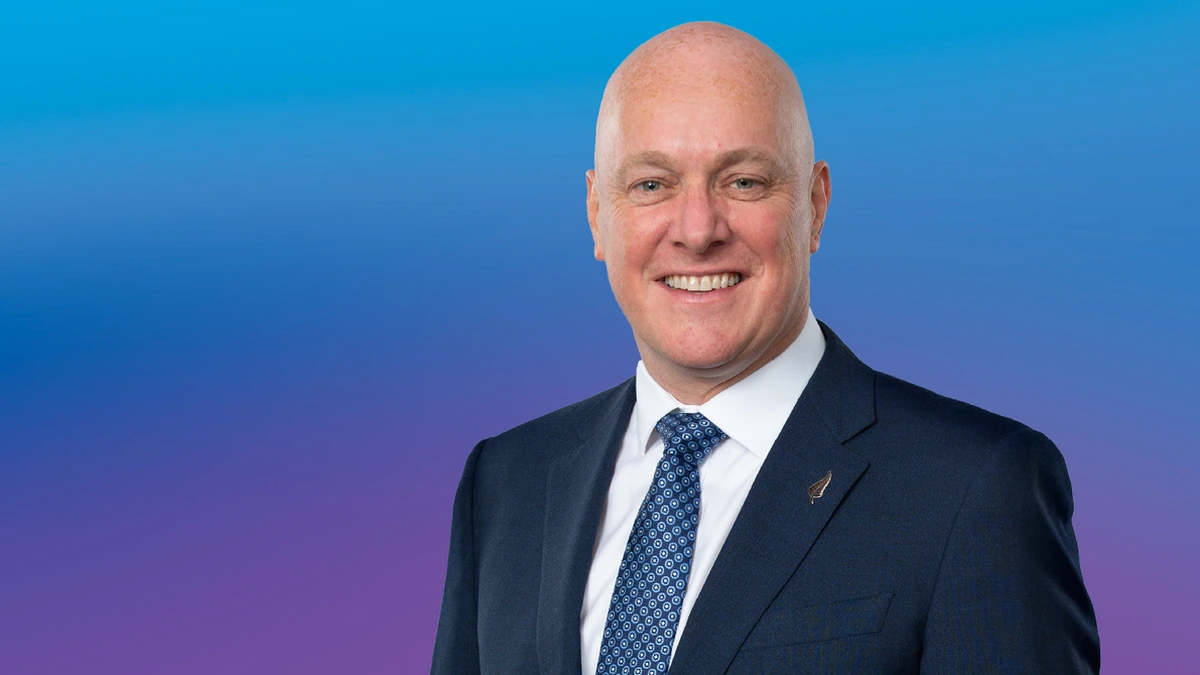
New Zealand’s National Party has set out 26 actions it would pursue in the first 100 days of a second term, with proposed changes to KiwiSaver, student loan repayments, home-buying support and tax policy among its priorities. Party leader Christopher Luxon unveiled the agenda on Sunday, October 25, at a campaign event in Auckland, less than two weeks before the general election.
The programme is conditional on National returning to government after the November 7 vote. It draws together existing election commitments and a timetable for taking some of them through Parliament, alongside administrative changes, reviews and work that would begin rather than finish during the 100-day period.
Among the commitments are legislation on retirement savings and paid parental leave, a reduction in compulsory student loan deductions for people living in New Zealand, a broader First Home Loan scheme and a pledge not to introduce new taxes. Luxon had also outlined several of the household-focused proposals in National’s election policy for young adults before the 26-action list was released.
That distinction between an early government action and a benefit taking effect is important. For example, National proposes introducing KiwiSaver legislation within 100 days, but making worker contributions compulsory is scheduled for July 2028 under its policy. The new agenda does not mean every measure would be in force within three months.
KiwiSaver reform and student loans feature prominently
National wants to make KiwiSaver contributions, or contributions to an equivalent retirement scheme, compulsory for workers from July 1, 2028. Its proposal would raise combined default employee and employer contributions to 12% by 2032. The first-100-days commitment is to introduce the changes to Parliament, not to require all workers to join immediately.
The retirement package also includes a NZ$1,500 government payment for eligible newborn children, with automatic enrolment from July 1, 2027. From the same date, National proposes government KiwiSaver contributions for people receiving paid parental leave, even when those parents are not making their own contributions. It also wants employers to make contributions for participating employees older than 65, subject to the proposed rules.
For employed borrowers living in New Zealand, the more immediate proposal concerns their take-home pay. National would reduce the compulsory student loan repayment rate from 12% to 10% from April 1, 2027. Those rates apply to income that is subject to repayment, not to a borrower’s entire gross salary. Under Inland Revenue’s current repayment rules, the 12% deduction generally applies to earnings above the applicable threshold for a borrower’s main job.
National estimates that an early-career accountant earning NZ$75,000 a year would keep roughly NZ$39 more each fortnight under the proposed lower rate. The figure is a party estimate based on its policy settings, not an increase that workers have already received. Lower compulsory payments would generally leave more cash available in each pay period but mean that affected borrowers take longer to pay off their loans.
A separate element of the 26-point agenda would toughen debt collection for people who move overseas and fall behind on student loans. National has proposed additional interest penalties for overseas-based borrowers in default, restrictions on KiwiSaver withdrawals by people departing permanently with unpaid loans, and changes to enforcement powers. The party presents the tougher overseas rules alongside the lower domestic repayment rate, rather than as a reduction in borrowers’ outstanding principal.
Housing support forms another part of the household package. National proposes lifting the income cap for the government-backed First Home Loan scheme to NZ$300,000 for all applicants. The scheme already offers qualifying buyers the possibility of purchasing with a deposit as low as 5%; the proposed change would widen the income eligibility criteria rather than offer 5% deposits to every buyer regardless of other lending requirements.
Paid parental leave would be extended in stages. Under National’s published policy, legislation introduced in the first 100 days would provide for 27 weeks from July 2027, up from 26 weeks, then 28 weeks in July 2028 and 30 weeks in July 2029. Parents would also have more scope to take leave at the same time. Those later dates matter for families planning around the proposed entitlement.
Tax commitments sit alongside spending and council-rate rules
On public finances, National says a returned government would reaffirm its pledge of no new taxes and publish its Budget Responsibility Rules. Another early action would be a Budget Policy Statement showing its intended path for government debt, spending and a return to surplus. National’s fiscal plan targets a surplus in the 2028-29 financial year, but that remains a policy objective rather than a result secured by the 100-day announcement.
The fiscal promises affect how the other commitments would be delivered. A programme that offers additional household support, changes loan repayments and increases spending on some services also has to be fitted into future budgets. National says its proposals are funded within its plan. The statement released Sunday was a list of intended early actions, not an independently audited account of the eventual fiscal outcomes.
Local-government costs feature in the agenda through a proposed cap on annual council rates increases, with a target range of 2% to 4%. The party says it would pass the relevant legislation, which has already cleared its first reading. National’s fuller policy specifies exceptions, including for certain extraordinary circumstances, and says the cap would take full effect in 2029. Passing a law during the first 100 days would therefore not immediately limit every council bill.
National also wants stronger powers for the Commerce Commission and a report within six months on the possible separation of Foodstuffs businesses. This is a proposal for regulatory scrutiny of supermarket competition, not an announcement that a breakup has been decided. Any structural change would depend on the review and further legal or policy decisions.
Elsewhere in the economic programme, the party proposes a trade mission to India involving food, beverage and seafood exporters. It would also advance a Home Energy Fund offering low-cost loans for household solar panels, batteries and insulation, as well as work on safety rules for plug-in solar equipment. The 100-day language on the energy measures calls for development and rulemaking, not a completed nationwide lending programme.
Health, schools and criminal justice complete the 26 actions
The agenda extends beyond household finances. In health, National proposes redirecting some foreign-aid funding to Pharmac to help pay for additional medicines. It also includes free cervical screening for women aged 25 to 69 and a target for 5% of cancer patients to receive part of their care through clinical trials within 10 years. That clinical-trials goal is explicitly longer term, even though it is included in the list of early priorities.
Education measures range from expanding the Maths Acceleration Programme to planning a School Start Check that would identify children’s needs before they begin school. National also proposes starting work on restrictions on screen use in early childhood education and in the first three years of primary school. The party has not presented the entire education package as changes that could be completed in the first 100 days.
Criminal justice and policing account for several other actions. National wants to advance legislation requiring active consent in sexual offences, begin work on tougher sentencing rules for sexual offending, and develop an offence relating to remaining silent when a child has been killed. The latter is proposed with a maximum penalty of up to 10 years in prison. These are legislative intentions, not existing criminal provisions introduced by the announcement.
The list also proposes legislation to prevent public funding from going to gangs, progress on online child-safety legislation, and a dedicated Auckland Transport Police Team intended to improve safety on buses, trains and ferries. Separately, it calls for immigration processing changes that would prioritise applications from partners of New Zealand citizens.
Taken together, the 26 entries mix measures already announced during the campaign with proposals at different stages of readiness. Some would require legislation to be introduced, others laws to be passed, and still others a review or programme to get under way. Luxon’s announcement establishes the priorities National says it would pursue if re-elected; it does not establish that those changes have taken legal effect or that their later objectives will be achieved.
New Zealand’s Electoral Commission has scheduled the general election for Saturday, November 7. Whether National can carry out the programme will depend first on the election result and the formation of the next government.
More News


Latest News
View all news- Bristol Myers Squibb, BioNTech Report 36.7% Response Rate in Phase 2 Pumitamig Lung Cancer Trial
- FAA’s JFK Flight Limits Enter New Two-Year Extension Through October 2028
- Eli Lilly Releases New Olomorasib Lung Cancer Data Ahead of 2027 Phase 3 Results
- Canada Announces Abu Dhabi Crown Prince Visit Focused on Investment and Economic Ties
- Austria Sets 2027 Motorway Toll Vignette Increase at 2%, Below Inflation