
Western Sydney International Airport Opens to Passenger Flights After Years of Construction
Jetstar inaugurated the new 24-hour airport with a Gold Coast service, while international routes and the airport metro connection follow on separate timelines.
Our editorial standards
MarketReview publishes clear, independently produced financial information using reliable sources and transparent editorial standards.
Read our Editorial Policy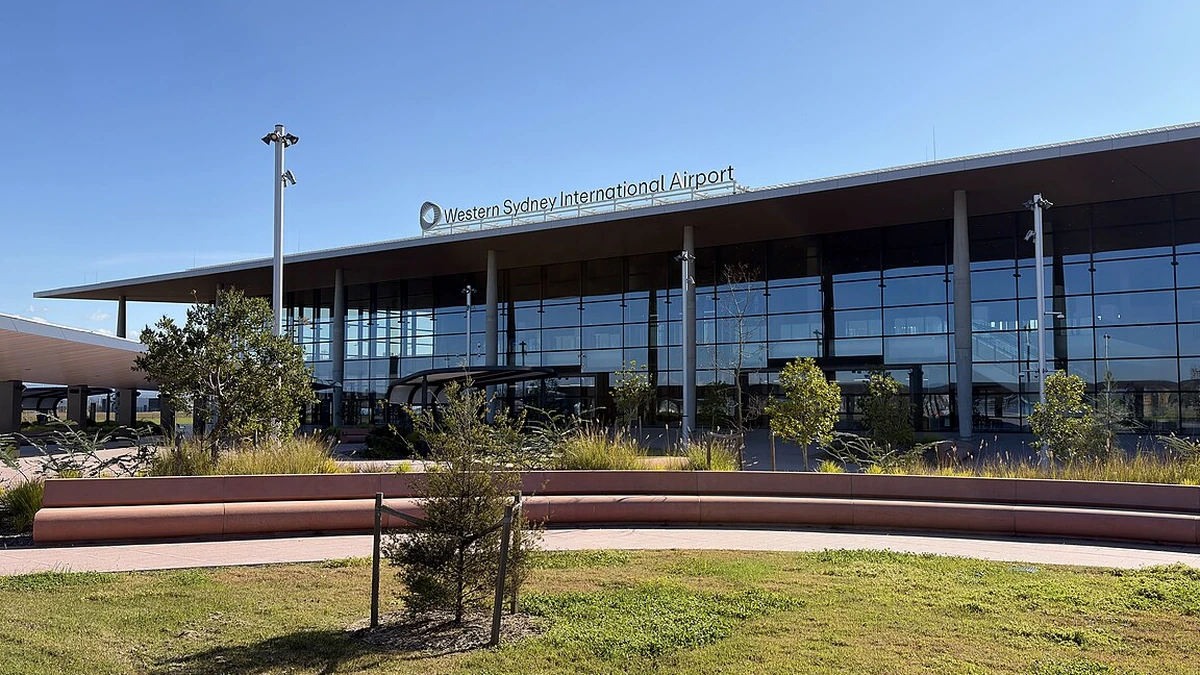
Western Sydney International Airport opened to commercial passengers on Sunday, October 25, 2026, with a Jetstar flight to the Gold Coast inaugurating services from Australia’s newest major airport. The first departure marked the shift from cargo-only operations to passenger travel at a facility intended to expand aviation capacity across Greater Sydney.
Jetstar flight JQ362, operated with an Airbus A320, was scheduled to depart at 11 a.m. local time. Prime Minister Anthony Albanese attended the opening at the Badgerys Creek site, which is named Western Sydney International (Nancy-Bird Walton) Airport in honor of the Australian aviation pioneer. The airport is Australia’s first major new airport in more than 50 years.
The federal government’s opening-day statement described a project shaped by about 15 years of planning, seven years of construction and a year of testing. Major construction on the runway and terminal had finished in June 2025, but systems, staff and aircraft operations still needed to be prepared before the first travelers could use the building.
For Western Sydney, the opening provides an alternative to Sydney Kingsford Smith Airport, although the initial choice of destinations is limited. The new facility can handle flights around the clock, unlike the existing airport’s night curfew. International services are starting in stages, and the rail connection designed to serve the terminal is not yet operating.
Jetstar begins service as international routes follow
Jetstar is the first airline to operate scheduled domestic passenger flights from Western Sydney, linking the airport with the Gold Coast, Melbourne and Brisbane. Its parent, Qantas Group, reached a five-year agreement with the airport covering domestic passenger services and freight. The airline group’s plan is to build up frequencies as demand develops rather than begin with the range of services already available at Kingsford Smith.
Qantas itself is due to start passenger operations on March 28, 2027. Its published plan calls for QantasLink Embraer E190 aircraft on four weekly flights each to Melbourne and Brisbane. The new routes are additional to the Qantas Group’s services at Sydney’s established airport, making this a gradual expansion of the Sydney air-travel market rather than an overnight replacement of existing operations.
International passenger service is scheduled to begin on October 26, one day after the domestic opening, with Air New Zealand flights to Auckland. Singapore Airlines has separately announced daily nonstop flights between Western Sydney and Singapore from November 23, subject to regulatory approvals. Its planned outbound flight from Western Sydney departs at 11:55 p.m., a schedule made possible by the new airport’s ability to operate at night.
Fiji Airways has announced a March 19, 2027 start for flights to Nadi, while the federal government has identified Vietjet and Qatar Airways among the other carriers secured for future international service. Those commitments broaden the prospective network, but passengers should distinguish announced future routes from flights available on opening day. The timetable and pace of expansion will depend on airline operations and demand.
A 24-hour airport built for more passengers and freight
Western Sydney International’s chief operational distinction is that it is not subject to Sydney Kingsford Smith’s nightly curfew. At the established airport, ordinary flight operations face restrictions between 11 p.m. and 6 a.m.; the new airport is designed to accommodate passenger aircraft and cargo movements at any hour. That flexibility matters for overnight freight and for international services whose schedules connect with flights on other continents.
The airport occupies a roughly 1,780-hectare site at Badgerys Creek. Construction started in September 2018 and delivered a 3.7-kilometer runway, a combined domestic and international passenger terminal, and dedicated cargo facilities. The opening-day government statement said the terminal has more than 40 check-in kiosks and 34 bag-drop kiosks. Its runway is designed to handle large long-haul aircraft even though the inaugural passenger flight used a narrow-body jet.
The first stage is designed for as many as 10 million passengers a year. That figure describes the airport’s initial handling capacity, not the number of people expected to use it immediately. Actual traffic will build as airlines add routes and frequencies. The difference is important for judging the project’s early commercial impact: a completed runway and terminal provide the space for growth, but do not guarantee that airlines will fill it at once.
Freight flights began in July, ahead of the passenger opening, with Qantas Freight starting regular operations that month. A further change is scheduled for November 1, when ordinary overnight freight flights previously permitted at Kingsford Smith are to lose that exemption under Australia’s airport-curfew arrangements. Operators will need to use Western Sydney or shift flights outside the curfew, except where specific exemptions apply. Cargo therefore represents an immediate use for the new airport’s 24-hour capability, independent of the gradual passenger rollout.
The public investment extends beyond the airport itself. The federal government describes the airport, future metro connection and surrounding road projects as part of a broader investment of nearly A$18 billion in Western Sydney; that is not the price of the terminal or runway alone. The opening-day release said more than 13,000 workers were involved in delivering the airport precinct, with over half from the region. Those are construction-related figures, rather than a measure of permanent jobs created after opening.
Travelers have buses and roads while metro construction continues
The most immediate limitation for travelers is on the ground. Western Sydney International opened before its dedicated metro railway, so there is no direct train service to the passenger terminal. The planned 23-kilometer Sydney Metro line will connect the airport with St Marys and Bradfield through six stations, allowing passengers to transfer to the broader rail network at St Marys once the project begins service.
In the meantime, Transport for NSW operates a fare-free WSI Link bus between St Marys Station and the airport. According to the agency’s airport travel guidance, the link runs every 30 minutes from 4:30 a.m. until midnight Sunday through Thursday, with service extending until 1 a.m. on Friday and Saturday. Travelers are encouraged to tap on and off with an Opal or contactless payment card, although no fare is charged for that service.
Five other bus routes connect the terminal with communities including Penrith, Mount Druitt, Liverpool, Campbelltown and Leppington. Those routes generally run every 30 minutes between 5 a.m. and 10 p.m. and require a normal fare. Taxis, rideshare vehicles and car rentals provide other choices, while the new M12 Motorway links the airport with the wider road network. Airport users can also access on-site parking and designated pickup areas.
The mismatch between a 24-hour airfield and buses that do not run all night means passengers on late departures or arrivals need to check their onward transport arrangements. The metro is intended to improve those connections, but it is not part of the airport’s initial passenger offering. For now, the opening creates another place to fly from in Sydney, with the Auckland service scheduled to follow on October 26 and Singapore Airlines’ daily service planned for November 23.
More News

Latest News
View all news- New Zealand National Party Unveils 26-Point First-100-Days Agenda Covering Taxes, Loans and KiwiSaver
- FAA’s JFK Flight Limits Enter New Two-Year Extension Through October 2028
- Eli Lilly Releases New Olomorasib Lung Cancer Data Ahead of 2027 Phase 3 Results
- Canada Announces Abu Dhabi Crown Prince Visit Focused on Investment and Economic Ties
- Austria Sets 2027 Motorway Toll Vignette Increase at 2%, Below Inflation
