New Zealand Election Results Leave Economic and Tax Policy Outlook Uncertain
A razor-thin projected majority for the governing bloc could change after special votes, leaving competing tax plans and fiscal priorities unresolved.
Our editorial standards
MarketReview publishes clear, independently produced financial information using reliable sources and transparent editorial standards.
Read our Editorial Policy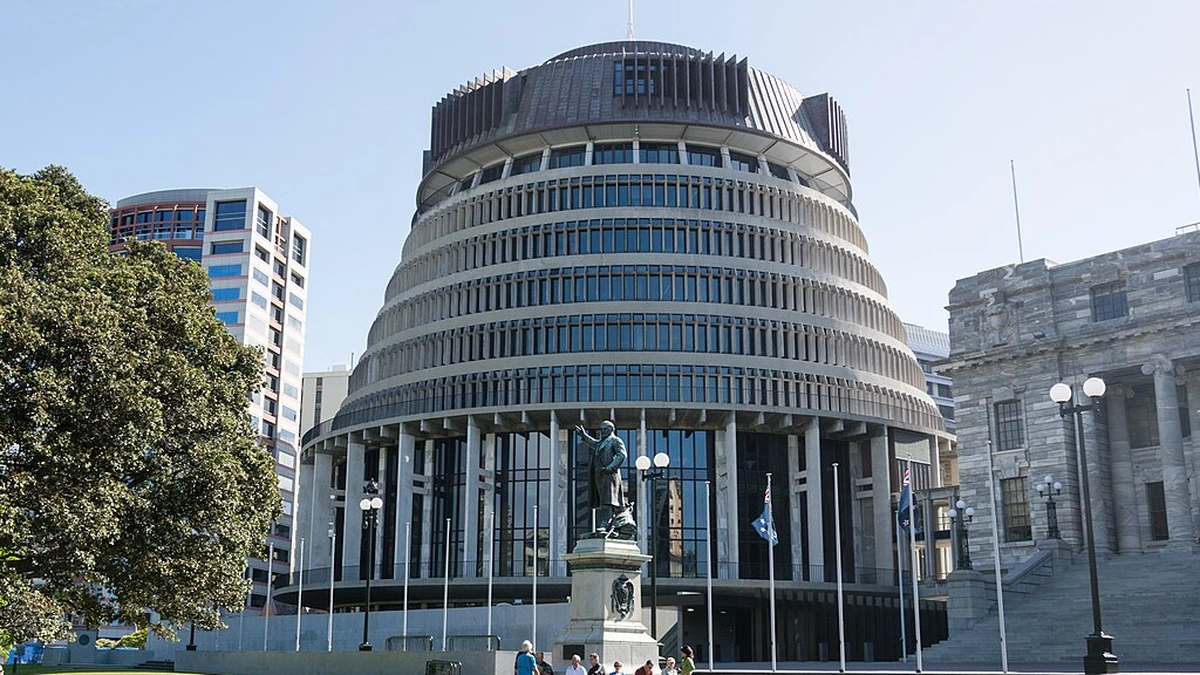
New Zealand’s governing coalition appeared to have narrowly retained a parliamentary majority in Saturday’s general election, but the preliminary count left the country’s economic and tax-policy direction unsettled. National and its partners ACT and New Zealand First were projected to hold 67 seats in a 130-seat Parliament, just one above the 66 seats needed for a majority.
The position was precarious. National and the opposition Labour Party each attracted roughly 29% of the party vote in late election-night returns, while a substantial number of special votes still had to be checked and counted. Neither the incumbent coalition nor its opponents could safely treat the projected seats as a final result.
The Electoral Commission’s preliminary results provide the basis for the election-night picture, which can change before the official declaration. The unresolved majority matters for public finances because the parties have campaigned on different approaches to taxes on property, business investment and the size of the government’s spending commitments.
A slender governing lead depends on the final count
Late Saturday projections based on the Electoral Commission’s returns gave National 42 seats, ACT 13 and New Zealand First 12. Labour was projected to win 35, the Greens 16 and Te Pāti Māori five. Opportunity, a newer party led by Qiulae Wong, was on course for seven seats after clearing the 5% party-vote threshold in the preliminary count. All these allocations remain provisional.
The projected size of Parliament is unusual. New Zealand normally has 120 seats under its mixed-member proportional system, but the total can rise when a party wins more electorate constituencies than its share of the party vote would otherwise justify. Such overhang seats help explain why a government would need 66 seats in the projected 130-member House rather than the usual 61.
Special votes include ballots cast by people voting outside their home electorates or overseas, as well as certain people who were not on the printed electoral roll at their voting place. They are excluded from the election-night count and added after eligibility checks during the official count. Ordinary ballots are also checked and recounted. Close electorate contests and a small shift in party-vote shares could therefore change the allocation of seats.
A one-seat cushion leaves little room for a changed result or a disagreement among governing partners. It does not, on its own, make a Labour-led alternative certain: the preliminary totals for Labour, the Greens and Te Pāti Māori amounted to 56 seats, and even adding Opportunity’s projected seven would leave those four parties short of the threshold. Any alternative governing arrangement would still need sufficient parliamentary support and political agreement.
The Electoral Commission has scheduled the official declaration for November 27. Until the numbers are confirmed, the election-night projection describes a possible governing majority, not a mandate for a specific set of tax measures.
Property and business taxes divide the parties
The sharpest contrast concerns property gains. Labour proposed a 28% capital gains tax on profits earned after July 1, 2027, from the eventual sale of commercial property and residential investment property. Its plan excludes the family home, farms, shares, KiwiSaver holdings, businesses and inheritances. Labour says the resulting revenue would be dedicated to healthcare, including more access to free doctor visits. It remains a campaign proposal, not an enacted tax.
National campaigned on a pledge to introduce no new taxes if returned to government. Its fiscal plan instead emphasised expenditure restraint, lower debt and a return to an operating surplus in the 2028/29 fiscal year. ACT has also opposed new taxes and proposed removing tax on qualifying KiwiSaver investment earnings. For households and investors, the policy difference is material: a Labour-led government could seek to tax specified future property gains, whereas a renewed National-led administration would be more likely to resist such a measure.
Yet National’s existing partners have their own priorities. New Zealand First proposed cutting the company tax rate from 28% to 20% for firms with annual turnover below NZ$30 million. The party put the initial annual fiscal cost at about NZ$1 billion, an estimate rather than an independently established outcome. It has also sought higher family assistance through Working for Families. These proposals could become bargaining points if the current three-party coalition continues.
Opportunity’s tax platform adds a different possibility to coalition discussions. It advocates an annual land-value tax of 1.75%, paired with a weekly citizen’s income of up to NZ$370 for most adults and changes to retirement contributions. Its policy is not equivalent to Labour’s tax on gains realised when property is sold: the proposed land tax would apply to land value each year. The party’s projected parliamentary entry would give that approach a voice, but neither its election-night seat count nor its campaign programme guarantees a place in government.
These differences make the election outcome relevant well beyond party leadership. A property investor deciding whether to sell, a smaller business assessing after-tax returns and a household planning around tax credits face markedly different proposals. None should be mistaken for an immediate change in law. Legislation and budget decisions would depend on the government that emerges and the parliamentary agreements it can secure.
Treasury forecasts leave limited fiscal room
The next administration will inherit a budget outlook that has improved but remains sensitive to economic conditions. In its September pre-election economic and fiscal update, New Zealand’s Treasury forecast an operating deficit, on its OBEGALx measure, of NZ$6.8 billion for 2026/27. It projected that deficit narrowing to NZ$800 million in 2027/28 and shifting to a NZ$4 billion surplus in 2028/29.
Those are forecasts under the policy settings incorporated when Treasury prepared its estimates, not guaranteed results for whichever parties form the next government. Treasury explicitly cautioned that changes to tax and spending settings would produce different fiscal outcomes. A new concession in coalition talks, a tax cut or additional spending commitment could require savings elsewhere, new revenue or more borrowing if the overall fiscal track is to be maintained.
Debt and growth assumptions narrow the choices further. Treasury projected net core Crown debt peaking at 43.9% of gross domestic product in 2027/28 before gradually declining. Its forecast for real annual-average GDP growth was 2.3% in the year ending June 2027, followed by 2.9% in the following year. Both figures were estimates made before the election, not evidence that the expected recovery has already occurred.
The agency also warned that higher global oil prices could keep inflation and interest rates elevated for longer than assumed. That would weaken the recovery and place additional pressure on government services. A slower economy would make it harder to collect the tax revenue embedded in the fiscal forecasts, regardless of whether the eventual administration prefers tax changes or spending restraint.
This is why the precise policy package cannot yet be inferred from the apparent winners. Even if National, ACT and New Zealand First keep enough seats to govern, the scope and timing of promised tax relief and spending measures would have to be reconciled with the budget numbers. Should the final count alter the balance, Labour’s property-tax plan and Opportunity’s land-tax proposal could take on greater significance in negotiations without automatically becoming government policy.
The next fixed milestone is the Electoral Commission’s November 27 declaration, which will incorporate special votes and the official recount. Only after the parliamentary arithmetic is settled can negotiations establish which tax promises have a realistic route into the next budget and legislative programme.
More News

Latest News
View all news- Berkshire Hathaway Reports Lower Q3 Operating Earnings, $9.6 Billion in Share Buybacks
- Powerhouse Parramatta Opens as A$915 Million Cultural Project Reaches Milestone
- Bank of Japan Releases Governor Ueda’s Analysis of Japan’s Current Account Surplus
- U.S. Consumer Sentiment Rises to 51.0 in November as Inflation Expectations Ease
- USDA Finalizes WIC Rule Allowing Online Grocery Orders and Digital Payments