
Bank of Israel Finds 62% of Survey Respondents Faced Financial Fraud Attempts
Five percent of respondents reported financial losses, with impersonation texts the leading reported approach and older customers showing a higher loss rate.
Our editorial standards
MarketReview publishes clear, independently produced financial information using reliable sources and transparent editorial standards.
Read our Editorial Policy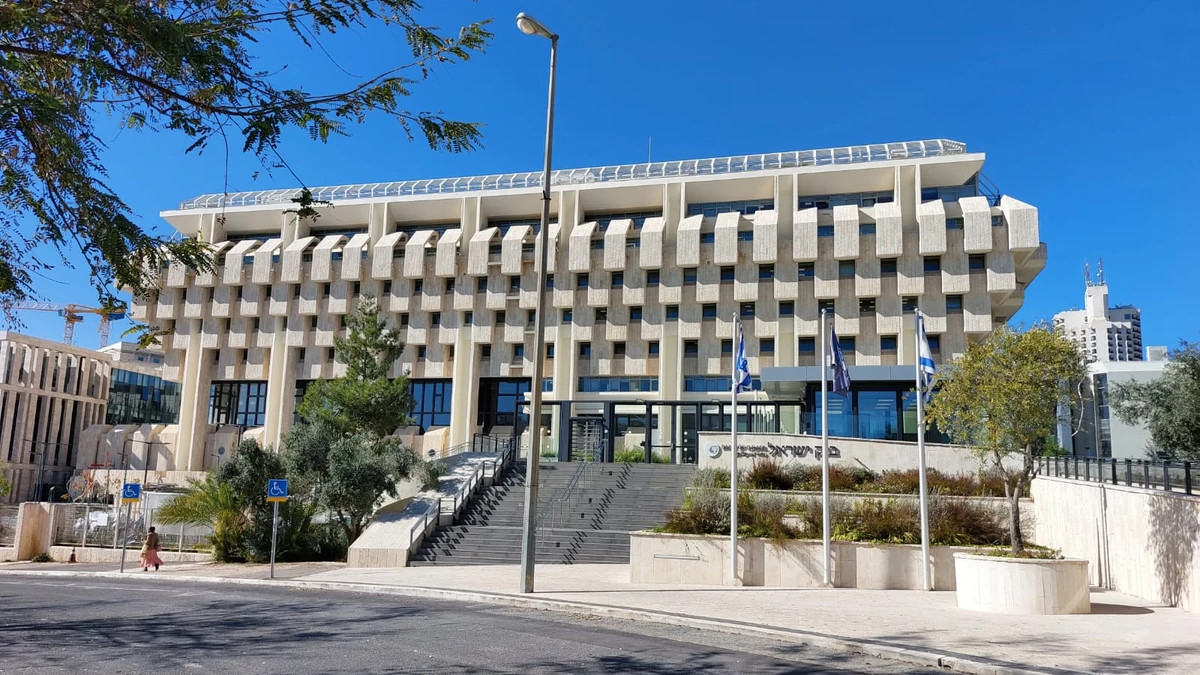
Almost two-thirds of respondents to a Bank of Israel customer survey said they had faced an attempted financial scam, according to findings published by the central bank on November 8. The Banking Supervision Department reported a 62% exposure rate, while 5% of respondents said fraud had caused them financial losses.
The findings accompany a new public-awareness campaign involving banks and credit card companies. They also show why the distinction between an attempted scam and an actual loss matters: the survey records people’s reported encounters, not a count of verified criminal cases or the total amount of money stolen.
Research institute Rushinek conducted the survey during the preceding year. The main online sample comprised 1,003 internet-connected adults aged 18 to 70, supplemented by telephone interviews with 50 respondents aged 70 or older and 50 Russian speakers. The central bank described the core group as representative of internet-connected people within that age range. The results should not be treated as an exact measure of fraud across Israel’s entire population.
Impersonation texts dominate the reported approaches
Fraudulent text messages stood out in the Bank of Israel’s survey findings. In its breakdown of methods used to approach customers, the regulator put impersonation text messages at 77%, ahead of bogus emails at 35% and links to fake websites or applications at 33%. These figures describe reported methods of contact, not the proportion of recipients who lost money.
Messaging services and telephone calls also featured prominently. The report listed attempted fraud through services such as WhatsApp or Telegram at 21%, while 18% reported calls from someone impersonating a bank or credit card company. The categories reflect different ways a suspected scam can reach a customer; the release does not provide separate financial-loss figures for each channel.
The common thread is impersonation. A message that appears to come from a trusted financial institution can direct someone to a fake website, where they may be asked to supply account credentials, card details or an authentication code. A caller posing as bank staff can make a similar request without directing the customer to a website. The central bank says fraud involving unauthorized use of bank accounts and credit cards can leave customers out of pocket.
Roughly one-third of survey participants said they sometimes receive suspicious links. The findings also raised concern about people entering personal or financial information into such links, a behavior that can expose credentials even when the original contact did not involve an unauthorized payment. The bank’s published summary does not establish the amount lost through this particular route.
Many respondents said they had avoided harm by recognizing a scam. Among those who encountered an attempt but did not suffer a financial loss, 62% reported identifying the deception themselves. Yet 19% of people surveyed said they take no steps to protect themselves against financial fraud. Those are different survey measures, but together they help explain the regulator’s emphasis on customer awareness rather than warnings about a single technical weakness.
Older respondents reported more successful fraud
The reported loss rate was higher among older customers. In that group, 12% said a scam had succeeded, compared with the 5% figure for the overall survey population. The central bank also found a pronounced difference in the handling of suspicious links: about half of older respondents said they entered identifying information into a link associated with a fraud attempt, versus 17% in the survey population overall.
That comparison does not mean every person who supplied information later lost money. Nor does it establish that age itself caused the difference. It does point to a possible route by which criminals can obtain information they need to impersonate a customer or initiate misuse of an account. The additional telephone group of people aged 70 and above was relatively small, so the subgroup findings warrant care when applied more broadly.
Another distinction appeared among respondents from former Soviet republics. In this group, 53% reported impersonation phone calls, compared with 18% across the survey. The researchers supplemented the main online sample with 50 Russian-speaking telephone respondents. The results suggest that a prevention message focused solely on suspicious text links could miss a form of contact reported more frequently by this group.
Those differences are relevant to the design of public warnings. A customer who receives an unexpected call from a supposed bank employee faces a different immediate decision from someone looking at a link in a text message. Both may be asked for the same sensitive information, but instructions about verifying the caller or opening an account through a trusted channel must be understandable in each setting.
There are limits to what the figures establish. The release does not disclose the value of reported losses, how much money banks or card companies subsequently reimbursed, or a breakdown of losses by individual fraud technique. It also does not present a comparable earlier customer survey that would allow the 62% figure to be interpreted as a measured year-over-year increase.
Banking watchdog expands fraud-awareness campaign
The Banking Supervision Department has launched another awareness drive through the Financial Education Forum, which it leads alongside the Association of Banks in Israel, banks and credit card companies. The timing is deliberate: November’s shopping promotions bring more payment-related messages and online purchasing activity, creating circumstances in which customers may be especially likely to encounter unfamiliar links or requests.
Daniel Hahiashvili, Israel’s Supervisor of Banks, said technological advances and artificial intelligence were making fraud methods more sophisticated. He called for continued public education by individual banks and card companies as well as the joint campaign. His comments describe the regulator’s concern about evolving threats; the new survey does not quantify how many of the reported attempts used AI.
The latest initiative follows earlier public education work by the supervisor. The banking regulator previously organized outreach with the financial sector, including information sessions in Hebrew, Arabic and Russian. The new findings give that effort a more specific focus on the channels people report encountering and the groups reporting higher exposure or losses.
The campaign is intended to help customers identify messages aimed at stealing payment details. The Bank of Israel’s guidance starts with a simple precaution: do not sign in to a bank account through a link received in a text or email. Customers should instead use a trusted method of reaching their bank and check any unexpected request through a contact channel they know is genuine.
The regulator also warns against entering card information or one-time verification codes into unsolicited links. It says a bank or credit card company will not ask for the authentication code during a telephone call that the customer did not initiate. That distinction matters because a message or caller may look familiar even when the request is not legitimate.
Anyone who suspects they have disclosed sensitive details should contact their bank or credit card company immediately and report the incident, according to the central bank. It also recommends periodically reviewing account activity for unfamiliar payments or discrepancies. For recipients uncertain about a message or call, the advice is to verify it with the financial institution before clicking, responding or giving out information.
More from Banking


Latest News
View all news- New York’s New Employee Records Law Takes Effect, Adding Compliance Requirements for Employers
- Sensex, Nifty End Lower in Diwali Muhurat Trading, Breaking Eight-Year Winning Streak
- Canada Details Nearly C$30 Billion Housing and Homelessness Plan at November 8 Halifax Event
- Australia Sets Defence Property Sale Timetable, Transfers 11 Sites to Finance Department
- Singapore’s Lee Urges Australia to Invest More in Southeast Asia
