Sensex, Nifty End Lower in Diwali Muhurat Trading, Breaking Eight-Year Winning Streak
Both Indian benchmarks slipped after early gains in the special Samvat 2083 session, although midcap and smallcap stocks finished higher.
Our editorial standards
MarketReview publishes clear, independently produced financial information using reliable sources and transparent editorial standards.
Read our Editorial Policy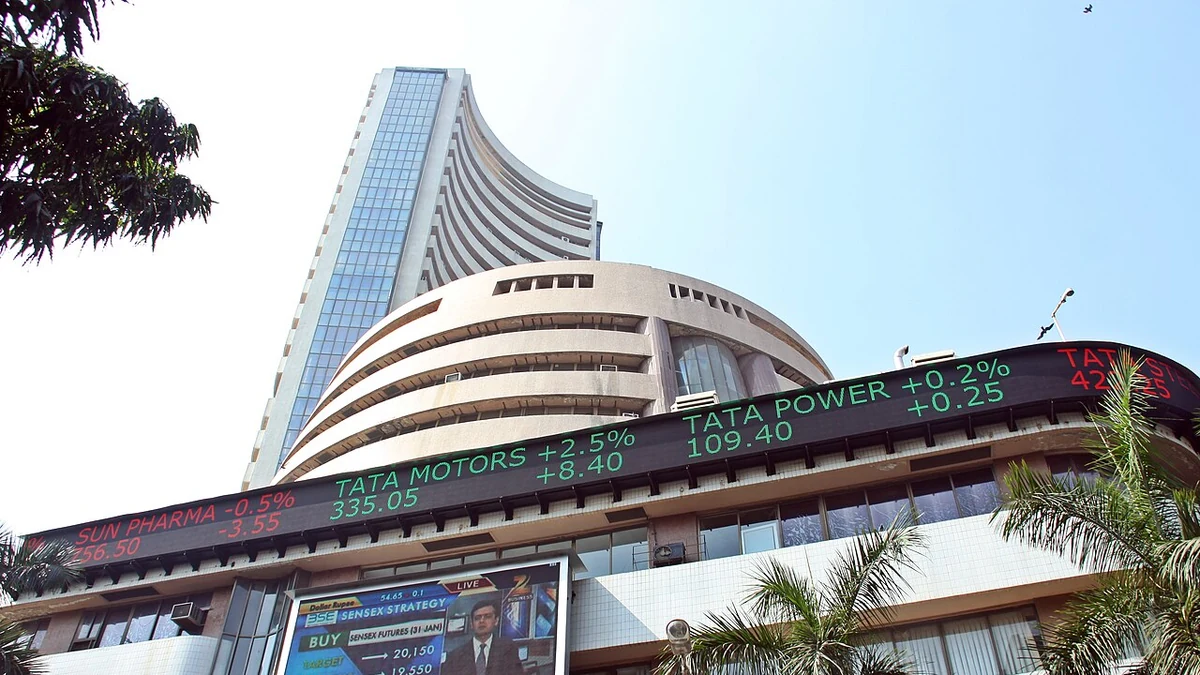
India’s leading stock benchmarks closed slightly lower in Sunday’s Diwali Muhurat trading session, ending eight consecutive years of gains during the annual market ritual. The BSE Sensex fell 28.62 points, or 0.04%, to 80,999.40, while the NSE Nifty 50 lost 43.95 points, or 0.18%, to finish at 24,986.40.
Both indices had moved higher shortly after trading began on November 8, 2026, but the advance faded before the closing bell. The special session marked the beginning of Samvat 2083, a new Hindu calendar year associated with an auspicious start for trading and investing.
The dip was narrow rather than a broad market retreat. Smaller-company benchmarks rose, and gains in some pharmaceutical, metal and energy shares contrasted with weakness in banking and information technology. The National Stock Exchange’s published market figures showed the Nifty finishing just below the 25,000 level it had cleared earlier in the session.
Early rally fades before the closing bell
The Sensex opened at 81,299.34, already above Friday’s close of 81,028.02, and climbed as high as 81,442.11. At that point, the index was more than 400 points above the previous close. By the end of trading, however, it had given back that advance and finished nearly 29 points lower. Its intraday low was 80,932.42.
The Nifty followed a similar path. It opened at 25,070.45 and touched 25,131.85 before retreating to a session low of 24,985.30. The final reading of 24,986.40 left the index near that low and below Friday’s close of 25,030.35. The difference between the early high and the final close makes the reversal more striking than the modest daily percentage decline by itself.
The two benchmarks measure different baskets of large listed companies, so their losses need not match. Their moves nevertheless told the same broad story: buying at the start of the special session was not sustained. The Sensex lost less than one-tenth of a percent, while the Nifty’s decline was somewhat larger.
Muhurat trading is not a normal full-day market session. The exchanges scheduled the main equity trading window for the afternoon, from 2:20 p.m. to 3:30 p.m. Indian time, with separate arrangements for pre-opening and closing procedures. The abbreviated session gives investors an opportunity to trade on Diwali, even though the date is otherwise designated a market holiday.
Banks and IT lag, but smaller stocks gain
Banking shares were among the weaker areas. The Nifty Bank index declined 0.40% to 58,850.65, while the Nifty Financial Services index slipped 0.38%. The Nifty IT index was down 0.33%. Those sector readings help explain how the headline benchmarks could fall even as advances appeared elsewhere in the market.
Among Nifty 50 constituents, SBI Life Insurance fell 1.11%, IndiGo operator InterGlobe Aviation lost 1.07%, and Bharti Airtel slipped 1.03%. Infosys declined 0.83%, while HDFC Bank eased 0.53%. These are sizeable listed businesses, and their declines sat alongside the broader weakness in financial and technology stocks.
The gainers offered a different picture. Sun Pharmaceutical Industries rose 2.96% and Tata Steel advanced 2.09%. Oil and Natural Gas Corporation gained 1.31%, while Adani Ports and Special Economic Zone added 0.66% and Power Grid Corporation rose 0.56%. The mixed performance shows why the closing direction of an index does not describe every sector or constituent.
Smaller-company indices also resisted the pullback. The Nifty Midcap 100 gained 0.13% to 60,688.15, and the Nifty Smallcap 100 increased 1.01% to 19,166.40. The Nifty Next 50, which tracks large companies outside the flagship Nifty 50, advanced 0.47%. These figures were stronger than the returns on the two principal benchmarks and point to a divided session rather than uniform selling.
Market-capitalization-weighted benchmarks can be pulled lower by weakness in a limited number of heavily weighted stocks even when other shares advance. Sunday’s pattern is consistent with that distinction, although the closing figures alone do not establish the trading motives of individual investors. It is more accurate to describe a loss for the major indices than a market-wide decline.
The first negative Muhurat close since 2017
The result ended a run of eight positive Muhurat sessions from 2018 through 2025. That history gives the close an unusual distinction, but it does not make the small loss comparable to a sustained retreat during regular trading. The annual session is brief and ceremonial, and its significance to participants is different from that of a full trading day.
This year’s trade also followed a strong advance across the preceding seven regular sessions. Against that backdrop, the market entered the Diwali window after substantial recent gains. The failure to extend that rally during Muhurat trading is a noteworthy change in the daily direction, but it does not by itself show that the earlier advance has ended.
The contrast between the session’s symbolism and its price action is important. Muhurat trading is traditionally regarded as a favorable occasion to begin the new financial year, yet the practice does not guarantee higher prices. The annual winning streak simply records how the benchmarks closed in earlier special sessions; it is not a measure of returns across entire Samvat years.
Sunday’s closing figures also highlight the limits of drawing a broader investment conclusion from one short window. The Nifty’s fall was less than a fifth of a percent, the Sensex barely moved on a percentage basis, and several wider market gauges increased. The session therefore says more about the uneven character of that afternoon’s trade than about the direction of Indian equities over the months ahead.
Regular price discovery resumes when the exchanges return to their usual sessions. Under the NSE’s published holiday calendar, Monday, November 9, is not listed as a market holiday, while Tuesday, November 10, is a scheduled closure for Diwali-Balipratipada. The next ordinary trading session will give a fuller test of whether selling in large financial and technology stocks persists or the opening strength returns.
More from Investing


Latest News
View all news- New York’s New Employee Records Law Takes Effect, Adding Compliance Requirements for Employers
- Canada Details Nearly C$30 Billion Housing and Homelessness Plan at November 8 Halifax Event
- Australia Sets Defence Property Sale Timetable, Transfers 11 Sites to Finance Department
- Bank of Israel Finds 62% of Survey Respondents Faced Financial Fraud Attempts
- Singapore’s Lee Urges Australia to Invest More in Southeast Asia