
Switzerland’s New Payment Standards and QR-Bill Rules Take Effect
The November rollout updates ISO 20022 messaging and euro QR-bill references, although SIX says some payment orders with unstructured addresses may still be received.
Our editorial standards
MarketReview publishes clear, independently produced financial information using reliable sources and transparent editorial standards.
Read our Editorial Policy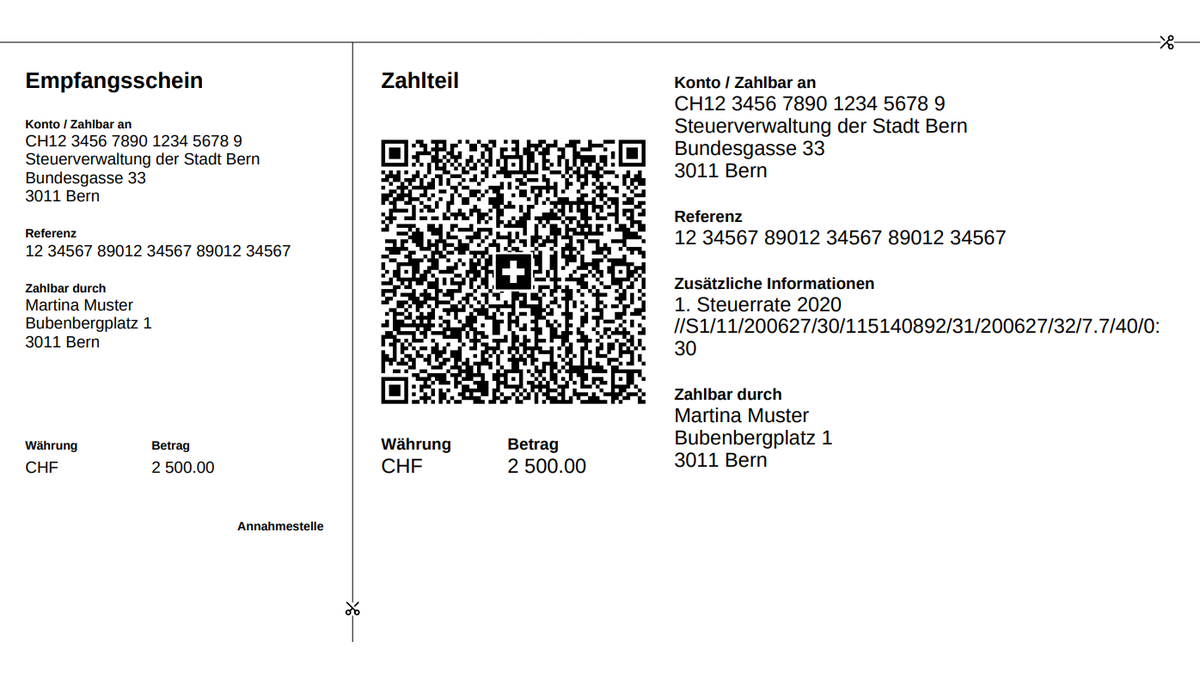
Switzerland’s 2026 payment standards and revised QR-bill guidelines took effect on November 14, updating the technical rules for bank payment messages and for invoices paid in euros. The rollout also moves Swiss payment services further toward structured address data, although an international delay has led to an important exception in how some incoming payment orders are checked.
SIX set November 14 as the effective date for both the Swiss Payment Standards 2026, or SPS 2026, and QR-bill version 2.4. The specifications were published earlier this year, with the related SIC payment-system release scheduled for November 13. Banks, business payment teams and software providers are mainly responsible for making the technical changes.
Not every payment containing older-style address data will automatically fail. In its updated Swiss Payments guidance, SIX says Swiss standards are going ahead even though Swift and the European Payments Council suspended their own November 2026 deadlines for structured or hybrid addresses. To avoid obstructing payments moving to and from the Swift network, address validation in the SIC release is being waived, and orders containing unstructured addresses may still be received.
ISO 20022 messaging moves to newer Swiss standards
A central part of SPS 2026 is the transition between generations of ISO 20022 messages, the standardized files that companies and financial institutions use to initiate payments, report their status and reconcile account activity. Switzerland allowed older 2009 message versions to operate alongside newer 2019 versions during a parallel period running to the November 2026 standards release. The updated specifications are intended to support the newer formats across customer-bank interfaces.
For example, SIX identifies pain.001.001.03 as an older customer credit-transfer message and pain.001.001.09 as the newer version. The corresponding payment-status formats include pain.002.001.03 and pain.002.001.10, while account-reporting messages move from older camt.05x.001.04 formats toward camt.05x.001.08. These version numbers matter most to banks, treasury platforms and developers exchanging payment files, not to someone entering an ordinary transfer in a banking app.
Address data is another part of the change. A structured address separates components such as the street, postal code, town and country into designated fields. A hybrid address permits some free-text address detail but still includes specific structured information. Under the Swiss standards, the town and country fields must be provided correctly whenever an address is supplied, rather than leaving the location embedded only in free-form lines.
That remains the published standard despite the international timetable change. SIX says structured and hybrid addresses are already widely used in Swiss and Liechtenstein payment traffic, so Switzerland kept its planned start date. But banks may continue to receive some payment instructions with unstructured addresses because the SIC platform will not enforce the relevant address validation in the same way. SIX also says banks can offer additional customer services outside the Swiss Payment Standards, so actual acceptance may depend on the institution and channel.
QR-bill version 2.4 changes the options for euro invoices
QR-bill version 2.4 addresses a more specific set of instructions. The format works on paper or digitally, with payment details printed in text and carried inside the Swiss QR code. Its familiar payment section and receipt remain. Nothing in the latest guidance calls for every existing bill to be replaced simply because the new effective date has arrived.
For invoices in Swiss francs, SIX says version 2.4 makes no technical adjustment. The meaningful change is how QR-bills denominated in euros can identify a payment. An ordinary IBAN can be paired with a creditor reference under ISO 11649, identified technically as SCOR, or used with an unstructured payment message and no structured reference. The Swiss QR-IBAN and its QR reference, known as QRR, are now reserved for invoicing in Swiss francs under version 2.4.
Those distinctions matter to companies that issue euro invoices automatically and to the software that generates the corresponding QR codes. An invoicing system cannot treat the QR-IBAN and the standard IBAN as interchangeable, because the type of account number determines which reference format is permitted. For euro bills using a structured creditor reference, software must produce the ISO 11649 format rather than the domestic QR reference.
Plans to discontinue euroSIC, the Swiss interbank infrastructure for euro payments, at the end of 2027 explain the change. SIX says euro QR-bills will ultimately be handled through SEPA credit transfers, which have restrictions on the payment details that can be carried through. The updated QR-bill guidance is also supported by eBill, Switzerland’s digital billing service.
Existing QR-bill specifications also have a transition period rather than disappearing overnight. SIX says version 2.4 replaces version 2.3 in the standards release, but version 2.3 remains valid until November 2027. Its documentation also notes that Romansh headings were added earlier in 2026 without requiring a technical change to invoicing.
What changes for saved payments and invoice issuers
Structured addressing for newly issued QR-bills actually predates November 14, 2026. SIX introduced that requirement on November 22, 2025, when version 2.3 took effect. The earlier revision also broadened the characters allowed in QR-bills, including more accented letters and special characters. A QR-bill address must therefore be structured even though some broader bank payment messages can use the hybrid form.
Recurring payment instructions created under older formats faced a second deadline. In a factsheet published in 2025, SIX warned that standing orders and saved payment templates based on QR-bills with unstructured addresses would cease to be processed from November 14, 2026, and told financial institutions to update the affected instructions by November 13. Payments such as recurring rent or leasing charges can require attention even if the account and amount remain unchanged, because a newly issued bill may carry address details in a different form.
SIX’s later clarification about waived SIC address validation means the earlier warning should not be read as a universal promise that every unstructured-address payment will now be rejected. It does not remove the structured-address requirement for newly created QR-bills or rewrite the SPS 2026 specifications. The practical course for a payer with an older saved instruction is to follow the bank’s guidance and update the template when replacement payment details are provided, rather than rely on an exception intended to maintain cross-border processing.
Businesses and public bodies issuing QR-bills have a different task: ensuring their billing systems generate the proper address fields and, for euro invoices, the correct IBAN-reference pairing. Companies sending payment files should also check with their bank or software supplier that the current ISO 20022 messages are supported. These are configuration and data-quality questions, not a change in the underlying amount owed on an invoice.
November 2027 is the next concrete milestone, marking the end of the remaining validity period for QR-bill version 2.3 and the planned shutdown of euroSIC. That transition is especially relevant to organizations still sending euro-denominated QR-bills or maintaining older billing software.
More from Banking


Latest News
View all news- U.S. Gasoline Prices Fall to $3.84 a Gallon, but Diesel Remains Above $6
- Nasdaq Expands Public Disclosure of Disciplinary Cases as $10,000 Threshold Is Removed
- India Opens Consent Manager Registration Portal With ₹2 Crore Minimum Net Worth Requirement
- Pennsylvania Publishes $460,000 Specialty-Crop Grant Rules Covering Hemp, Honey and Grains
- Carney Says Canada–U.S. Trade Talks Are Progressing, but Auto Tariffs Remain a Sticking Point
