
Local Opposition Becomes a Credit Risk for AI Data-Center Lenders
Banks still want to finance AI infrastructure, but lenders are giving permits and community support more weight as blocked or delayed projects spread across the U.S.
Our editorial standards
MarketReview publishes clear, independently produced financial information using reliable sources and transparent editorial standards.
Read our Editorial Policy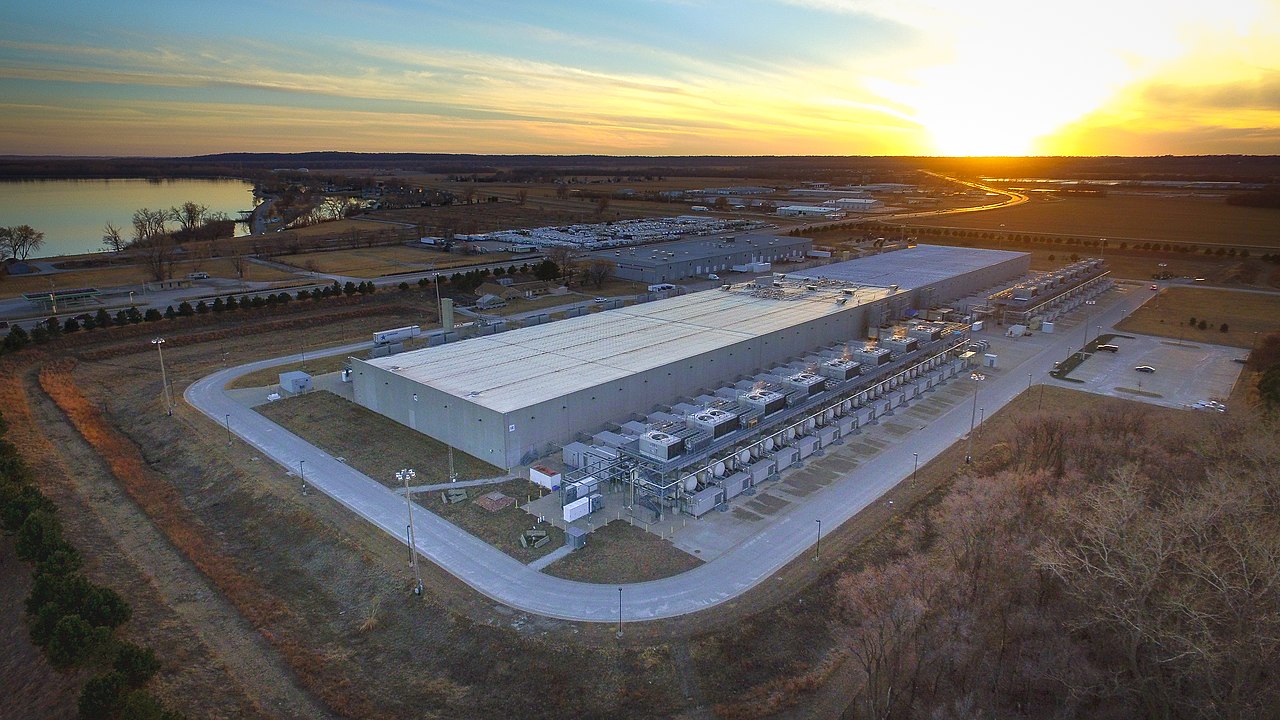
Local opposition to U.S. data-center projects is becoming more than a political or permitting problem. It is starting to influence how lenders assess whether projects are ready to finance, adding another layer of risk to an artificial-intelligence infrastructure boom that has already drawn huge commitments from banks, asset managers and private-credit firms.
Reuters reported that senior bankers are giving community support, permitting status and the risk of project delays more weight when evaluating data-center loans. The lenders cited by Reuters remain interested in financing the sector, but they are becoming more selective about which projects and jurisdictions can move from planning to construction. That shift matters because data centers are unusually capital intensive, and a project that loses months to zoning fights, grid approvals or litigation can tie up underwriting resources long before it generates revenue.
Data Center Watch says at least 75 U.S. data-center projects worth about $130 billion were blocked or delayed during the first quarter of 2026. The research group says that roughly matched the number of disrupted projects it tracked during all of 2025. Its tally does not mean $130 billion of investment has been permanently canceled, but it does show how quickly local resistance has become a material execution issue for developers and their financiers.
Permitting risk is becoming part of the credit decision
The financing problem starts with timing. Large data-center loans are typically discussed well before construction begins, and lenders spend significant time reviewing technical plans, zoning, environmental issues, insurance, valuations and expected cash flows. If permits are delayed or a local government changes course, the lender may have to redo work, postpone funding or walk away.
Reuters reported that Bank of America infrastructure-finance executive Karen Fang considers necessary permits, approvals and community support part of project readiness. JPMorgan executive Kevin Curtin also described credit agreements as only the start of the process because borrowers must continue meeting covenants and monitoring requirements before additional money is drawn during construction.
That structure helps explain why local opposition can become a credit issue even when demand for computing power remains strong. Construction loans and warehouse facilities are often funded in stages. A lender does not simply hand over the entire commitment on day one. Conditions attached to later drawdowns can protect the lender if a project fails to secure leases, permits or other prerequisites.
CyrusOne provides a useful example of the scale involved. The data-center operator announced in January 2025 that it had closed a $7.9 billion warehouse credit facility, on top of a $1.8 billion revolving facility completed earlier, bringing the additional debt capital raised to about $9.7 billion. Reuters reported that part of that warehouse facility can be used for new construction only when required permits and leases are in place. CyrusOne is also facing local opposition to a proposed $500 million data center in Sangamon County, Illinois.
The point is not that every contested project will lose financing. It is that lenders have a direct reason to care about whether a site can actually be built on schedule. A project can look attractive on long-term AI demand and still become a poor credit if approvals drag on, construction costs rise, contracted customers lose patience or a grid connection is delayed.
Capital is still available, but location is becoming more important
The change in underwriting does not amount to a retreat from AI infrastructure. Major Wall Street firms continue to advise on and arrange financing for data-center projects. Reuters identified large financings tied to projects that have faced community resistance, including a $12.3 billion bond sale involving a BlackRock and Meta project in El Paso, Texas.
What is changing is the value lenders place on where a project is located and how much political friction it faces. Data Center Watch says active opposition groups now span 49 states and that more than 300 state data-center bills were filed in the first six weeks of 2026. Fourteen states saw proposals for statewide moratoria during that period. Those figures suggest developers increasingly have to treat public acceptance as part of site selection rather than an issue to manage after financing is arranged.
Recent state actions make that risk more concrete. New York Governor Kathy Hochul signed an executive order in July creating a temporary moratorium on new hyperscale data centers while the state develops standards covering energy, water, environmental impacts and community benefits. The pause can last up to one year and restricts certain discretionary state permits that were not already complete.
Texas, normally one of the most development-friendly markets in the country, has also tightened scrutiny. Governor Greg Abbott directed the Public Utility Commission of Texas and ERCOT in August to audit every data center moving through the grid-interconnection process before a project can proceed. His office said ERCOT was considering more than 474 gigawatts of new connection requests, with roughly 90% tied to data centers. The audit asks developers for information on power demand, water use, tax incentives, ownership and measures to reduce impacts on neighboring communities.
Those actions matter to lenders because they can lengthen the path between a financing commitment and a producing asset. A site with cheap land and access to fiber is less attractive if the project cannot secure power, water or local approvals on a predictable timetable. Conversely, a jurisdiction with clearer permitting and a community-benefit framework may become more valuable even if its headline construction costs are higher.
The main risk is delay, not a collapse in AI demand
The emerging credit concern sits alongside an enormous increase in electricity demand from computing. The U.S. Energy Information Administration said in January that rising demand from large computing facilities was the main reason it expected the strongest four-year stretch of U.S. electricity-demand growth since 2000. In a May analysis, EIA estimated that servers accounted for about 7% of commercial-sector electricity consumption in 2025 and projected that share could rise to 22% to 33% by 2050 across its scenarios.
That growth helps explain why lenders still want exposure to the sector. A completed, leased data center can have a very different risk profile from a project still waiting for zoning approval, a transmission study or local acceptance. For a financier, the distinction is crucial because delays postpone the point at which an asset can begin producing the cash flow expected to service debt.
For banks and private-capital firms, the practical response is likely to be more conditions rather than less interest. Lenders can require permits and leases before construction draws, build monitoring requirements into credit agreements, price delay risk or favor projects in jurisdictions where planning and grid approvals are clearer. Developers can try to reduce that risk by securing power earlier, building generation on site, offering community benefits or choosing locations where local governments have already established rules for large computing facilities.
For investors, that is an important counterweight to the headline numbers surrounding the AI buildout. The sector may attract hundreds of billions of dollars in new capital, but financing capacity alone does not guarantee that a data center will reach operation on time. Permitting, grid access and community acceptance can determine when cash begins to flow, and therefore how attractive the project is to the lenders funding it.
The next phase of the boom is likely to make that distinction sharper. Texas now requires its audit before projects in the ERCOT interconnection process can move ahead, while New York’s temporary moratorium gives the state up to a year to establish a new framework. As those policies are implemented, lenders will get a clearer view of which markets can convert AI demand into financeable, buildable projects and which ones carry a higher risk of delay.
More from Banking

Latest News
View all news- USDA Releases October Crop Supply and Demand Estimates for Global Grain Markets
- U.S. Consumer Sentiment Falls to 46.3 as Inflation Expectations Rise
- Swiss-Ukraine Reconstruction Agreement Takes Effect, Opening Procurement Route for Swiss Firms
- U.S. Commerce Department Finalizes South Korean Hot-Rolled Steel Subsidy Review
- Treasury Names Judy Shelton Counselor on Currency Policy, With China Focus
