
Australian Annual Wage Growth Holds at 3.2% in June Quarter
Australia’s Wage Price Index rose 0.8% for a fifth straight quarter, while annual private-sector wage growth eased to 3.1% and public-sector growth held at 3.4%.
Our editorial standards
MarketReview publishes clear, independently produced financial information using reliable sources and transparent editorial standards.
Read our Editorial Policy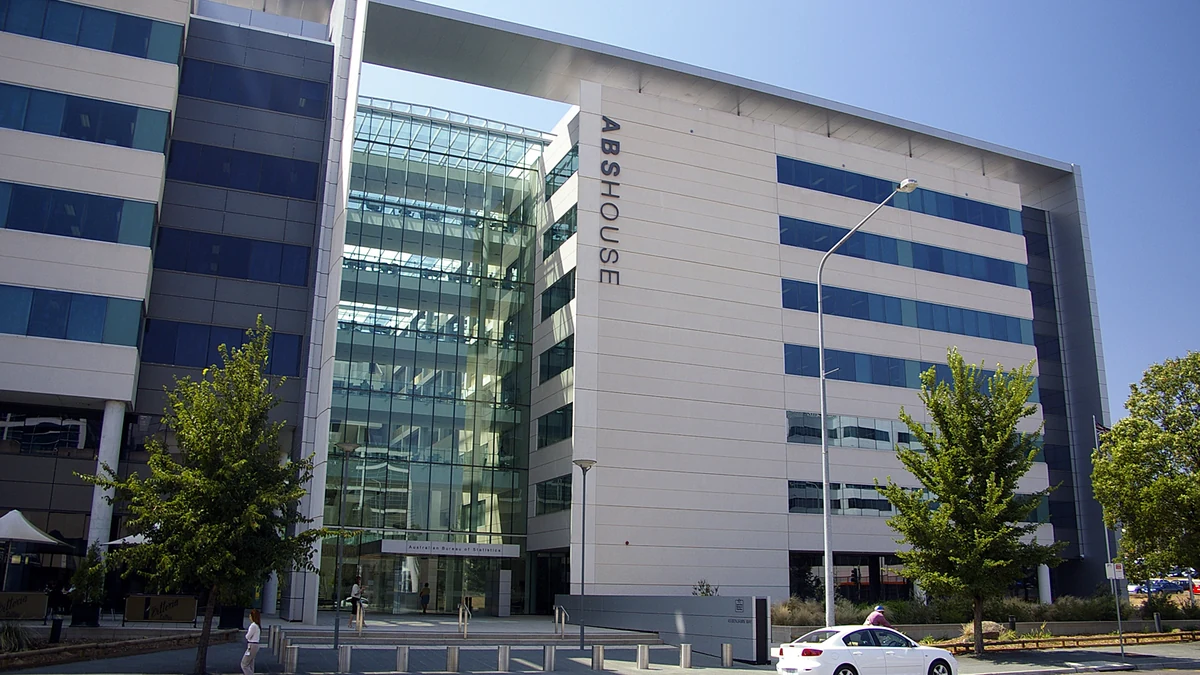
Australian wage growth remained at an annual pace of 3.2% in the June quarter of 2026, as pay gains in the private sector eased and stronger public-sector increases helped keep the overall quarterly rate steady. The seasonally adjusted Wage Price Index rose 0.8% from the March quarter, the fifth consecutive quarterly increase of that size, according to the Australian Bureau of Statistics.
The annual result was lower than the 3.4% recorded in the June quarter of 2025, but it did not represent a fresh quarter-to-quarter slowdown in the headline annual rate. The latest ABS series shows annual WPI growth at 3.2% in both the March and June quarters of 2026. That distinction matters because the June data point to a shift in where wage pressure is coming from rather than a broad-based loss of momentum across every part of the labour market.
Private-sector wage growth eased as public pay rises strengthened
The ABS June-quarter Wage Price Index release showed private-sector wages rising 0.7% over the quarter and 3.1% over the year. Annual private-sector growth was down from 3.2% in the March quarter and 3.4% a year earlier. Public-sector wages rose 0.9% in the quarter and 3.4% over the year, leaving the annual rate unchanged from March but below the 3.7% recorded in June 2025.
The public sector accounted for 32% of the overall wage increase in original terms, up from 26% in the June quarter a year earlier. The ABS said the larger contribution reflected pay increases for jobs covered by state enterprise agreements, supported by increases under existing Commonwealth agreements. State government pay rises alone contributed 65% of public-sector wage growth during the quarter.
The private sector still contributed the majority of the overall increase because it represents a much larger share of total wage expenditure. Yet fewer private-sector jobs received a pay change during the quarter. In original terms, 10% of private-sector jobs recorded a wage change, down from 12% a year earlier and the lowest proportion since the June quarter of 2020. For the jobs that did receive an increase, the average hourly wage change was 3.9%, the same as a year earlier.
The pattern was different in the public sector. Twenty-five percent of public-sector jobs recorded a wage change in the June quarter, up from 20% a year earlier. The average increase among those jobs was 3.1%, down from 3.5% in the June quarter of 2025. In other words, public-sector increases were more widespread than a year ago but, on average, smaller for the jobs receiving them.
Fewer jobs are receiving pay rises above 4%
The distribution of wage changes also points to a gradual cooling from the faster wage growth seen after the pandemic. The ABS said 79% of jobs that recorded an annualised wage change had an increase of less than 4%, up from 75% in the June quarter of 2025. That was the largest share since the June quarter of 2022. At the same time, the share of jobs receiving annualised increases between 4% and 6% fell to 14.3%, while the share receiving more than 6% was 6.7%.
Those figures help explain why annual WPI growth is below its late-2023 peak even though quarterly growth has been unusually steady. The headline index has risen 0.8% in each of the past five quarters, but the mix of individual pay changes has shifted toward increases below 4%. The ABS noted that the decline in the proportion of jobs receiving larger wage rises has contributed to slower annual wage growth overall.
Industry data showed a wide range of outcomes. In original terms, information media and telecommunications recorded the strongest quarterly wage increase at 1.2%. Public administration and safety and mining each rose 1.1%. Retail trade and other services posted the smallest quarterly increases, at 0.1%. Over the year, health care and social assistance had the fastest wage growth at 3.8%, while professional, scientific and technical services recorded the slowest annual increase at 2.5%.
The annual wage figure also sits below the latest headline inflation rate. Australia’s Consumer Price Index was 3.8% higher in June than a year earlier, compared with the WPI’s 3.2% annual rise to the June quarter. On a simple comparison of the two measures, wage growth trailed consumer-price inflation by 0.6 percentage points. The measures are not identical and do not translate directly into changes in household purchasing power, but the gap shows that nominal pay growth was not keeping pace with the broad CPI over that period.
July award increases could lift wage growth in coming quarters
The June-quarter data do not yet capture one of the biggest scheduled wage changes of 2026. Australia’s minimum award wages increased by 4.75% from July 1 following the Annual Wage Review. The ABS says its June-quarter WPI captures wages for the last pay period ending on or before the third Friday of May, meaning the July increase falls outside this release and will begin feeding into later quarters.
The Reserve Bank of Australia has already built stronger near-term wage growth into its outlook. In its August Statement on Monetary Policy, the RBA said year-ended wage growth was expected to be slightly stronger in the near term than it had forecast in May. It cited public-sector enterprise agreements, the Annual Wage Review and other administered decisions, as well as elevated short-term inflation expectations, as factors likely to support pay growth.
That outlook complicates the interpretation of the latest 3.2% annual reading. The June data show some moderation in private-sector wage pressure and fewer large pay increases across the economy, but the scheduled award increase and public-sector agreements could push parts of the index higher in the second half of the year. The RBA also said firms in its liaison program had become more likely to expect wage growth to pick up over the year ahead.
Wages remain relevant to monetary policy because labour costs can influence services inflation and business pricing, especially when productivity growth is weak. The RBA left the cash rate target unchanged at 4.35% on August 11 after three increases earlier in 2026. It said labour-market conditions had eased by a little more than expected in recent months, but inflation remained too high and the economy still faced upside inflation risks.
The next Wage Price Index release is scheduled for November 18 and will cover the September quarter. That report will provide the first broader read on how the July award-wage increase, continuing public-sector agreements and softer private hiring conditions are combining to shape wage growth in the second half of 2026.
More News

Latest News
View all news- U.S. Commerce Department Finalizes South Korean Hot-Rolled Steel Subsidy Review
- Treasury Names Judy Shelton Counselor on Currency Policy, With China Focus
- U.S. Opens Proposed Gulf Offshore Oil and Gas Lease Sale 4 for Review
- Federal Reserve Reports Rising Household Financial Stress Despite Gains in Income and Wealth
- Canada Employment Falls in September as Unemployment Rises to 6.5%
